
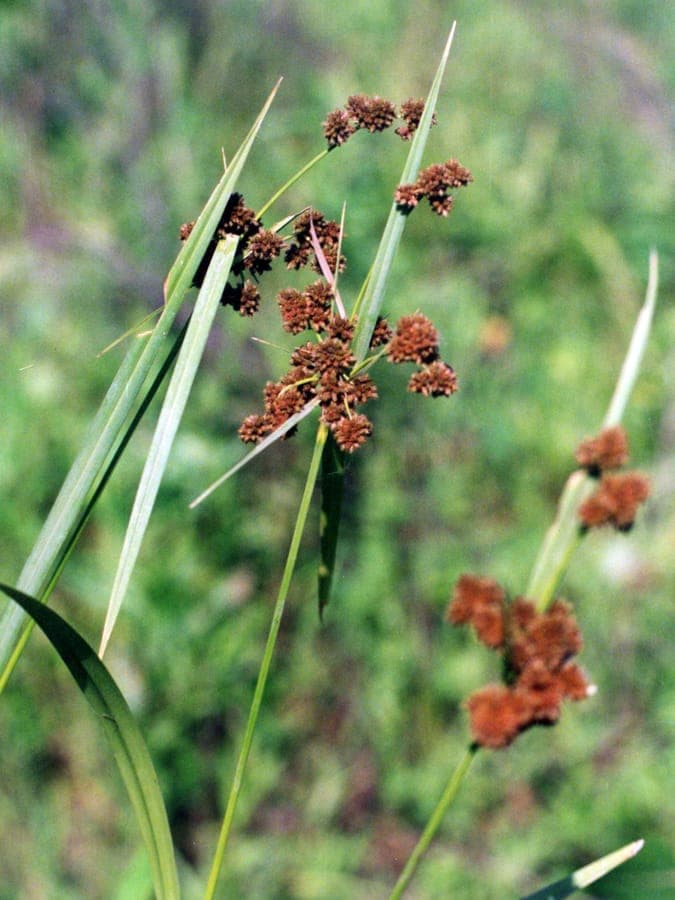
Jennifer Anderson. United States, IA, Scott Co., Davenport, Nahant Marsh. 2002. / Public domain, via Wikimedia Commons
Scirpus atrovirens: complete guide
Scirpus atrovirens
¿Quieres ver Scirpus atrovirens: complete guide en tu jardín?
1 minuto, sin tarjeta de crédito
Overview
Scirpus atrovirens, commonly known as dark green bulrush or black bulrush, is an attractive grass species from North America that thrives along water. This plant belongs to the Cyperaceae family (sedges and rush family) and specializes in wet, marshy soils. With its dense growth habit and interesting dark green color, it is an excellent choice for water gardens, wetlands, and natural banks. The plant creates a beautiful silhouette and attracts aquatic wildlife.
Appearance and bloom
The dark green bulrush grows in dense clumps reaching 60-100 cm in height. The stems are green and slightly flattened, with fine leaves growing along the stem. The color is characteristically dark green to black-green, especially at the plant top. In summer, inconspicuous greenish-brown flower spikes appear at the stem tops. After flowering, small brown seeds form. The plant maintains its structure year-round.
Ideal location
This plant flourishes in wet to very wet soils along watercourses or in marshes. It tolerates full sun to partial shade, but blooms best in sunnier locations. As a marsh and bank plant, it can grow in shallow water or regularly waterlogged soils. Place it along ponds, ditches, or in rain gardens.
Soil
Scirpus atrovirens thrives in wet to very wet soils. The plant is specialized for wetlands and has a strong preference for nutrient-rich, humus-laden earth. A slightly acidic to neutral pH (4-7) is optimal. The plant can even grow in permanent water conditions as long as water depth does not exceed 30 cm. Organic material in the soil benefits the plant.
Diseño gratis
¿Quieres ver Scirpus atrovirens: complete guide en tu jardín? Crea un diseño gratis ahora.
Watering
This plant is actually a water-lover and should be kept constantly moist or wet. In fact, this plant tolerates being submerged without issues. In garden settings, it is important to keep the soil moist at normal waterside conditions or submerged in lowland areas. The plant does not tolerate temporary drought well. Regular irrigation or placement near water is essential.
Pruning
Minimal pruning is needed. Remove dead stems and leaves in spring before new growth begins. This helps free space for new growth. Thinning dense clumps every three years helps keep the plant healthy. Do not cut back to ground level - leave about 5 cm standing.
Maintenance calendar
Spring: Remove dead material, thin clumps. Summer: Monitor water management, no pruning needed. Autumn: No pruning, plant reaches maximum height. Winter: Plant partially dies back in cold climates.
Winter hardiness
Scirpus atrovirens is winter-hardy and can withstand temperatures down to -30 degrees C (hardiness zone 4-11). In cold climates, the above-ground plant dies back, but the rootstock survives and will regrow in spring. In warmer regions, the plant remains mostly green year-round.
Companion plants
Plant this bulrush with other aquatic plants such as reed, cattail, and water lilies. Underground it can grow well alongside other water-bound plants. Avoid strong groundcovers that block light. It provides food and shelter for aquatic insects and birds.
Closing
Scirpus atrovirens is an essential part of any natural water ecosystem in the garden. Its dark green color and robust growth make it a valuable element. For moisture-loving gardeners, this is an indispensable plant. Available from water plant nurseries. Learn more at gardenworld.app/en.
¿Quieres ver Scirpus atrovirens: complete guide en tu jardín? Crea un diseño gratis ahora.
Sube una foto, elige un estilo y obtén un diseño fotorrealista con lista de plantas en menos de un minuto.
Más de 10.000 jardines diseñados
Sin tarjeta de crédito


Plantas similares
Flat-stemmed club-rush: complete guide
Bolboschoenus planiculmis
Everything about Bolboschoenus planiculmis: growing conditions, watering, care, and use as a pond margin or wetland plant in garden design.
Great Plains flatsedge: complete guide
Cyperus lupulinus
Everything about Great Plains flatsedge (Cyperus lupulinus): growing conditions, care, garden uses, and ecological value. Tips for pond margins and dry sandy soils.
Golden beak sedge: complete guide
Rhynchospora corymbosa
Everything about golden beak sedge (Rhynchospora corymbosa): a dramatic tropical marginal for pond edges, bog gardens, and wet habitats.