
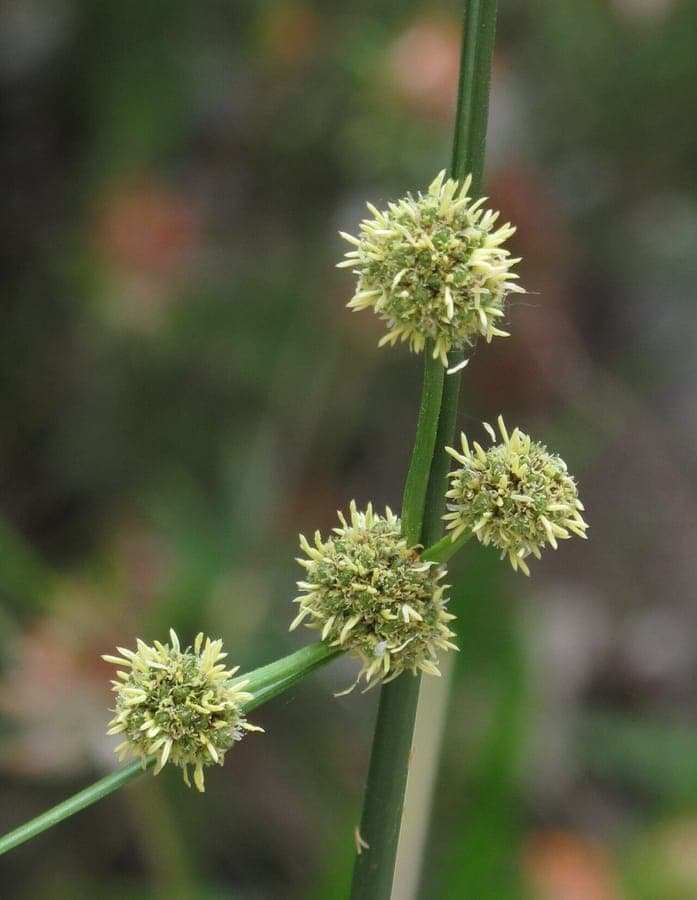
Robert Flogaus-Faust / CC BY 4.0, via Wikimedia Commons
Scirpoides holoschoenus: complete guide
Scirpoides holoschoenus
¿Quieres ver Scirpoides holoschoenus: complete guide en tu jardín?
1 minuto, sin tarjeta de crédito
Scirpoides holoschoenus, commonly called roundhead bulrush, round-head club-rush or scirpe-jonc, ranks as a graceful grass-like plant perfectly suited to water garden margins and wetland edges. This sedge offers the textural interest and structural element many gardens desperately need. Native from the Canary Islands through Europe to the West Himalayas, it grows wild along watercourses, marshy meadows and nutrient-rich banks throughout its range.
Scirpoides holoschoenus reaches 30 to 80 centimeters in height depending on growing conditions and water availability. The stems are slender yet sturdy, bending gracefully in wind. The main attraction, however, is the flower heads: dense, spherical brown balls 8 to 12 millimeters in diameter clustered in groups of 2 to 5 atop the stems. These distinctive flower heads appear from May through September, providing abundant insect food.
The leaves are narrow and cylindrical, distinctly different from typical broad plant foliage. This leaf character gives the plant an exceptionally fine texture and lightweight appearance. The foliage moves subtly in the slightest breeze, creating dynamic interest in still garden settings.
After flowering, the brown spheres persist through autumn as seed heads, extending ornamental value. They progressively darken from summer tan to autumn copper to winter brown. These persistent seed heads provide food for birds and wildlife throughout fall and winter.
Culture requires consistently moist to wet soil and ample sunlight. The plant thrives best in water garden margins with nutrient-rich mud. Poor drainage and periodic inundation are not problems but rather preferences of the plant. In very dry years, supplemental irrigation becomes necessary.
Plant in March or April in nutrient-rich, moist soil. Avoid planting deeply: roots should remain just beneath the soil surface. Incorporate generous compost and garden waste into planting soil. The plant spreads slowly via underground rhizomes. Within four to five years, small plantings expand into substantial clumps.
Scirpoides holoschoenus is completely winter-hardy to minus 15 degrees Celsius. In mild winters, foliage persists green. In harsh winters, stems die back but regrow vigorously in spring. Winter protection is unnecessary.
Companion planting with wetland and water margin plants works beautifully. Combine with Iris, Carex, Filipendula, lythrum and other aquatic species. Vary height and scale through layering of plants at different distances from water. Ensure at least 30 centimeters of open water remains for wildlife activity.
Plants are available from specialized water plant nurseries from March through October at modest cost. Larger online suppliers offer greater selection and shipping convenience. For mass plantings, establish at least 3 to 5 plants per meter of water margin.
Visit gardenworld.app to design water gardens featuring Scirpoides holoschoenus. The designer tool creates harmonious water features with complementary plantings. Explore all possibilities at gardenworld.app/en and create a successful water garden that brings movement, texture and wildlife habitat to your outdoor space.
¿Quieres ver Scirpoides holoschoenus: complete guide en tu jardín? Crea un diseño gratis ahora.
Sube una foto, elige un estilo y obtén un diseño fotorrealista con lista de plantas en menos de un minuto.
Más de 10.000 jardines diseñados
Sin tarjeta de crédito


Plantas similares
Flat-stemmed club-rush: complete guide
Bolboschoenus planiculmis
Everything about Bolboschoenus planiculmis: growing conditions, watering, care, and use as a pond margin or wetland plant in garden design.
Great Plains flatsedge: complete guide
Cyperus lupulinus
Everything about Great Plains flatsedge (Cyperus lupulinus): growing conditions, care, garden uses, and ecological value. Tips for pond margins and dry sandy soils.
Golden beak sedge: complete guide
Rhynchospora corymbosa
Everything about golden beak sedge (Rhynchospora corymbosa): a dramatic tropical marginal for pond edges, bog gardens, and wet habitats.