
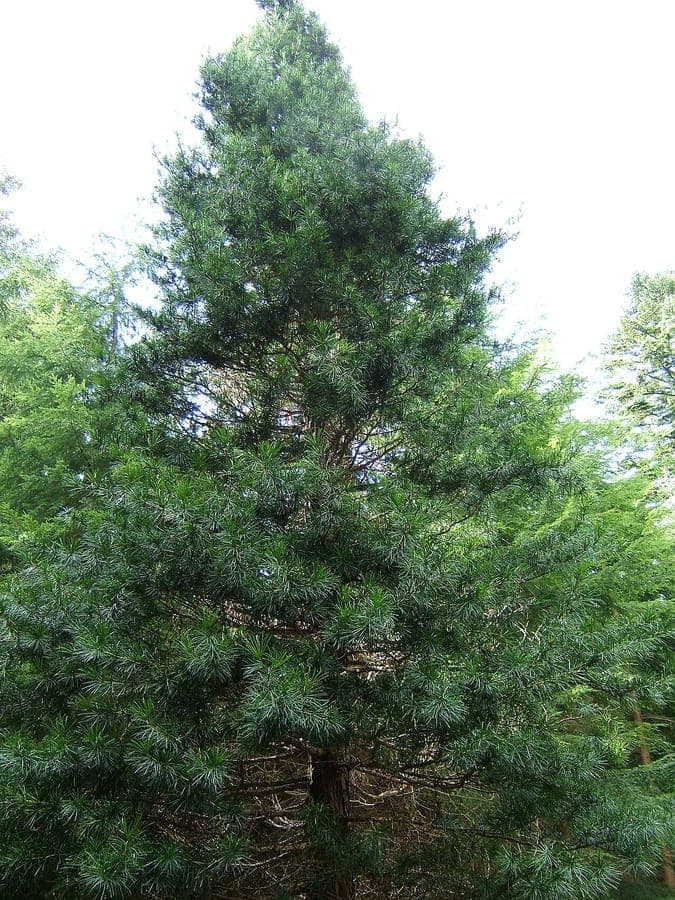
No machine-readable author provided. MPF assumed (based on copyright claims). / CC BY 2.5, via Wikimedia Commons
Sciadopitys verticillata: complete guide
Sciadopitys verticillata
¿Quieres ver Sciadopitys verticillata: complete guide en tu jardín?
1 minuto, sin tarjeta de crédito
Overview
Sciadopitys verticillata, known as Japanese umbrella pine or koya-maki, is an exceptional conifer from Japan. This tree is renowned for its distinctive needles arranged in characteristic umbrella or parasol-like whorls. With its elegant silhouette and slow growth, it is a precious addition to gardens seeking a refined Japanese aesthetic. This tree is truly a showstopper for plant enthusiasts.
Appearance and bloom
The Japanese umbrella pine grows slowly into a pyramidal or columnar form reaching 10-25 meters in height. The most striking feature is the needle arrangement in horizontal whorls of 8-12 needles, creating a completely unique structure. The needles are fine, green, and give the tree an extremely delicate appearance. The bark is reddish-brown. Small red cones may develop in warm years but usually remain inconspicuous.
Ideal location
This tree grows best in a sheltered location with partial shade to full sun. It prefers a spot with good air circulation but protected from strong winds. In European climates, a south to west-facing position is ideal. Avoid hot, dry locations directly south-facing. Once established, this tree is fairly wind-tolerant.
Soil
Sciadopitys verticillata requires well-draining, acidic to neutral soil. A pH between 5.5 and 7.0 is optimal. The tree prefers rich, humus-laden earth with good structure. Sand or loam mixed with abundant organic matter works well. Add brown peat or leaf mold at planting time. Drainage is essential - the tree does not tolerate waterlogged soil.
Diseño gratis
¿Quieres ver Sciadopitys verticillata: complete guide en tu jardín? Crea un diseño gratis ahora.
Watering
Regular watering is necessary during the first growing season, especially in dry periods. An established tree tolerates normal rainfall well but grows better with consistent (not excessive) moisture. Ensure water drains properly. Heavy rains are not problematic as long as the soil does not become stagnant. Provide supplemental water during exceptionally dry years.
Pruning
Minimal pruning is required. This tree grows naturally elegant and symmetrical. Remove only dead, diseased, or damaged branches. Light shaping may occur in spring, but excessive pruning damages the natural form. Allow the tree to retain its characteristic shape.
Maintenance calendar
Spring: Inspect for diseases, add humus at the base, light thinning of branches. Summer: Water regularly during dry spells, maintain shade. Autumn: Cleanup around the tree. Winter: Protection against heavy snow loads.
Winter hardiness
Sciadopitys verticillata is fairly winter-hardy (zones 6-8) but prefers a sheltered location. In harsh winters, needles may discolor, but this is usually not permanent. Newly planted trees need winter protection. Mulch the base generously for extra protection against extreme frost.
Companion plants
Plant this tree with other shade-tolerant plants like rhododendrons, hydrangeas, and Japanese maples. Low groundcovers such as mosses and sedges work well around the base. Avoid strong competition from other large trees. This is a solitary plant requiring adequate space.
Closing
Sciadopitys verticillata is a beautiful and distinctive tree that brings subtle elegance and refined structure to the garden. Its slow growth and unique needles make it a valuable element. Available from specialized tree nurseries. Discover more plant information at gardenworld.app/en.
¿Quieres ver Sciadopitys verticillata: complete guide en tu jardín? Crea un diseño gratis ahora.
Sube una foto, elige un estilo y obtén un diseño fotorrealista con lista de plantas en menos de un minuto.
Más de 10.000 jardines diseñados
Sin tarjeta de crédito


Plantas similares
Acer pycnanthum: complete guide
Acer pycnanthum
Acer pycnanthum, the Japanese swamp maple, is a fast-growing tree with early red flowers and brilliant autumn color, ideal for damp garden settings.
Freeman maple: complete guide
Acer × freemanii
Everything about the Freeman maple (Acer x freemanii): a fast-growing shade tree with spectacular autumn colour for large gardens.
Silver vine: complete guide
Actinidia polygama
Discover silver vine (Actinidia polygama): a hardy climbing plant with silvery foliage, loved by gardeners and cats alike.