
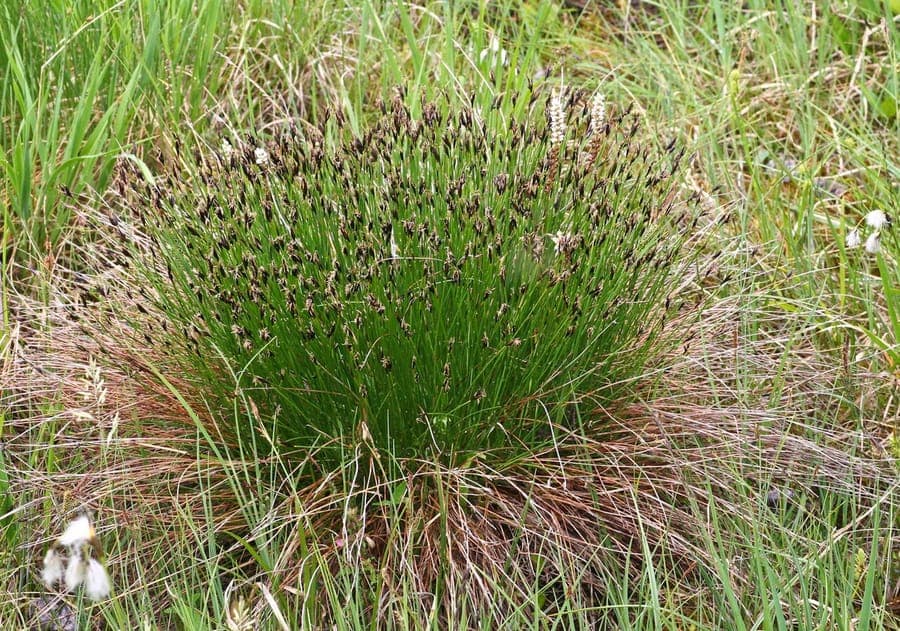
Ragnhild&Neil Crawford from Sweden / CC BY-SA 2.0, via Wikimedia Commons
Brown bog-rush: complete guide
Schoenus ferrugineus
¿Quieres ver Brown bog-rush: complete guide en tu jardín?
1 minuto, sin tarjeta de crédito
Brown Bog-Rush: Complete Guide
Overview
The Brown Bog-Rush (Schoenus ferrugineus), also known as Rusty Bog-Rush, is a delicate and elegant marsh flower from the Cyperaceae family. This plant is endemic to Europe and prefers to grow in wet, acidic marshes. Despite its small stature, this plant is an important part of very specific marsh ecosystems.
This plant is less well-known than many other garden plants, but offers unique value to lovers of rare and native flora. It grows best in wet, acidic conditions and can be a charming addition to special water gardens.
Appearance & Bloom
The Brown Bog-Rush is a small to medium plant that typically grows 15-50 cm tall. The plant displays fine, stiff, branched stems with small, drooping leaves. This gives it a characteristic appearance that is immediately recognizable.
The flowers appear as small, rust-red spikelets at the tops of the stems. These flowers are subtle but have their own delicate beauty. The flowering period is in summer, making it a seasonal attraction.
The plant forms dense clumps and can form small groups in marsh landscapes. This growth pattern makes it suitable for natural marsh projects and wild gardens.
Ideal Location
The Brown Bog-Rush thrives best in very wet, acidic marshes with a pH below 5.5. This plant's preference for acidic conditions places it outside the reach of many standard gardens, though specialized wetland gardens can accommodate it perfectly.
The plant feels at home in areas with full sun to partial shade. It accepts shallow water and permanent water saturation. In drier seasons, it still accepts moist conditions.
Protection from strong winds is beneficial given the delicate nature of the plant.
Diseño gratis
¿Quieres ver Brown bog-rush: complete guide en tu jardín? Crea un diseño gratis ahora.
Soil Requirements
The Brown Bog-Rush requires very acidic, wet soils. A pH of 4.5-5.5 is ideal, though it can thrive up to pH 6.0. The soil must be permanently wet with low nutrient levels. These specific requirements make it less suitable for standard gardens.
Organic, acidic sediments or peaty soils are perfect. The soil must not be fertilized, as the plant is adapted to nutrient-poor conditions.
Watering
The plant requires permanently wet conditions. Ensure the soil always remains saturated. Standing water is acceptable, even preferred. The plant does not accept dry periods.
In artificial marsh projects, rainwater or additional water purification can be used to maintain acidity.
Pruning
Pruning is not necessary. The plant is small and maintenance-free. Dead stems can be removed in spring.
Maintenance Calendar
The maintenance calendar is simple:
- Spring: Remove dead stems
- Summer: Monitor water status
- Fall: Preparation for winter
- Winter: Minimal maintenance, prevent ice formation
Winter Hardiness
The Brown Bog-Rush is very winter-hardy and can survive under ice. The plant regrows from roots in spring.
Companion Plants
The Brown Bog-Rush grows well with:
- Peatmoss roots
- Acidic water vegetation
- Drosera species (sundew)
- Other acidic marsh endemics
Closing
The Brown Bog-Rush is a special plant for lovers of rare, native flora. Its requirements for very acidic, wet conditions make it unsuitable for all gardens, but it can be a fascinating addition to specialized marsh projects. Visit gardenworld.app for more tips on wild gardens. Also discover gardenworld.app/en.
¿Quieres ver Brown bog-rush: complete guide en tu jardín? Crea un diseño gratis ahora.
Sube una foto, elige un estilo y obtén un diseño fotorrealista con lista de plantas en menos de un minuto.
Más de 10.000 jardines diseñados
Sin tarjeta de crédito


Plantas similares
Flat-stemmed club-rush: complete guide
Bolboschoenus planiculmis
Everything about Bolboschoenus planiculmis: growing conditions, watering, care, and use as a pond margin or wetland plant in garden design.
Great Plains flatsedge: complete guide
Cyperus lupulinus
Everything about Great Plains flatsedge (Cyperus lupulinus): growing conditions, care, garden uses, and ecological value. Tips for pond margins and dry sandy soils.
Golden beak sedge: complete guide
Rhynchospora corymbosa
Everything about golden beak sedge (Rhynchospora corymbosa): a dramatic tropical marginal for pond edges, bog gardens, and wet habitats.