
O Tupinólogo / CC BY 4.0, via Wikimedia Commons
Brazilian Pepper Tree: Complete Guide
Schinus terebinthifolia
¿Quieres ver Brazilian Pepper Tree: Complete Guide en tu jardín?
1 minuto, sin tarjeta de crédito
Brazilian Pepper Tree: Complete Guide
Overview
The Brazilian Pepper Tree (Schinus terebinthifolia) is a fascinating plant native to Brazil and adjacent regions. This beautiful tree is renowned for its ornamental value, stunning red berries, and versatile applications in gardens. The plant belongs to the Anacardiaceae family and is a popular choice for gardening enthusiasts seeking to add tropical elegance to their outdoor spaces.
This specimen grows into medium-sized trees and creates a beautiful hedge structure. Its robust nature makes it suitable for various climate zones, though it prefers warm weather.
Appearance & Bloom
The Brazilian Pepper Tree displays an impressive growth pattern with anticipated summer flowering. The plant produces small, subtle flowers that form in clusters. However, the real spectacle occurs when the berries appear.
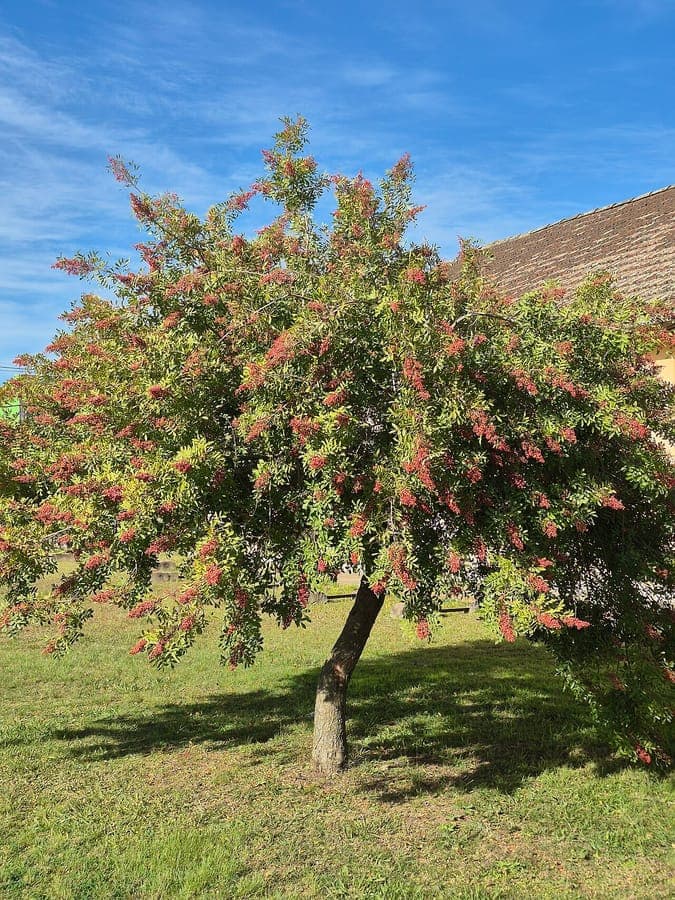
The fruits are bright red to pink in color and appear in rich bundles on the branches. These berries give the tree a spectacular appearance, especially against a blue sky. The glossy, dark green leaves form the perfect contrast with the bright fruits, making this specimen a fantastic choice for creating visual interest.
The leaves are compound and give the tree a delicate, almost filigree appearance when caught in the light. This foliage makes it an elegant showstopper in any garden.
Ideal Location
The Brazilian Pepper Tree feels most at home in locations with full sunlight. This ensures the plant grows optimally and can achieve rich flowering. Aim for a spot where at least 6 hours of direct sunlight is available.
While sunny is ideal, the plant can also grow in partial shade, though this may result in fewer flowers and berries. Ensure the plant is protected from strong winds, as these can damage the leaves.
Plant the specimen in a location where it can grow to its full potential, as it can become quite large. This makes it suitable for larger gardens or as an accent tree.
Soil Requirements
The Brazilian Pepper Tree is not overly particular about soil conditions but prefers well-draining soils. Poor drainage is a significant risk factor and can lead to root rot. Add organic matter to the soil before planting.
A pH of neutral to slightly acidic (6.0-7.0) is ideal. Heavy clay soils can be improved by adding sand or perlite. The plant tolerates lean soils, so nutrient-rich soils are not necessarily needed, though moderate nutrition will promote growth.
Diseño gratis
¿Quieres ver Brazilian Pepper Tree: Complete Guide en tu jardín? Crea un diseño gratis ahora.
Watering
Water the Brazilian Pepper Tree regularly, especially during dry periods. Young plants require more water than established specimens. Ensure the soil is moist but not waterlogged.
Once established, this tree is quite drought-tolerant and can survive extended dry periods without additional water. In regions with regular rainfall, supplemental watering is usually unnecessary.
In winter, water requirements may decrease. Check soil moisture and adjust accordingly.
Pruning
Pruning is not always necessary, but it helps maintain the tree's shape. If you wish to promote more compact growth, prune in spring before new growth begins.
Remove any dead, diseased, or damaged branches as soon as possible. This promotes the overall health of the plant. Thin out excessive branches to create an open crown structure, allowing air and light to penetrate better.
When pruning, use disinfected tools to prevent spreading disease.
Maintenance Calendar
The maintenance calendar helps you stay on track with periodic tasks:
- Spring: Fertilizer application and structural pruning
- Summer: Regular watering and pest monitoring
- Fall: Fertilization and winter preparation
- Winter: Minimal maintenance, water only as needed
Winter Hardiness
The Brazilian Pepper Tree is less winter-hardy than some other species. In areas with frost, protect the plant against temperatures below 0 degrees Celsius. Mulch around the root zone to protect the roots.
In colder climates, it may be beneficial to grow the plant in a pot and bring it indoors when frost threatens. Fortunately, this specimen is reasonably compact and can be moved easily.
Companion Plants
The Brazilian Pepper Tree grows well in combination with other tropical plants. Good companions include:
- Mandarin trees for contrast
- Orchids that enjoy the partial shade it creates
- Tropical groundcover for texture
- Other red-flowering shrubs for color harmony
Closing
The Brazilian Pepper Tree is a wonderful plant that combines elegance with practical value. Its beautiful appearance, durability, and relative ease of care make it an excellent choice for both experienced gardeners and beginners.
Whether you are looking for a tree to beautify your garden or simply want to add a tropical touch, the Brazilian Pepper Tree offers everything you need. With the right location, soil, and care, this plant will provide years of beauty. Visit gardenworld.app for more inspiration and tips for creating your dream garden. Also discover gardenworld.app/en for local advice.
¿Quieres ver Brazilian Pepper Tree: Complete Guide en tu jardín? Crea un diseño gratis ahora.
Sube una foto, elige un estilo y obtén un diseño fotorrealista con lista de plantas en menos de un minuto.
Más de 10.000 jardines diseñados
Sin tarjeta de crédito


Plantas similares
Skunkbush sumac: complete guide
Rhus trilobata
Everything about Rhus trilobata: siting, soil, autumn colour, pruning, and how this tough ornamental shrub earns a place in any garden.
Winged sumac: complete guide
Rhus copallinum
Everything about Rhus copallinum, the winged sumac with spectacular autumn colour. Location, pruning and garden value in full detail.
Aromatic sumac: complete guide
Rhus aromatica
Full guide to aromatic sumac (Rhus aromatica): planting, soil, care, pruning and companion plants for dry, sunny gardens and slope stabilisation.