
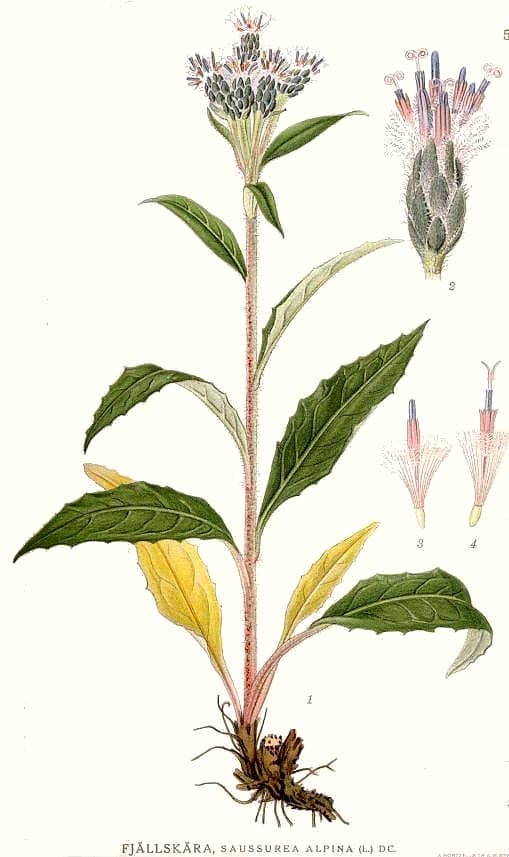
Carl Axel Magnus Lindman / Public domain, via Wikimedia Commons
Alpine saw-wort: complete guide
Saussurea alpina
¿Quieres ver Alpine saw-wort: complete guide en tu jardín?
1 minuto, sin tarjeta de crédito
Overview
The Alpine saw-wort (Saussurea alpina) is a fascinating alpine herb from the Asteraceae family. This plant grows naturally in mountain regions across Europe to Siberia. With its purple flowers and compact growth habit, it's ideal for rock gardens, alpine troughs, and specialist plant collections. Gardeners who enjoy cultivating challenging alpine species will appreciate this unique plant.
Appearance and Bloom
Saussurea alpina grows as a compact rosette with narrow, lance-shaped leaves. The plant reaches approximately 15-30 centimeters in height. Purple to reddish-purple flowers appear in short inflorescences from July to September. The flowers form attractive seed heads after blooming. All plant parts are adapted to alpine environments with short growing seasons.
Ideal Location
Saussurea alpina thrives in full sun locations in alpine or rock gardens. At least 8 hours of direct sun daily is necessary. The plant can tolerate partial shade in very hot, dry regions. Place the plant in elevated areas or slopes where water drains quickly. Wind is not problematic - alpine plants are adapted to windy environments.
Soil
Good drainage is crucial. Saussurea alpina does not do well in standard garden soil. Use a mixture of sharp sand, perlite, and gravel (40-50 percent) mixed with peat moss (30-40 percent) and compost (10-20 percent). The pH range is 6.5-7.0. Better results in pots with specialized alpine plant mix. Ensure no water accumulates around the plant crown - this causes rot.
Watering
Saussurea alpina should be watered moderately during the growing period (May to October). Let the soil dry slightly between waterings. Excess water is the main cause of plant death. Water in the morning, not evening. In winter, when the plant is dormant, give almost no water. Only provide small amounts if the soil becomes completely dry. Ensure ventilation to minimize moisture problems.
Diseño gratis
¿Quieres ver Alpine saw-wort: complete guide en tu jardín? Crea un diseño gratis ahora.
Pruning and Maintenance
Minimal pruning is needed. Remove faded flower heads to prevent excessive self-seeding. Dead leaves can be gently removed. The plant itself forms an attractive mound and needs no active pruning. A layer of gravel around the plant helps water drainage and prevents root rot.
Maintenance Calendar
Spring: Begin moderate watering as growth starts. Check for slugs and insects. Summer: Water moderately; deadhead flowers. Fall: Reduce watering as season progresses. Winter: Minimal water; check for moisture problems. Light mulching helps.
Winter Hardiness
Saussurea alpina is fully hardy in alpine regions to USDA zone 2 (-40 degrees Celsius). It tolerates frost and snow without problem. However, the plant is sensitive to winter wet conditions. Ensure excellent drainage and prevent waterlogging. Protect if needed with glass or plastic in exceptionally wet winters.
Companion Plants
In rock gardens, combines well with other alpine flowers like Saxifraga, Sempervivum, and Dianthus. Groundcover with sedums works well. Avoid strong competitors that would overgrow the weaker Saussurea. Well-suited for trough culture with other alpines.
Conclusion
The Alpine saw-wort is a rewarding plant for specialist gardeners interested in cultivating alpine flora. With well-drained soil and careful management, this interesting mountain plant will provide years of enjoyment. Find seeds or small plants from specialized alpine nurseries. Discover more on gardenworld.app about alpine and rock gardens.
Extra Culture Points
Seed propagation is the easiest method - seeds need cold stratification. Growing from seed takes 2-3 years to flowering. Pot upsize carefully - these plants dislike frequent disturbance. In very wet climates, pot culture may give better results. Winter drainage is essential; use sand and gravel.
¿Quieres ver Alpine saw-wort: complete guide en tu jardín? Crea un diseño gratis ahora.
Sube una foto, elige un estilo y obtén un diseño fotorrealista con lista de plantas en menos de un minuto.
Más de 10.000 jardines diseñados
Sin tarjeta de crédito


Plantas similares
Calendula stellata: complete guide
Calendula stellata
Complete guide to Calendula stellata, the star-flowered marigold from Sicily: location, soil, watering and companion planting tips.
Korean chrysanthemum: complete guide
Chrysanthemum x rubellum
Chrysanthemum x rubellum is a hardy autumn perennial with single pink to copper flowers from August to November. Care and combinations.
Helianthus divaricatus: complete guide
Helianthus divaricatus
Helianthus divaricatus is a North American woodland sunflower with yellow summer blooms, ideal for naturalistic borders and shady edges.