
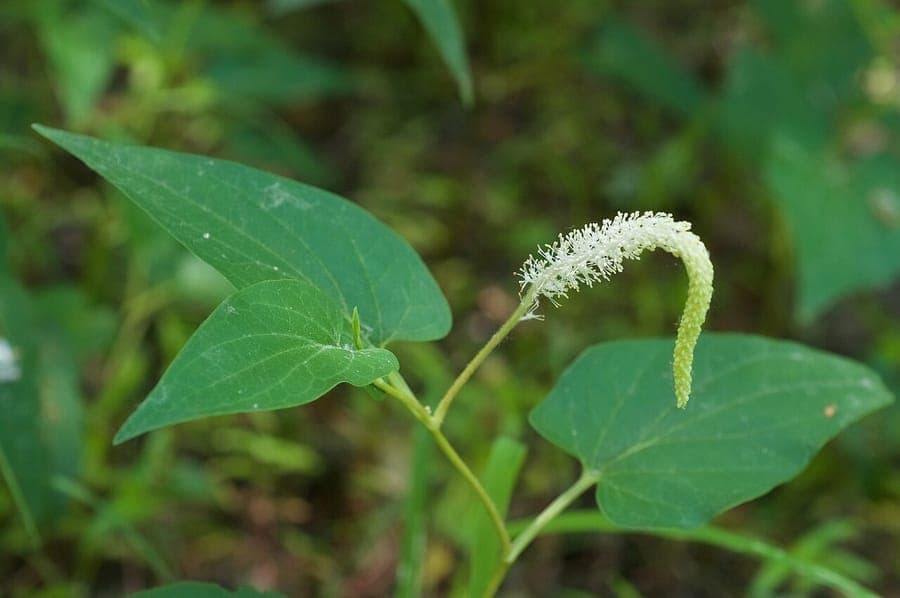
Eric Hunt / CC BY-SA 4.0, via Wikimedia Commons
Lizard's-tail (Saururus cernuus): complete guide
Saururus cernuus
¿Quieres ver Lizard's-tail (Saururus cernuus): complete guide en tu jardín?
1 minuto, sin tarjeta de crédito
Overview
Lizard's-tail (Saururus cernuus) is a remarkable native plant from the Saururaceae family, native to eastern United States through Mexico. This elegant plant is renowned for its characteristic drooping (cernuous) white flower spikes that resemble lizard's tails. The plant grows in wet, marshy habitats and is essential for wetland gardens and water-loving landscapes. With its heart-shaped leaves and long-lasting white flowers, it brings grace to water edges.
Appearance and Bloom
Lizard's-tail grows as an elegant, upright herb reaching about 60 to 90 centimeters tall. The plant produces large, heart-shaped leaves that grow in clusters along the stems. The characteristic white flower spikes (spikelets) droop gracefully, giving the plant its name. These flowers appear in June and remain flowering through August, providing long periods of interest. The flower spikes darken as they mature.
Ideal Location
Lizard's-tail grows best in partial to full shade, making it ideal for water edge zones. Ensure at least 2-3 hours of light daily. The plant tolerates full sun but appears fuller and healthier in lightly shaded areas. Position the plant in a moist to wet spot near water, where roots can regularly be reached by water.
Soil
Lizard's-tail grows in consistently moist to wet soils. The plant tolerates water-logged ground and can grow in shallow water. It grows best in rich soils containing organic matter. In temperate gardens, compost or muddy material can be added to the plant. The plant also grows well in pure water hydroponic systems.
Diseño gratis
¿Quieres ver Lizard's-tail (Saururus cernuus): complete guide en tu jardín? Crea un diseño gratis ahora.
Watering
Keep soil always moist to wet. This is essential for optimal growth. Water can be directly to several centimeters deep where the plant grows. Watering is needed during dry periods. The plant appreciates higher relative humidity and may disappear in dry, hot conditions. In containers the pot should be placed in a water tray.
Pruning
Pruning is minimally needed. Remove dead stems in late fall or early spring after the plant has died back. Some maintenance as needed, but the plant will usually form itself naturally. Remove only damaged or diseased parts.
Maintenance Calendar
April: Young leaves appear as temperatures rise. May-June: Growth accelerates and flower spikes begin appearing. June-August: Flowering and full flower production. September-October: Leaves begin turning color. November-March: Plant goes dormant, stems die back.
Winter Hardiness
Lizard's-tail is hardy in temperate climates and survives temperatures down to about -20 degrees Celsius. The plant loses its leaves in fall and regrows from roots in spring. In very cold regions, mulching around the plant in fall can help provide protection.
Companion Plants
Combine lizard's-tail with other wetland plants such as pickerelrush and water mint. Iris varieties add vertical interest. Dark-leaved hostas create contrasts. For larger wetland landscape, combine with other water-loving native plants such as trillium and Solomon's seal.
Conclusion
Lizard's-tail is a must-have for those wanting to create wetland and water gardens. With its distinctive flowers and natural elegance, this plant brings much character to wet, marshy gardens. Once established, it provides years of beauty with minimal maintenance requirements.
Availability: Available at garden centers with good water plant sections. Seek native plant specialists or water gardens.
¿Quieres ver Lizard's-tail (Saururus cernuus): complete guide en tu jardín? Crea un diseño gratis ahora.
Sube una foto, elige un estilo y obtén un diseño fotorrealista con lista de plantas en menos de un minuto.
Más de 10.000 jardines diseñados
Sin tarjeta de crédito


Plantas similares
Acer pycnanthum: complete guide
Acer pycnanthum
Acer pycnanthum, the Japanese swamp maple, is a fast-growing tree with early red flowers and brilliant autumn color, ideal for damp garden settings.
Freeman maple: complete guide
Acer × freemanii
Everything about the Freeman maple (Acer x freemanii): a fast-growing shade tree with spectacular autumn colour for large gardens.
Silver vine: complete guide
Actinidia polygama
Discover silver vine (Actinidia polygama): a hardy climbing plant with silvery foliage, loved by gardeners and cats alike.