
Kurt Stüber [1] / CC BY-SA 3.0, via Wikimedia Commons
Winter savory: complete guide
Satureja montana
¿Quieres ver Winter savory: complete guide en tu jardín?
1 minuto, sin tarjeta de crédito
Overview
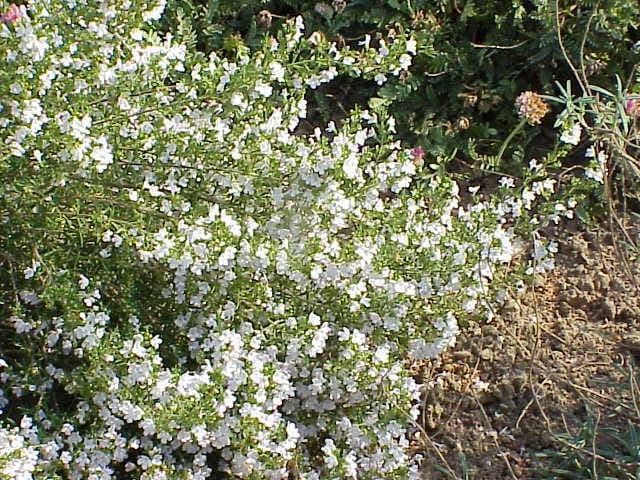
Winter savory (Satureja montana) is a hardy, perennial herb native to Southern and Central Europe through Lebanon. This robust herb is also known as mountain mint and belongs to the Lamiaceae family. Unlike summer savory, winter savory is cold-hardy and will remain in your garden for many years. The plant forms a compact, dense shrub with fine, narrow leaves and countless small flowers in white to purple.
Winter savory is ideal for gardeners who want to enjoy the same herb for years without having to resow annually. It is a low-maintenance plant that is also very ornamental and lends itself well to borders, medicinal gardens and container cultivation. The flavor is intense and more refined than many other herbs, making it popular in Mediterranean and Italian cooking.
Appearance and bloom cycle
Winter savory reaches a height of 20 to 40 centimeters and forms a neat, dense shrub. The leaves are linear, fine and stiff, about 0.5 to 1 centimeter long, and have a dark green color that is retained even in winter. The plant is therefore attractive year-round.
Flowers appear from July through September and are small, about 5 millimeter flowers in white to lilac-purple. They grow in dense spikes along the tops of the stems and attract many pollinators. The plant also emits a pleasant aromatic scent.
Ideal location
Winter savory loves sun to partial shade. Plant it in a sunny or partially shaded spot where it receives at least 4 to 6 hours of direct sunlight daily. Although the plant tolerates partial shade, it grows stronger and flowers more abundantly in full sun. In very warm, dry locations, some afternoon shade can prevent it from drying out.
In pots, you can place winter savory anywhere it gets some light. It is also suitable for window boxes and planters, although full sun is preferable.
Soil requirements
Winter savory grows best in well-draining, dry to moderately moist soil. It does not tolerate heavy clay soil with stagnant water. Improve heavy soil by adding sand and gravel. For container growing, use well-draining potting soil with some added sand.
The plant is not demanding regarding nutrients and grows well on poor soil. Adding compost or slow-release fertilizer in spring is sufficient.
Diseño gratis
¿Quieres ver Winter savory: complete guide en tu jardín? Crea un diseño gratis ahora.
Watering
Winter savory is very drought-tolerant once established. Water new plants regularly during the first year until they are well-rooted. After that, you hardly need to water the herb again, unless it is extremely dry.
In containers, you will need to water more frequently. Be careful not to overwater, as wet feet can lead to root rot. Water only when the soil surface feels dry.
Pruning and maintenance
Prune winter savory in spring back to about one-third of its height to maintain a dense, compact plant. After pruning, the herb regrows quickly. You can harvest small tips throughout the year for kitchen use, which automatically promotes branching.
Remove dead or damaged stems regularly. After flowering, you can prune the plant again to maintain density and prevent it from becoming thin.
Maintenance calendar
Spring (March-May): Prune to desired shape. Apply compost as top dressing. Water regularly until the plant is well-rooted.
Summer (June-August): Harvest tips regularly. Check that the herb does not dry out in extremely dry periods. Deadhead spent flowers.
Autumn (September-October): Reduce watering. Prepare the plant for winter. Pruning can prevent the herb from becoming too long and thin.
Winter (November-February): Winter savory remains green. In very severe winters, protection with straw can help. Water very sparingly.
Winter hardiness
Winter savory is cold-hardy to about -15 degrees Celsius and grows well in temperate regions. It remains green year-round and is therefore also decorative in winter. In very severe winters and with heavy snow, some protection with straw or fallen leaves can help, but this is usually not necessary.
Companion plants
Winter savory grows well with other cold-hardy herbs and Mediterranean plants such as oregano, thyme, rose and lavender. In borders, you can combine it with saxifrage and other alpine plants. In pots, it works well with other hardy herbs.
In the vegetable garden, you can place it alongside vegetables where it can provide some pest deterrence.
Closing
Winter savory is a fantastic cold-hardy herb for any garden. It grows easily, requires minimal maintenance and provides years of flavor and beauty. Whether you want to create a Mediterranean garden or simply seek a few attractive herbs, winter savory is an excellent choice. Purchase your plant from garden centers, and enjoy this wonderful herb for years to come.
Want to learn more about cold-hardy herbs? Visit gardenworld.app for inspiration and design your own herb paradise. On gardenworld.app you'll find ideas for combining hardy herbs with other plants.
¿Quieres ver Winter savory: complete guide en tu jardín? Crea un diseño gratis ahora.
Sube una foto, elige un estilo y obtén un diseño fotorrealista con lista de plantas en menos de un minuto.
Más de 10.000 jardines diseñados
Sin tarjeta de crédito


Plantas similares
Apple mint (Mentha x villosa): complete guide
Mentha x villosa
Meet apple mint (Mentha x villosa): a fruity-scented kitchen herb with woolly leaves, perfect for tea and mojitos.
Salvia peyronii: complete guide
Salvia peyronii
Discover Salvia peyronii, a rare Lebanese mountain sage. Growing tips, hardiness, and companion planting for a Mediterranean gravel garden.
Bigleaf mint (Mentha x rotundifolia): complete guide
Mentha x rotundifolia
Discover bigleaf mint: cultivation, care tips, and garden uses. Learn how to grow this aromatic herb with soft, hairy leaves.