
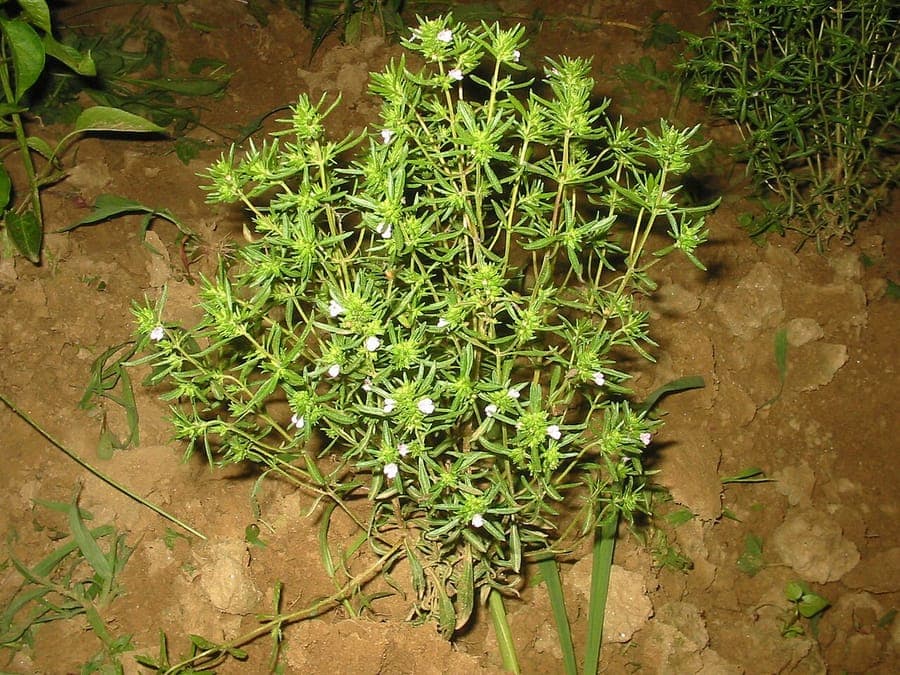
No machine-readable author provided. Bogdan assumed (based on copyright claims). / CC BY-SA 3.0, via Wikimedia Commons
Savory: complete guide
Satureja hortensis
¿Quieres ver Savory: complete guide en tu jardín?
1 minuto, sin tarjeta de crédito
Overview
Summer savory (Satureja hortensis) is an annual herb native to Southeast Europe and Southwest Siberia. It is also known as bean herb and is a beloved culinary herb in Mediterranean cooking. The plant grows compactly and forms a beautiful mound with fine, narrow leaves and countless small flowers in white to purple shades. Summer savory has a strong, aromatic scent reminiscent of oregano and thyme, with refined herbaceous notes.
This herb is perfect for gardeners who enjoy fresh culinary herbs and prefer low-maintenance plants. Summer savory is ideal for container gardening on balconies or patios and grows equally well in window box planters. The flavor is intense and more refined than many other herbs, making it popular in Italian and French recipes.
Appearance and bloom cycle
Summer savory reaches a height of approximately 30 to 50 centimeters and forms a neat, bushy mound. The leaves are linear, fine and thin, about 1 to 2 centimeters long, with a fresh green color. They are densely arranged along the stems and give the plant a delicate appearance.
Flowers appear from July and bloom continuously until October. They are small, about 5 millimeters, and grow in clusters along the upper stems. The flowers are white or lilac-purple and attract many pollinators. The entire plant emits a pleasant aromatic scent, especially when brushed against.
Ideal location
Summer savory loves sunshine and requires at least 6 to 8 hours of direct sunlight daily. Plant it in a sunny spot where the plant can maximize warmth. This also stimulates the aromatic oils in the herb and intensifies the flavor. The plant is undemanding regarding location, as long as it receives sufficient sunlight.
The plant grows perfectly in small pots on your balcony or terrace. Place pots in a sunny spot, preferably where they receive some afternoon shade. During very hot periods, some afternoon shade can prevent the soil from drying too quickly.
Soil requirements
Summer savory grows best in well-draining soil. Light, sandy or loamy soil is ideal. Ensure water cannot stagnate around the roots, as this leads to root rot. You can easily use potting soil for container growing, optionally amended with sand or perlite.
The plant is not demanding regarding nutrients. Standard potting soil with moderate nutritional value is sufficient. Do not add excessive fertilizer, as this can compromise the aromatic intensity of the herb.
Diseño gratis
¿Quieres ver Savory: complete guide en tu jardín? Crea un diseño gratis ahora.
Watering
Summer savory should not dry out completely, but also must not become waterlogged. Water regularly when the soil surface feels dry. On warm summer days, this may be necessary daily, especially for container plants. Check potted plants at least once daily.
During rainy periods, no supplemental watering is needed. In extremely hot and dry conditions, you can mist the plant several times daily to increase humidity. This also helps prevent spider mites.
Pruning and maintenance
Pinch back the tops of young plants regularly (when they are about 10 centimeters tall) to obtain a fuller, bushier plant. This stimulates the development of side shoots. You can also regularly harvest small tops for kitchen use, which automatically promotes branching.
Remove spent flowers to extend the blooming period. This also prevents the plant from expending excessive energy on seed production. During the growing season, you can harvest 30 to 50 percent of the plant without problems for kitchen use.
Maintenance calendar
Spring (March-May): Sow seeds directly in the ground or in pots. Do not apply excessive fertilizer. Ensure adequate water and sunshine.
Summer (June-August): Water regularly, especially during dry periods. Harvest tops regularly. Monitor for pests.
Autumn (September-October): Harvest in early morning for optimal flavor and aroma. The plant dies back as temperatures cool.
Winter (November-February): Summer savory is an annual and does not survive frost. Sowing can begin again in spring.
Winter hardiness
Summer savory is not cold-hardy and is only suitable for annual cultivation. The plant dies when exposed to the first frost. However, this is not a problem, since the herb is intended for summer cultivation. Plant it only after the last frost in spring.
Companion plants
Summer savory grows well with other sun-loving plants and Mediterranean herbs such as oregano, thyme and rosemary. In the vegetable garden, you can place it alongside tomatoes, peppers and eggplant, where it can provide some pest deterrence.
In pots, you can combine summer savory with other summer herbs or with flowers that love full sun, such as lavender or sunflowers. Ensure all plants have similar water and humidity requirements.
Closing
Summer savory is a practical herb for every gardener who loves fresh herbs. It grows easily, requires minimal maintenance and provides months of delicious harvests. Whether you have a large vegetable garden or just a few pots on your balcony, summer savory fits perfectly in your kitchen gardens. Purchase seeds from garden centers, and enjoy this wonderful herb throughout the summer.
Want to learn more about herb gardening? Visit gardenworld.app for inspiration and design your own herb garden. On gardenworld.app you'll find ideas for combining herbs with vegetables and flowers.
¿Quieres ver Savory: complete guide en tu jardín? Crea un diseño gratis ahora.
Sube una foto, elige un estilo y obtén un diseño fotorrealista con lista de plantas en menos de un minuto.
Más de 10.000 jardines diseñados
Sin tarjeta de crédito


Plantas similares
Apple mint (Mentha x villosa): complete guide
Mentha x villosa
Meet apple mint (Mentha x villosa): a fruity-scented kitchen herb with woolly leaves, perfect for tea and mojitos.
Salvia peyronii: complete guide
Salvia peyronii
Discover Salvia peyronii, a rare Lebanese mountain sage. Growing tips, hardiness, and companion planting for a Mediterranean gravel garden.
Bigleaf mint (Mentha x rotundifolia): complete guide
Mentha x rotundifolia
Discover bigleaf mint: cultivation, care tips, and garden uses. Learn how to grow this aromatic herb with soft, hairy leaves.