
Randy Everette / CC BY-SA 3.0, via Wikimedia Commons
Sassafras: complete guide
Sassafras albidum
¿Quieres ver Sassafras: complete guide en tu jardín?
1 minuto, sin tarjeta de crédito
Overview
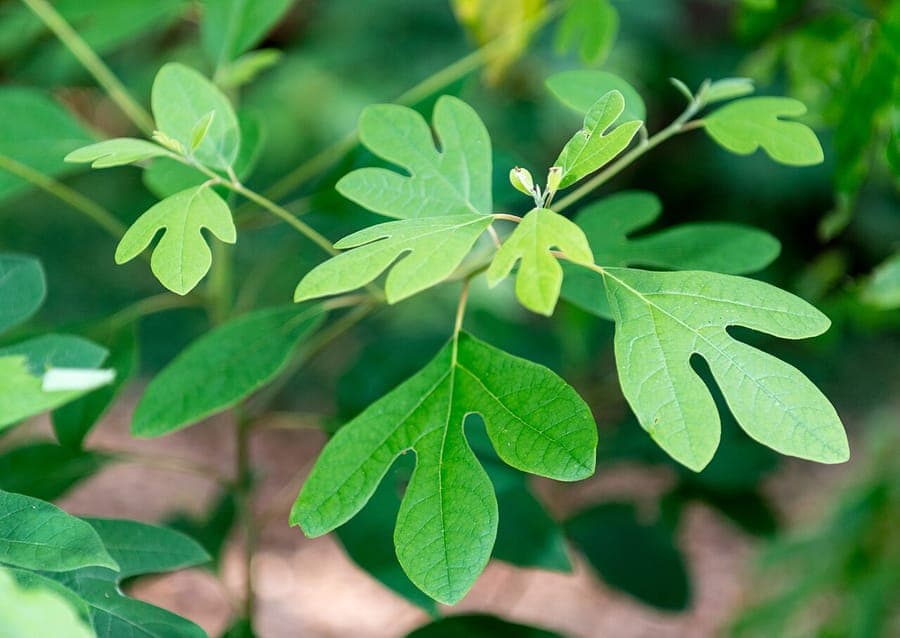
The Sassafras (Sassafras albidum) is a beautiful deciduous tree native to eastern North America. This tree is renowned for its remarkable leaves which come in three different shapes on the same tree - some unlobed, some with two lobes, and some with three lobes. In autumn, the foliage transforms into spectacular yellows, oranges, reds, and deep purples. With its interesting form and seasonal beauty, Sassafras is an excellent choice for larger gardens.
Appearance and Growth
Sassafras albidum is a striking tree that can reach 6 to 10 meters in height. The leaves are the most distinctive feature: some are entire, others have two lobes, and still others have three lobes (hence the nickname "mitten tree"). Autumn coloration is spectacular with combinations of yellow, orange, red, and purple. In spring, small yellow flowers appear before the leaves fully emerge. Female trees produce dark blue berries in autumn that birds love to eat.
Ideal Location
Sassafras thrives in sunny to partially shaded locations. At least 4-5 hours of direct sun daily is required for optimal growth and fall color. The tree needs space to fully develop, so avoid planting it too close to houses or other large trees. A standalone position allows the full silhouette to be appreciated, which is particularly stunning in autumn.
Soil
Sassafras is not particularly fussy about soil types and grows well in both acidic and neutral soils with a pH of 4.5 to 7.3. The tree prefers well-drained, moderately moist soil. Heavy clay or permanently wet soil should be avoided. Adding organic material (compost, leaf mold) when planting improves soil structure and water availability. Once established, Sassafras trees are quite drought-tolerant.
Watering
After planting, Sassafras should be watered regularly until the root system is fully established (1-2 years). Water deeply and evenly through dry periods. Once established, Sassafras trees tolerate moderate drought well. In extremely dry years, supplemental watering is beneficial, especially for young trees. Avoid waterlogging, particularly in early years.
Diseño gratis
¿Quieres ver Sassafras: complete guide en tu jardín? Crea un diseño gratis ahora.
Pruning and Maintenance
Sassafras requires minimal pruning. Remove only dead, broken, or diseased branches. The tree has a naturally attractive growth pattern and rarely needs formal shaping. If maintaining as a specimen tree, lower side branches can gradually be removed to expose the trunks. Prune preferably in late winter when the tree is dormant.
Maintenance Calendar
Spring: Check for winter damage. Remove dead wood. Summer: Water during dry periods, especially young trees. Fall: Enjoy the spectacular fall color - this is the highlight of the year. Winter: Provide wind protection for young trees. Mulch around the base for frost protection.
Winter Hardiness
Sassafras albidum is fully hardy in all temperate climates, down to USDA zone 4 (-30 degrees Celsius). The tree tolerates frost, snow, and strong winds without problem. This makes it ideal for all temperate regions. Young trees may need extra wind protection in their first year.
Companion Plants
Sassafras combines well with other fall-flowering shrubs like ornamental aspens, Red Maple, and Heuchera. For groundcover around the base, shade-loving species like Ivy work well. Avoid competition with trees having strong shallow root systems like birches.
Conclusion
The Sassafras is a beautiful choice for those desiring seasonal beauty in their garden. With its unique leaf shapes and spectacular autumn color, it provides years of enjoyment. This tree is hardy and relatively easy to maintain, making it suitable for gardens of all skill levels. Discover more on gardenworld.app about deciduous trees and fall foliage.
Additional Success Tips
Plant young trees directly in the ground - they dislike remaining in pots. Mulching around the tree helps retain moisture and suppress weeds. Allow natural seedlings to grow if you want a larger specimen. The tree can be propagated via root cuttings. Avoid pruning in May-June when sap is running.
¿Quieres ver Sassafras: complete guide en tu jardín? Crea un diseño gratis ahora.
Sube una foto, elige un estilo y obtén un diseño fotorrealista con lista de plantas en menos de un minuto.
Más de 10.000 jardines diseñados
Sin tarjeta de crédito


Plantas similares
Ocotea floribunda: complete guide
Ocotea floribunda
All about Ocotea floribunda, a tropical laurel tree from Central and South America: growing in temperate climates, containers, pruning, and care in greenhouses.
Redbay: complete guide
Persea borbonia
A full guide to redbay (Persea borbonia), a fragrant evergreen tree native to the southeastern United States, related to avocado and laurel.
Swamp bay: complete guide
Persea palustris
A full guide to swamp bay (Persea palustris), an evergreen tree native to the wetlands and coastal swamps of the southeastern United States.