
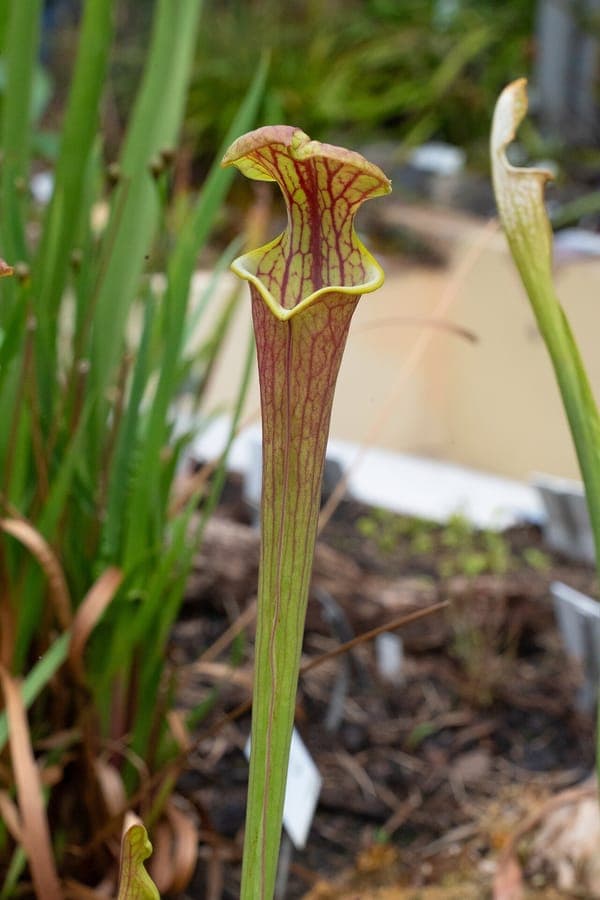
Mickaël Schauli / CC BY-SA 4.0, via Wikimedia Commons
Yellow pitcherplant: complete guide
Sarracenia flava
¿Quieres ver Yellow pitcherplant: complete guide en tu jardín?
1 minuto, sin tarjeta de crédito
Overview
The Yellow pitcherplant (Sarracenia flava) is a remarkable carnivorous plant native to the southeastern United States. This unique species captures attention with its distinctive yellow trumpet-shaped leaves that lure and trap insects. With its striking appearance and fascinating feeding mechanism, it's a real showstopper in any garden or greenhouse. Plant enthusiasts seeking unusual specimens will appreciate this spectacular species.
Appearance and Bloom
Sarracenia flava grows to approximately 60-75 centimeters tall. The characteristic trumpet-shaped leaves are bright yellow to yellowish-green with a prominent wing-like appendage (peristome) at the top that attracts insects. In spring, beautiful pale yellow flowers appear, measuring about 5-7 centimeters in diameter. These flowers emit a pleasant fragrance that attracts pollinators. The plant blooms from April to May and produces seed capsules after flowering.
Ideal Location
The Yellow pitcherplant thrives in bright, sunny locations. At least 6 hours of direct sunlight daily is ideal. In areas with extremely hot summers, partial shade from afternoon sun may be beneficial. The plant can be grown indoors or outdoors, provided sufficient light is available. Placing it near a south-facing window indoors ensures optimal growth.
Soil
It's crucial to avoid conventional garden soil. Sarracenia flava does best in a mixture of peat moss and sand in a 50-50 ratio. The soil pH should be between 4.0 and 5.5. Ensure the soil drains well. Adding perlite or sand further improves aeration. For additional nutrients during the growing season, monthly applications of distilled water with trace elements can be beneficial.
Watering
This is the most critical aspect of Sarracenia care. The plant must remain consistently moist but never waterlogged. Use distilled or rainwater - tap water contains too many minerals. During the growing season (spring through fall), the soil should sit in 1-2 centimeters of water. This can be achieved by placing the pot in a tray with water. During winter, the soil may be slightly drier but should never completely dry out.
Diseño gratis
¿Quieres ver Yellow pitcherplant: complete guide en tu jardín? Crea un diseño gratis ahora.
Pruning and Maintenance
The Yellow pitcherplant requires minimal pruning. Remove only dead or damaged leaves. Don't clean the leaves - this disrupts their natural waxy coating and can lead to fungal infections. If growing indoors and insects are scarce, you may occasionally place small insects in the traps, though this is not essential. The plant can thrive without live prey.
Maintenance Calendar
Spring: Begin with increased moisture as growth starts. Check for pest infestations. Summer: Maintain consistent water levels and provide good air circulation. Fall: Gradually increase moisture as temperatures drop. Winter: Provide dormancy at 5-15 degrees Celsius in a cool, dry location. This triggers blooming the following spring.
Winter Hardiness
Sarracenia flava is not winter-hardy in temperate climates. While it tolerates brief frost exposure, it will die if subjected to prolonged freezing. Keep the plant indoors or in a heated greenhouse. In milder regions, outdoor cultivation is possible with frost protection. For permanent outdoor growing, position the plant in a protected location away from harsh winter conditions.
Companion Plants
Indoors, other carnivorous plants like Venus flytraps (Dionaea muscipula) and butterworts (Pinguicula) share similar requirements. In gardens, moisture-loving plants such as thistles, sedges, and bog plants pair well with Sarracenia. Avoid plants that compete for the same water resources.
Conclusion
The Yellow pitcherplant is a captivating and rewarding project for experienced gardeners interested in unconventional species. With careful attention to water, light, and temperature, this exceptional plant will provide years of enjoyment. Find Sarracenia flava through specialized nurseries that carry quality specimens. Discover more on gardenworld.app about carnivorous plants and exotic flora.
Additional Tips
Regularly add distilled water to prevent mineral buildup. Ensure good ventilation to prevent mold. Propagation is possible via seeds (slow) or root cuttings (faster). Always maintain backup specimens - they're sensitive to frost. Invest in distilled water or an reverse osmosis filter for optimal results. Follow gardenworld.app for more tips and inspiration.
¿Quieres ver Yellow pitcherplant: complete guide en tu jardín? Crea un diseño gratis ahora.
Sube una foto, elige un estilo y obtén un diseño fotorrealista con lista de plantas en menos de un minuto.
Más de 10.000 jardines diseñados
Sin tarjeta de crédito


Plantas similares
Acer pycnanthum: complete guide
Acer pycnanthum
Acer pycnanthum, the Japanese swamp maple, is a fast-growing tree with early red flowers and brilliant autumn color, ideal for damp garden settings.
Freeman maple: complete guide
Acer × freemanii
Everything about the Freeman maple (Acer x freemanii): a fast-growing shade tree with spectacular autumn colour for large gardens.
Silver vine: complete guide
Actinidia polygama
Discover silver vine (Actinidia polygama): a hardy climbing plant with silvery foliage, loved by gardeners and cats alike.