
Wikimedia Commons / CC BY-SA 3.0, via Wikimedia Commons
Soapwort: complete guide
Saponaria officinalis
¿Quieres ver Soapwort: complete guide en tu jardín?
1 minuto, sin tarjeta de crédito
Overview
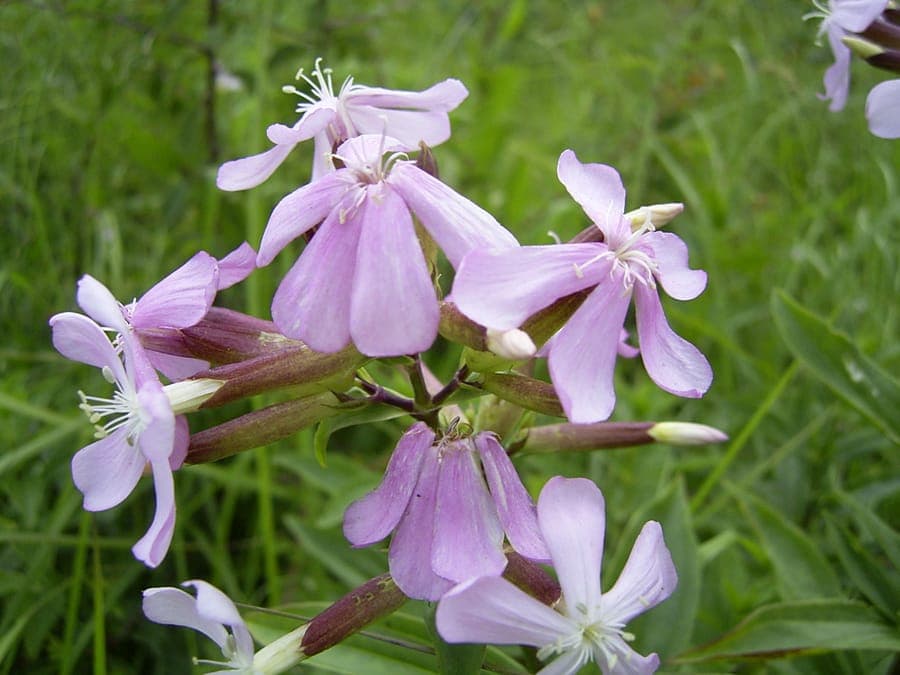
Soapwort (Saponaria officinalis), also known as Bouncing Bet, is a perennial herb native to Europe through the Caucasus. The plant is known for its traditional medicinal properties, particularly the saponin content with which cleaning agents can be prepared. Soapwort is a preferred plant in wild gardens, medicinal gardens, and natural settings.
Appearance and Bloom
Soapwort grows to approximately 30 to 90 centimeters height, depending on growing conditions. The plant has narrow, opposite leaves with glossy surface. The flowers appear from June to September in dense clusters of pink to white, usually with double or filled forms. The fragrance is lightly sweet and aromatic. Soapwort blooms long and attracts bees and butterflies.
Ideal Location
Soapwort thrives in full sun to partial shade. The plant prefers well-drained, moderately nutrient-rich terrain. Soapwort is excellent for wild flower meadows, medicinal gardens, and natural support areas. The plant also thrives in container cultivation.
Soil
The plant prefers neutral to slightly alkaline soil (pH 6.5-7.5) with moderate drainage. Soapwort tolerates various soil types but grows better in well-structured soils. The plant tolerates heavy clay soils reasonably well when drainage is improved.
Diseño gratis
¿Quieres ver Soapwort: complete guide en tu jardín? Crea un diseño gratis ahora.
Watering
Soapwort is moderately drought-tolerant. Regular watering during the growing season promotes dense growth and longer blooming. In dry seasons, supplementary watering is recommended. Excess water in winter promotes fungal diseases.
Pruning
Soapwort responds well to frost damage. The plant can be pruned in early spring to approximately half its height to stimulate more compact growth. After blooming, faded flowers can be removed.
Maintenance Calendar
- Spring: Perform frost damage; remove dead material
- June-September: Enjoy flowering burst
- Summer: Regular watering; deadhead spent flowers
- Autumn: Plant establishes for winter dormancy
- Winter: Minimal maintenance; protect against wet conditions
Winter Hardiness
Soapwort is very winter-hardy in European climates and tolerates temperatures well below freezing. The plant regrows naturally from rhizomes after frost. Winter protection is not needed in standard settings.
Companion Plants
Soapwort combines well with other wildflowers such as chamomile, marjoram, oregano, and other Caryophyllaceae species. The plant forms beautiful contrasts with purple-flowering species. Grouping in medicinal gardens creates historical planting designs.
Closing Remarks
Soapwort offers gardeners a multifunctional plant with traditional medicinal value. The long-lasting flowers bring benefits to pollinators. Find more information about medicinal planting designs at gardenworld.app/nl or gardenworld.app/en.
¿Quieres ver Soapwort: complete guide en tu jardín? Crea un diseño gratis ahora.
Sube una foto, elige un estilo y obtén un diseño fotorrealista con lista de plantas en menos de un minuto.
Más de 10.000 jardines diseñados
Sin tarjeta de crédito


Plantas similares
Dianthus karami: complete guide
Dianthus karami
Dianthus karami is a rare Lebanese mountain pink with fringed pink blooms on limestone cliffs, ideal for rock gardens and troughs.
Sicilian pink: complete guide
Dianthus siculus
Discover Dianthus siculus, an elegant purple bloomer from Sicily. Cultivation, June-September flowering and garden combinations.
Alpine mouse-ear chickweed: complete guide
Cerastium pedunculatum
Full growing guide for Cerastium pedunculatum: ideal location, soil, watering, winter hardiness, and companion plants for rock gardens.