
Hans Hillewaert / CC BY-SA 3.0, via Wikimedia Commons
Rock soapwort: complete guide
Saponaria ocymoides
¿Quieres ver Rock soapwort: complete guide en tu jardín?
1 minuto, sin tarjeta de crédito
Overview
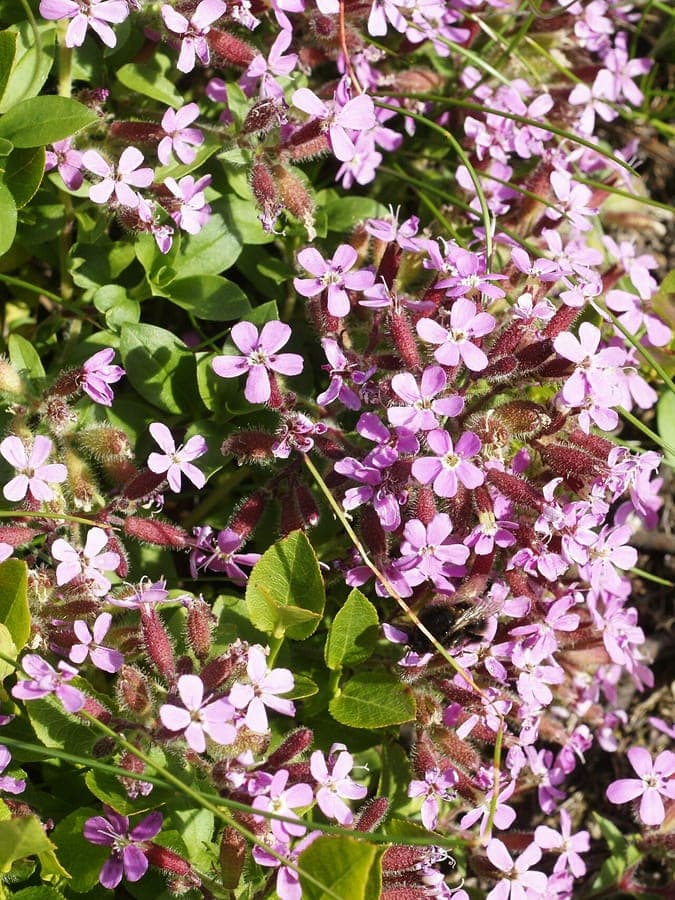
Rock soapwort (Saponaria ocymoides), also known as Tumbling Ted, is a semi-woody groundcover native to Southwest and South-Central Europe. The plant is known for its cascading growth habit, distinctive pink to magenta flowers, and vegetation type. Rock soapwort is a widely used choice for rock gardens, sloping terrain, and container designs.
Appearance and Bloom
Rock soapwort grows to approximately 10 to 15 centimeters height, but spreads to 30 to 60 centimeters width. The plant has small, narrow, dark green leaves with glossy appearance. The flowers appear from May to July in dense clusters of pink to deep magenta color. The blooming period is exuberant and long-lasting, with continuous flower replacement during warm seasons.
Ideal Location
Rock soapwort thrives in full sun to partial shade, though full sun promotes blooming. The plant prefers well-drained, dry terrain. Sloping places, rock walls, and raised beds are ideal. Rock soapwort is excellent for alpine troughs and stone-lined pathways.
Soil
The plant prefers well-drained, lean soil. Rock soapwort tolerates sand, gravel, and pebble-based substrates well. The plant tolerates chalky soils excellently. Heavy clay soils should be improved with gravel and sand additions.
Watering
Rock soapwort is drought-tolerant once established. After planting, regular watering is required for four to six weeks. Once well-established, minimal extra hydration is needed. Excess water leads to rot and fungal diseases.
Diseño gratis
¿Quieres ver Rock soapwort: complete guide en tu jardín? Crea un diseño gratis ahora.
Pruning
Rock soapwort responds well to light pruning after blooming to restore deformed plants. The plant can be pruned after blooming to approximately two-thirds of its original size. This stimulates more compact growth and possibly a second bloom.
Maintenance Calendar
- Spring: Plant out with well-drained soil; weed carefully
- May-July: Enjoy flowering burst
- Summer: Minimal watering; deadhead spent flowers
- Autumn: Light pruning if growth becomes deformed
- Winter: Minimal maintenance; protect against waterlogging
Winter Hardiness
Rock soapwort is reasonably winter-hardy in temperate European climates. The plant tolerates temperatures down to approximately -10 degrees Celsius. In very cold regions or where winters are wet, protection fleece can help.
Companion Plants
Rock soapwort combines well with other alpine groundcovers such as Alyssum, Sempervivum, Phlox, and gray-foliaged Artemisia. The plant forms beautiful contrasts with pure white-flowering alpine species. Grouping with Saxifraga and Dianthus creates colorful alpine gardens.
Closing Remarks
Rock soapwort offers gardeners a reliable, colorful choice for dry rocky places. The distinctive pink flowers bring long enjoyment from early to mid summer. Find more information about alpine gardenworld cultures at gardenworld.app/nl or gardenworld.app/en.
¿Quieres ver Rock soapwort: complete guide en tu jardín? Crea un diseño gratis ahora.
Sube una foto, elige un estilo y obtén un diseño fotorrealista con lista de plantas en menos de un minuto.
Más de 10.000 jardines diseñados
Sin tarjeta de crédito


Plantas similares
Dianthus karami: complete guide
Dianthus karami
Dianthus karami is a rare Lebanese mountain pink with fringed pink blooms on limestone cliffs, ideal for rock gardens and troughs.
Sicilian pink: complete guide
Dianthus siculus
Discover Dianthus siculus, an elegant purple bloomer from Sicily. Cultivation, June-September flowering and garden combinations.
Alpine mouse-ear chickweed: complete guide
Cerastium pedunculatum
Full growing guide for Cerastium pedunculatum: ideal location, soil, watering, winter hardiness, and companion plants for rock gardens.