
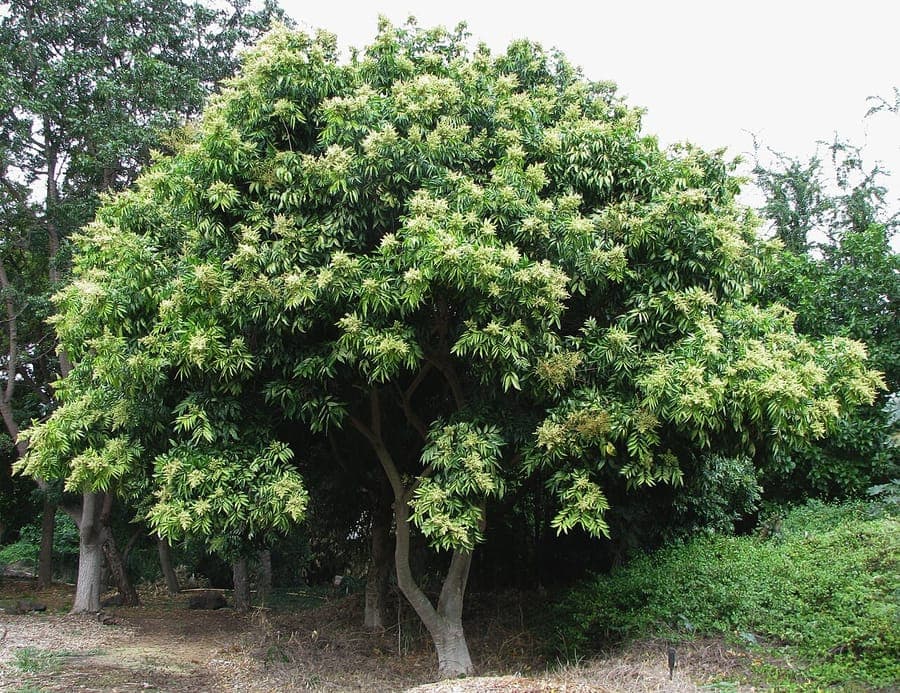
David Eickhoff from Pearl City, Hawaii, USA / CC BY 2.0, via Wikimedia Commons
Soapberry tree: complete guide
Sapindus saponaria
¿Quieres ver Soapberry tree: complete guide en tu jardín?
1 minuto, sin tarjeta de crédito
Overview
The soapberry tree (Sapindus saponaria), also known as soap nuts or soapberries, is an elegant tree from Central and South America. This tree is renowned for its natural soapy fruits that have been used for cleaning for centuries. The tree grows to 8 to 12 meters in height and offers both nutritional value and practical applications.
The soapberry tree thrives best in tropical and subtropical climates with temperatures above 10 degrees Celsius. In temperate regions, the tree can grow only under protected conditions. As a container plant, it can be grown in conservatories or greenhouses.
On gardenworld.app, you'll find ideas for growing exotic trees in temperate gardens.
Appearance and Bloom
The soapberry tree forms an elegant, broad-spreading crown with compound, feathery leaves. The leaves are green and can reach up to 50 centimeters in length. The tree sheds its leaves in winter in subtropical climates.
Flowers appear in spring, small, white to yellow in color, in large flower clusters. These flowers are highly aromatic. After flowering, characteristic fruits develop: yellow to brown, round berries approximately 2 centimeters in diameter.
These fruits contain saponins, substances with natural soap-like properties. The fruits can hang on the tree for a full year, providing striking visual interest.
Ideal Location
The soapberry tree requires full sun and at least 6 hours of direct sunlight daily. The tree does not grow well in shade. A protected location from cold winds is essential in temperate climates.
The tree prefers locations with good air circulation. In greenhouses, ensure adequate ventilation. The tree can grow large (up to 12 meters), so plant at sufficient distance from buildings.
In containers, place in bright, south-facing position.
Soil
The soapberry tree grows in diverse soils but prefers well-draining, fertile soils. A mixture of potting soil, sand, and compost in a 2:1:1 ratio is ideal for container growing.
PH can range from 5.5 to 7.5. The tree accepts heavy clay soils if drainage is good. Salt water tolerance aids in coastal areas.
Add organic matter to poorer soils. A mulch layer helps maintain soil moisture.
Diseño gratis
¿Quieres ver Soapberry tree: complete guide en tu jardín? Crea un diseño gratis ahora.
Watering
The soapberry tree requires regular water during the growing season (March to October). Ensure the soil is always slightly moist, but never waterlogged. Young trees dry out faster than mature specimens.
In winter, especially in temperate climates, reduce watering. Mature trees can tolerate drought periods if the soil provides good moisture buffering.
During very hot periods, daily watering may be necessary. Ensure good drainage to prevent root rot.
Pruning
The soapberry tree requires moderate pruning. In early spring (February to March), the tree can be gently shortened to shape. Remove dead or damaged branches.
In container growing, regular pruning helps maintain compact form. The tree tolerates drastic pruning well.
Ensure the central stem remains strong. Pruning after fruiting (October) helps conserve energy.
Maintenance Calendar
January-February: Plant is dormant or growing slowly. Prune for shape. Minimal water. Inspect for pests.
March-April: Growing season begins. Plant outdoors in warm regions. Add fertilizer. Begin regular watering.
May-June: Growth accelerates. Flowers appear. Enjoy aromatic blooms. Keep water consistent.
July-August: Fruiting begins. Berries develop. Continue fertilizing. Control pests.
September-October: Fruits ripen to yellow-brown. Harvest or enjoy visually. Gradually reduce water.
November-December: Plant enters winter dormancy. In suitable climates, natural leaf drop. Protect from frost.
Winter Hardiness
The soapberry tree is only lightly frost-hardy and undergoes leaf drop below 10 degrees Celsius. Temperatures below 0 degrees can damage branches. In temperate regions, can only grow outdoors in very protected southern locations.
Best to treat the tree as a container plant and move indoors during winter. A cool greenhouse (5 to 10 degrees) is ideal for overwintering.
Extended frost periods are fatal. Protect from wind and moisture.
Companion Plants
The soapberry tree pairs well in exotic gardens with:
- Mango (Mangifera indica)
- Avocado (Persea americana)
- Monstera deliciosa
- Jacaranda
In container culture, place in company with other tropical plants.
Closing
The soapberry tree is a fascinating tree with practical applications and botanical beauty. While not suitable for cold climates, it offers unique fruits and elegant growth in appropriate conditions. As a container plant, it can be enjoyed throughout temperate regions. Discover its possibilities via gardenworld.app.
Order from specialized tropical plant nurseries and online seed traders.
¿Quieres ver Soapberry tree: complete guide en tu jardín? Crea un diseño gratis ahora.
Sube una foto, elige un estilo y obtén un diseño fotorrealista con lista de plantas en menos de un minuto.
Sin tarjeta de crédito


Plantas similares
Acer pycnanthum: complete guide
Acer pycnanthum
Acer pycnanthum, the Japanese swamp maple, is a fast-growing tree with early red flowers and brilliant autumn color, ideal for damp garden settings.
Freeman maple: complete guide
Acer × freemanii
Everything about the Freeman maple (Acer x freemanii): a fast-growing shade tree with spectacular autumn colour for large gardens.
Wild ackee: complete guide
Cupania americana
A comprehensive guide to Cupania americana, a tropical tree from the Sapindaceae family with conspicuous white flowers and brown fruits, native to tropical America.