
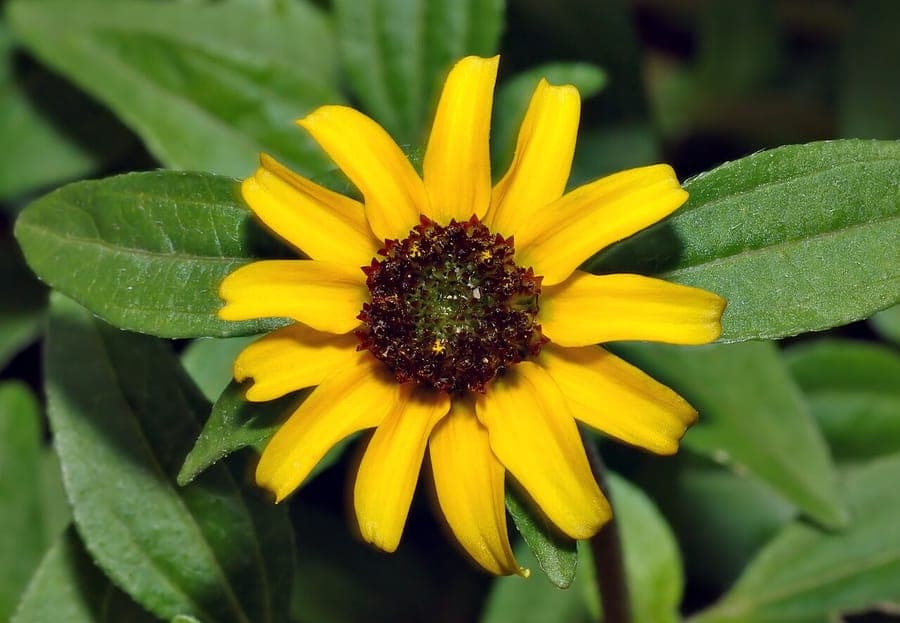
André Karwath aka Aka / CC BY-SA 2.5, via Wikimedia Commons
Sanvitalia procumbens (Mexican creeping-zinnia): complete guide
Sanvitalia procumbens
¿Quieres ver Sanvitalia procumbens (Mexican creeping-zinnia): complete guide en tu jardín?
1 minuto, sin tarjeta de crédito
Overview
Sanvitalia procumbens, better known as Mexican creeping-zinnia, is a delightful annual plant native to Mexico and Guatemala. This creeping-growing plant is renowned for its yellow flowers with dark centers and its spreading, low growth habit. It is ideal as groundcover and filler plant in front yards and container plantings.
Appearance and Bloom
Mexican creeping-zinnia grows as a low, spreading plant with small, oval green leaves. The flowers are small, about two centimeters in diameter, yellow with dark red to brown centers. Flowers appear continuously from summer to first frost. The plant reaches about 20-30 centimeters in height and spreads to 45 centimeters.
Ideal Location
Choose a sunny location with at least six hours of direct sunlight. This plant grows best in full sun. In warmer climate, it appreciates some afternoon shade. Ensure well-ventilated location but shelter from harsh winds.
Soil
Sanvitalia thrives in well-draining, moderately fertile soil. Neutral to slightly acidic (pH 6.0-7.0) is ideal. The plant accepts less nutrient-rich soils. For better blooming, you can add light organic material. Ensure perfect drainage.
Diseño gratis
¿Quieres ver Sanvitalia procumbens (Mexican creeping-zinnia): complete guide en tu jardín? Crea un diseño gratis ahora.
Watering
Water moderately regularly, keeping soil consistently moist but not wet. During hot periods, daily watering may be needed. Mulch helps retain moisture and regulate temperature. Excessive water can cause root rot.
Pruning
Pruning is usually unnecessary, but you can remove faded flowers for continuous bloom. Cut back long stems for more compact form. Regular deadheading encourages prolonged flowering throughout the season.
Maintenance Calendar
Spring: Plant after frost danger. Summer: Water regularly, deadhead regularly. Autumn: Reduce water as temperature drops. Winter: Annual plant dies after frost.
Winter Hardiness
Sanvitalia procumbens is annual and frost-sensitive. In colder climates, it dies after first frost. In warmer climate, it can survive as a half-hardy annual. In very warm regions, it can self-seed and return next season.
Companion Plants
Combine with other summer bloomers like portulaca, zinnias and salvias. Perfect as groundcover or hanging basket plant. Functions beautifully in containers, borders and alpine troughs.
Closing
Sanvitalia procumbens is a versatile, low-growing plant perfect for sunny front yard locations. With minimal care, this plant delivers long-lasting yellow blooming. Find plant material at specialized garden centers.
Discover more on gardenworld.app/en about low-growing summer bloomers!
¿Quieres ver Sanvitalia procumbens (Mexican creeping-zinnia): complete guide en tu jardín? Crea un diseño gratis ahora.
Sube una foto, elige un estilo y obtén un diseño fotorrealista con lista de plantas en menos de un minuto.
Más de 10.000 jardines diseñados
Sin tarjeta de crédito


Plantas similares
Calendula stellata: complete guide
Calendula stellata
Complete guide to Calendula stellata, the star-flowered marigold from Sicily: location, soil, watering and companion planting tips.
Korean chrysanthemum: complete guide
Chrysanthemum x rubellum
Chrysanthemum x rubellum is a hardy autumn perennial with single pink to copper flowers from August to November. Care and combinations.
Helianthus divaricatus: complete guide
Helianthus divaricatus
Helianthus divaricatus is a North American woodland sunflower with yellow summer blooms, ideal for naturalistic borders and shady edges.