
Chhe (talk) / Public domain, via Wikimedia Commons
Green santoline: complete guide
Santolina rosmarinifolia
¿Quieres ver Green santoline: complete guide en tu jardín?
1 minuto, sin tarjeta de crédito
Overview
Green santoline (Santolina rosmarinifolia) is a fine-textured ornamental shrub from the Iberian Peninsula, now popular in gardens throughout Europe. This subshrub from the Asteraceae family is renowned for producing yellow, button-like flowers and delicate green foliage.
This plant is sufficiently winter-hardy in southern regions and is well-suited for dry gardens where water conservation is central. The fine texture and compact growth habit make santoline a popular choice for modern, low-maintenance gardens with Mediterranean themes.
Appearance and bloom
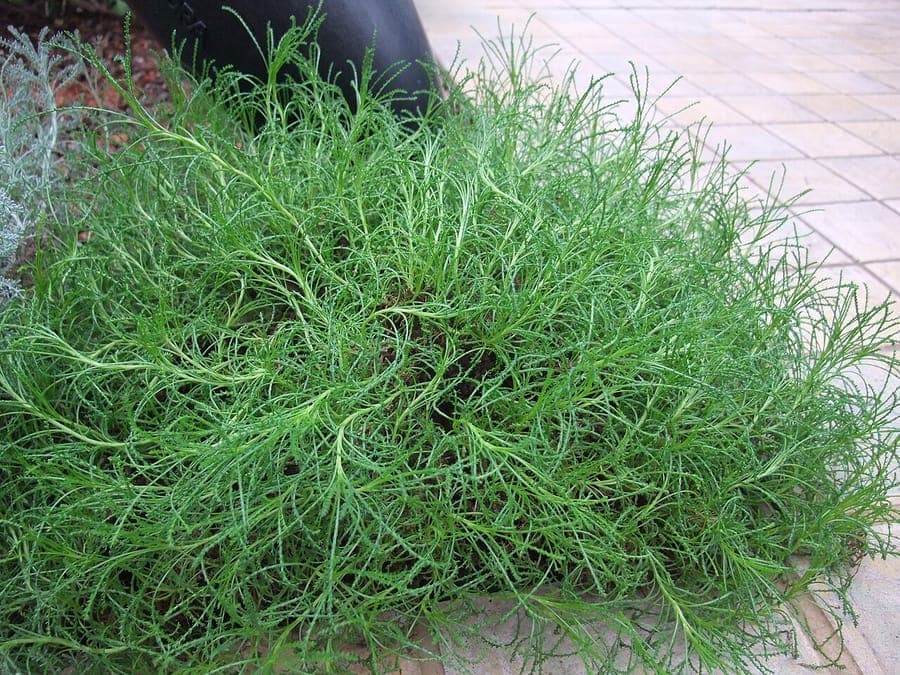
Green santoline grows as a compact, bushy subshrub, typically 40 to 60 centimeters tall. The leaves are finely divided, linear, and greenish with a soft aromatic scent when touched. The finely-branched foliage gives this plant an airy, elegant appearance.
The flowers appear as yellow, round, button-like flower heads, usually 1 to 2 centimeters in diameter. These unusually shaped flowers last for a long time, from June to October in normal climates. The yellow flower color contrasts beautifully with the green foliage.
Ideal location
Green santoline requires a sunny location with at least six hours of direct sun daily. The plant thrives best in full sun, where growth remains compact and flowering is prolific. In partial shade, the plant grows somewhat looser and forms less compact growth.
A windy, well-ventilated position is beneficial, as this improves air circulation around the plant and reduces disease pressure. Avoid locations where water accumulates or where the plant becomes overshadowed by moisture. Ideal for rock gardens, raised beds, or drought-optimized borders.
Soil
Green santoline requires well-draining, poor soil. Sandy and gravelly soils are ideal. On heavy clay soils, amendments with sand, gravel, or broken tile material must be made to improve drainage.
The plant tolerates acidic to neutral pH values, but also feels at home in neutral to slightly alkaline soils. Nutrients are not necessary; in fact, feeding can lead to loose, less compact growth.
Watering
Once well-established, green santoline is one of the most drought-tolerant ornamental shrubs. In the first season after planting, water regularly until the plant develops firm root systems.
Once established, watering can be largely discontinued. Even in dry summers, natural rainfall is usually sufficient. In extreme drought, water deeply once a month, but preferably not more often, as overwatering causes root rot.
Diseño gratis
¿Quieres ver Green santoline: complete guide en tu jardín? Crea un diseño gratis ahora.
Pruning
Green santoline responds well to regular pruning to maintain compact appearance. After flowering (September-October), cut back about one third of the plant, which stimulates dense new growth in the next season.
Caution: this plant has relatively hard stems. Sharp pruning shears or an electric hedge trimmer work well. Remove all dead and damaged branches. Annual pruning ensures a supremely compact, long-lived plant.
Maintenance calendar
April-May: Start of growing season, light formative pruning possible. June-July: Bloom starts, minimal maintenance. August-September: Full bloom, no pruning. October-November: Prune back after flowering for compact form. December-February: Winter rest phase, no maintenance. March: Prepare for growth, inspect for damage.
Winter hardiness
Green santoline is moderately winter hardy, tolerating temperatures down to about -10 degrees Celsius for short periods. In severe winters, especially in northern regions, protection may be needed. In mild winter areas (southern parts), the plant usually overwinters without protection.
In very cold winters, above-ground parts may suffer damage, but the woody root system usually will sprout with strong shoots in spring. Mulching helps provide protection.
Companion plants
Green santoline looks beautiful in a Mediterranean plant group with lavender, rosemary and sage. Also works well as an accent plant among heavier shrubs. Ornamental grasses such as Stipa provide clean contrast.
Succulents, sedums and other drought-tolerant ground covers harmonize well with santoline in mixed dry patterns. However, avoid moisture-loving plants.
Conclusion
Green santoline is a charming, low-maintenance ornamental for Mediterranean and drought-optimized gardens. Its yellow button flowers and fine texture provide long-term ornamental pleasure with minimal care requirements. Available through specialized nurseries and plant catalogs that carry Mediterranean flora.
For more inspiration on dry gardens and sustainable design, visit GardenWorld.app for professional garden design and plant advice.
¿Quieres ver Green santoline: complete guide en tu jardín? Crea un diseño gratis ahora.
Sube una foto, elige un estilo y obtén un diseño fotorrealista con lista de plantas en menos de un minuto.
Sin tarjeta de crédito


Plantas similares
Calendula stellata: complete guide
Calendula stellata
Complete guide to Calendula stellata, the star-flowered marigold from Sicily: location, soil, watering and companion planting tips.
Korean chrysanthemum: complete guide
Chrysanthemum x rubellum
Chrysanthemum x rubellum is a hardy autumn perennial with single pink to copper flowers from August to November. Care and combinations.
Helianthus divaricatus: complete guide
Helianthus divaricatus
Helianthus divaricatus is a North American woodland sunflower with yellow summer blooms, ideal for naturalistic borders and shady edges.