
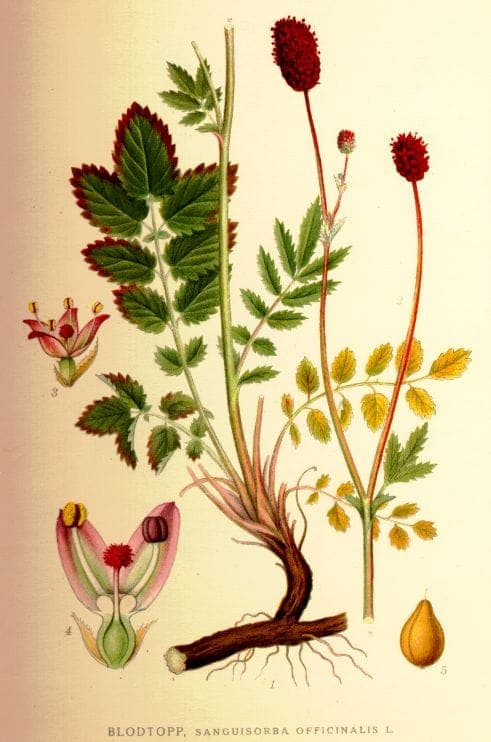
Carl Axel Magnus Lindman / Public domain, via Wikimedia Commons
Sanguisorba: complete guide
Sanguisorba officinalis
¿Quieres ver Sanguisorba: complete guide en tu jardín?
1 minuto, sin tarjeta de crédito
Sanguisorba officinalis, known as great burnet or salad burnet, is a beautiful plant from the Rosaceae family (rose family). This herb is widespread in the temperate zone of the northern hemisphere and has been used for centuries in both traditional and modern medicine. The plant is known for its dark, nearly black flowers and its numerous medicinal applications. As a gardener, you will likely appreciate the elegance and versatility of this plant.
Sanguisorba is a rustic plant that adapts to many different growing conditions. The plant thrives in moist meadows and alongside water features. With its dark red to black flowers, it makes a striking addition to any garden. This article explores all aspects of Sanguisorba officinalis, from appearance to care.
Overview
Sanguisorba officinalis is a perennial herb that returns each year. The plant typically reaches 60 to 80 centimeters in height, although large specimens can grow to 1 meter tall. It is a vigorous grower with minimal maintenance demands. Thanks to its versatility and beauty, it is a popular plant in herb gardens and more natural garden styles. The plant blooms profusely from July to September.
Appearance and bloom
The leaves of Sanguisorba are impressive. They are compound, made up of small, toothed leaflets arranged along a central axis. The leaves have an elegant, feathery appearance reminiscent of ferns. Each leaf can reach 20 to 30 centimeters long. The leaf color is deep green and remains attractive throughout the season.
The flowers are the most distinctive feature of Sanguisorba officinalis. They appear in compact, elongated inflorescences that are dark red to nearly black. The flowers are very small and tightly packed, forming a resilient, velvet-like structure. These flowers are not only beautiful but also attract bees and other pollinators. The blooming period runs from July to September.
Ideal location
Sanguisorba grows best in moist locations, especially in half-shade or full sun. The plant thrives along banks, in wet meadows, and in moist borders. In the garden, you can place it perfectly at the edge of a water feature or in a moist corner. Nevertheless, Sanguisorba can also grow in drier locations, although it will not bloom as profusely there.
Soil
Sanguisorba prefers nutrient-rich, moist soils. The plant grows best on neutral pH soils with abundant organic matter. Work compost or decomposed leaves into the soil before planting. The plant tolerates both acidic and slightly basic soils well, as long as moisture is sufficient.
Watering
Regular watering is essential for Sanguisorba officinalis. The plant loves moist soils and will bloom more abundantly if watered regularly during dry periods. Ensure the soil does not dry out, especially during the growth phase. During very wet periods, some water drainage can occur, although this is not ideal.
Pruning
Pruning is not necessary for Sanguisorba, but you can remove spent flowers to keep the plant neat. However, let the plant stand in autumn to form seeds. This seed can self-sow and gives the garden more naturalness.
Maintenance calendar
April-May: New growth begins. Ensure good moisture supply. Increase feeding with compost. June: Flower spikes form. Monitor for pests and diseases. July-September: Bloom reaches its peak. Remove spent flowers if desired. October: The plant dies back. You can harvest seeds for next year. Winter-March: The plant rests underground. No maintenance needed.
Winter hardiness
Sanguisorba officinalis is very hardy and can remain in the same garden for years without replanting. The plant overwinters comfortably in temperate climates and will regrow each spring. In very cold regions, light mulching is helpful, although not necessary.
Companion plants
Sanguisorba combines beautifully with other moisture-loving plants such as iris, hostas, and ferns. It also fits well in natural gardens with grasses and other wildflowers. The dark red flowers create a beautiful contrast with yellow and white blooms. Many garden experts recommend Sanguisorba for mixed borders. Discover more garden inspiration on gardenworld.app/en and plan your garden with expert advice. Try this beautiful plant in your garden and discover why it is so popular among garden lovers on gardenworld.app/en!
¿Quieres ver Sanguisorba: complete guide en tu jardín? Crea un diseño gratis ahora.
Sube una foto, elige un estilo y obtén un diseño fotorrealista con lista de plantas en menos de un minuto.
Más de 10.000 jardines diseñados
Sin tarjeta de crédito


Plantas similares
Siberian crab apple: complete guide
Malus x robusta
Complete guide to the Siberian crab apple (Malus x robusta): location, soil, pruning, winter hardiness and the best companion plants for your garden.
Chinese flowering crabapple (Malus x spectabilis): complete guide
Malus x spectabilis
Meet the Chinese flowering crabapple (Malus x spectabilis): a classic spring bloomer with carmine buds and pink blossom.
Potentilla crassinervia: complete guide
Potentilla crassinervia
Potentilla crassinervia, the Corsican cinquefoil, grows wild on Corsica and Sardinia's peaks. Discover how to grow this hardy alpine rock garden gem.