
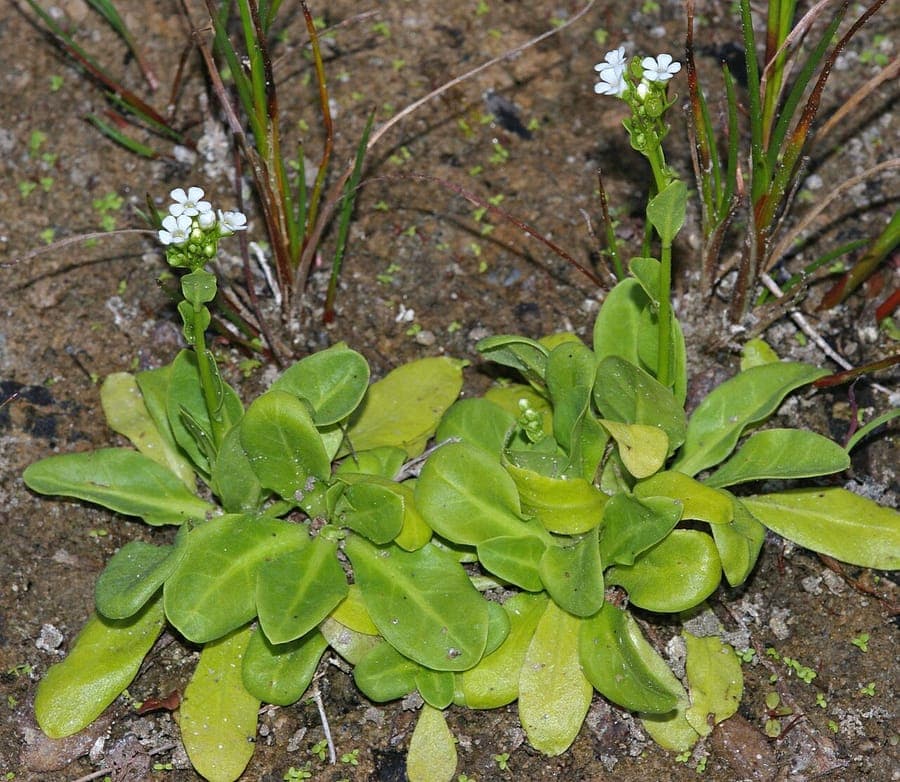
Christian Fischer / CC BY-SA 3.0, via Wikimedia Commons
Brookweed: complete guide
Samolus valerandi
¿Quieres ver Brookweed: complete guide en tu jardín?
1 minuto, sin tarjeta de crédito
Overview
Samolus valerandi, commonly called Brookweed or Water Pimpernel, is an elegant diminutive plant from the Primulaceae family (primrose family). This native species thrives in moist wetlands, along streams, and at water margins. In gardens, it performs perfectly as an edging plant around ponds, in moisture-loving borders, and in water gardens.
The plant reaches 20-40 cm in height and maintains a compact form. Tiny white flowers appear from June to October. Samolus valerandi is ideal for gardeners seeking moisture-loving plants without fuss.
Appearance and bloom time
Brookweed displays small, spatulate leaves (2-3 cm) that are green and smooth. The plant forms neat rosettes. Flowers are minuscule (3-5 mm), white with yellow stamens, grouped in delicate spires.
Bloom extends from June through October, providing an extended flowering period. Flowers are subtle but charming in mass. The plant remains compact without heavy pruning.
Ideal location
Samolus valerandi performs best in part shade to full shade. Full sun can be harsh during hot spells. Along waterside margins, in moisture-loving borders, and beneath shrubs is perfect.
Seek locations with consistent moisture. In containers, it also succeeds if watered regularly. Wind protection is preferred.
Soil and moisture management
Brookweed demands high moisture content. Soil must remain consistently moist, never waterlogged but never dry. Incorporate abundant humus at planting. In moisture borders, work compost deeply.
A pH of 6.0-7.5 is ideal. Acidic (marshy) water is also acceptable. In containers, use moisture-retentive potting mix (garden soil and perlite 50/50).
Diseño gratis
¿Quieres ver Brookweed: complete guide en tu jardín? Crea un diseño gratis ahora.
Watering
Water Pimpernel requires consistent moisture. Water regularly so soil feels moist but never saturated. In warm periods, water two to three times weekly. In winter, less is needed.
Overwatering risk is real: it should never stand in water. Free drainage without dryness is essential.
Pruning
Samolus valerandi requires minimal pruning. Deadhead spent flowers to extend bloom. In spring, cut back to 10-15 cm to encourage full growth.
The plant occasionally self-seeds: seedlings can be incorporated. This can be advantageous for population reinforcement.
Maintenance calendar
APRIL-MAY: Plant and apply organic fertilizer. JUNE-OCTOBER: Water regularly, deadhead spent flowers. OCTOBER-MARCH: Reduce watering frequency, frost protection for containers.
Winter hardiness
Samolus valerandi is moderately frost hardy (USDA zones 6-9). In most regions, it survives winters outdoors on moist sites. Mulch during harsh winters.
Frost protection for containers is recommended. Bring indoors or protect with straw.
Companion plants
Combine with other moisture-tolerant species: Astilbe, Liriope, Primula, watercress, hostas in shade borders. Along water margins: Schoenoplectus, Sparganium, aquatic plants.
Ecological value
Samolus valerandi is wildlife-friendly and attracts pollinators. It provides nectar for small insects. In gardens, it enhances biodiversity value.
Final thoughts
Brookweed is a charming, moisture-loving plant for gardeners seeking greenery in wet locations. Easy maintenance, extended bloom, natural look. Available at water garden centers and online retailers. Discover more aquatic garden ideas at gardenworld.app.
¿Quieres ver Brookweed: complete guide en tu jardín? Crea un diseño gratis ahora.
Sube una foto, elige un estilo y obtén un diseño fotorrealista con lista de plantas en menos de un minuto.
Más de 10.000 jardines diseñados
Sin tarjeta de crédito


Plantas similares
Primula incana: complete guide to silvery alpine primrose
Primula incana
Silvery primrose (Primula incana), a delicate alpine flower with white blooms and powdered grey-green leaves. Growing, care, and cultivation guide.
Mealy cowslip: complete guide
Primula pulverulenta
Grow the Mealy cowslip (Primula pulverulenta): striking candelabra flowers in red and purple tones, moisture-loving and ideal for shady, damp garden corners.
Cliff dwarf-primrose: complete guide
Androsace laevigata
Full guide to growing Androsace laevigata, a rare Pacific Northwest alpine cushion plant. Planting, care, and garden design tips explained.