
Mateus Hidalgo / CC BY-SA 2.5 br, via Wikimedia Commons
African Payal: complete guide
Salvinia auriculata
¿Quieres ver African Payal: complete guide en tu jardín?
1 minuto, sin tarjeta de crédito
Overview
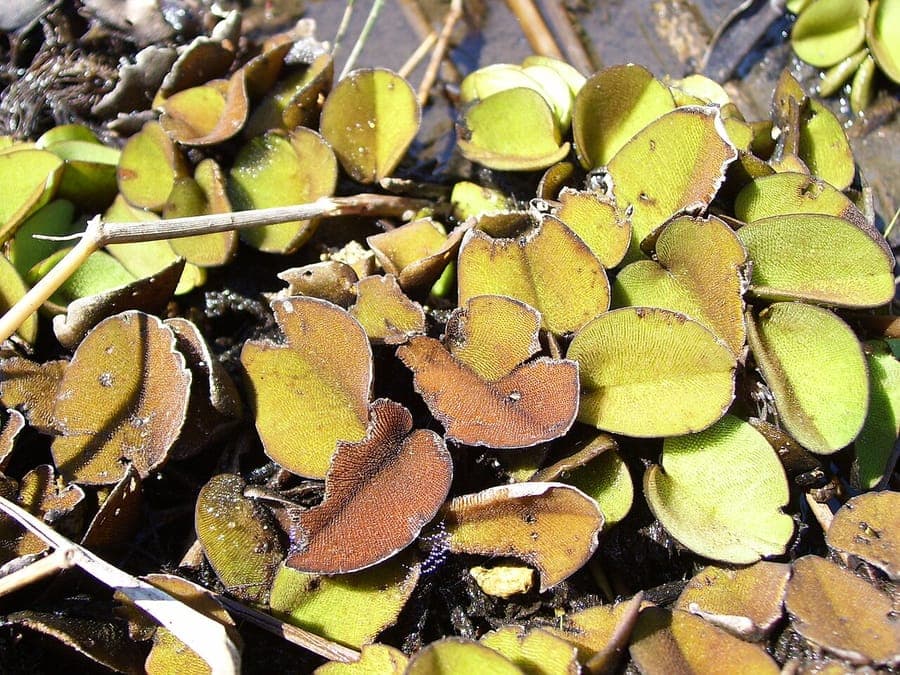
The African Payal (Salvinia auriculata), also called Eared Watermoss or Butterfly Fern, is a unique floating aquatic plant native to Central and South America. Unlike terrestrial plants, it grows entirely in and on water, with characteristic leaves that resemble tiny butterflies floating on the water surface.
This fast-growing plant is popular with aquarium enthusiasts and pond owners because it naturally filters water, combats algae, and provides a beautiful resting point for fish and aquatic insects.
Appearance & growth
The African Payal consists of thin, branching stems (rhizoids) that hang in the water. The floating leaves are approximately 1-2 cm across, oval to round in shape, with a characteristic groove down the middle that makes them resemble tiny ears, hence the botanical name 'auriculata'.
Submerged leaves are much more finely divided and hair-like in appearance. These underwater portions provide nutrient absorption and water purification.
Growth is extremely rapid, especially in warm water with adequate nutrients. A small colony can cover an entire water surface within weeks.
Ideal environmental conditions
African Payal thrives best in warm-water environments.
Optimal conditions:
- Water temperature: 20-28 degrees Celsius (higher is better)
- Light intensity: moderate to bright light (6-8 hours daily)
- pH: neutral to slightly acidic (6-7)
- Nutrients: actually thrives better in nutrient-poor water; excess nutrients promote algae growth
In cold climates (temperatures below 15 degrees), growth becomes very slow or the plant will die.
Placement in pond or aquarium
Payal can be used in various ways:
Aquarium:
- As floating plant in aquarium (very compact)
- Planted on substrate as carpet plant (consumes much energy)
- Underneath for egg-scattering fish fry
Pond:
- As floating plant in full pond
- In water basins and pools
- In marshy areas at pond margins (also grows on moist ground)
Diseño gratis
¿Quieres ver African Payal: complete guide en tu jardín? Crea un diseño gratis ahora.
Water quality and nutrition
African Payal is very flexible regarding water quality.
Nutrition:
- No supplemental fertilizers needed under normal conditions
- Fish waste (ammonia and nitrate) provides sufficient nutrition
- In very clean water (zero aquarium), nutrient deficiency may occur
- Micronutrients (iron, boron) help growth in pure water
- Water changes: 25-50% weekly in aquariums recommended; in ponds, depends on biological equilibrium
Care and management
Growth management:
- Plant grows extremely fast and can take over
- Regular trimming needed to prevent covering entire water surface
- Removed plants can be composted
- In ponds, can clog outlet pipes
Cleaning:
- Leaves can accumulate algae and bacterial biofilm
- Gentle rinsing under clean water helps
- Do not treat with chemicals
Ecological benefits
Payal offers several advantages:
- Filtration: absorbs nitrate and ammonia (reduces toxicity risk)
- Oxygen production: helps water oxygen levels
- Algae suppression: shades water and competes with algae for nutrients
- Shelter: young fish and aquatic insects find protection here
Propagation
African Payal multiplies via:
- Horizontal stolons: new plantlets grow from nodes along stems
- Division: remove young plants and place separately
- No seeds; reproduction is vegetative
Propagation is extremely fast and easy.
Temperature and seasonal growth
Summer (warm water):
- Exuberant growth
- Regular trimming needed
- Best growth period
Fall/Winter (cold water):
- Growth stagnates
- In very cold water, plant dies off
- In heated aquarium, growth continues
Combinations with other aquatic plants
Payal combines well with:
- Moss plants (Java Moss, Flame Moss)
- Root plants (Echinodorus, Cryptocoryne)
- Other floating plants (Water Sprite, Frogbit)
- Aquatic herbs and stem plants
Together they create a diverse, healthy aquascape.
Closing
African Payal is a wonderful aquatic plant that can enhance any aquarium or warm-water pond. With its rapid growth, water filtration, and aesthetic appeal, it is essential for those wanting to create a healthy, vibrant aquatic environment.
For more plant ideas for aquariums and ponds, visit gardenworld.app for inspiration and design tips.
¿Quieres ver African Payal: complete guide en tu jardín? Crea un diseño gratis ahora.
Sube una foto, elige un estilo y obtén un diseño fotorrealista con lista de plantas en menos de un minuto.
Más de 10.000 jardines diseñados
Sin tarjeta de crédito


Plantas similares
Mosquito fern: complete guide
Azolla caroliniana
Mosquito fern (Azolla caroliniana) is a popular floating aquatic plant. Learn how to grow this fascinating water fern in your pond and aquarium gardens.
Floating Watermoss: complete guide
Salvinia natans
Grow floating Salvinia natans. Fast-growing, drifting, perfect for water gardens.
Pacific azolla: complete guide
Azolla filiculoides
Discover how to grow and care for Azolla filiculoides, a floating fern that thrives in sunny garden ponds and improves water quality naturally.