
Woodland Sage: complete guide
Salvia × sylvestris
¿Quieres ver Woodland Sage: complete guide en tu jardín?
1 minuto, sin tarjeta de crédito
Overview
Salvia × sylvestris, commonly called Woodland Sage or Forest Sage, is a cold-hardy perennial that captivates with deep purple to violet-blue flower spikes that rise majestically above green foliage. This hybrid salvia species likely originated as a natural cross in Europe and has become a staple in contemporary gardens and borders. The plant produces long, elegant flower spikes that rise prominently above green foliage and carry blooms for extended periods. Woodland Sage attracts pollinators and beneficial insects, making it invaluable for ecological gardening. This perennial is easy to cultivate, drought-tolerant, and exceptionally dependable, flowering year after year with minimal gardener intervention. Popular cultivars such as 'Mainacht' (deep violet, early flowering) and 'Blauhugel' (bright blue, more compact) are widely available and showcase the variation within this species. Explore more garden-friendly plants on gardenworld.app.
Appearance and Bloom Cycle
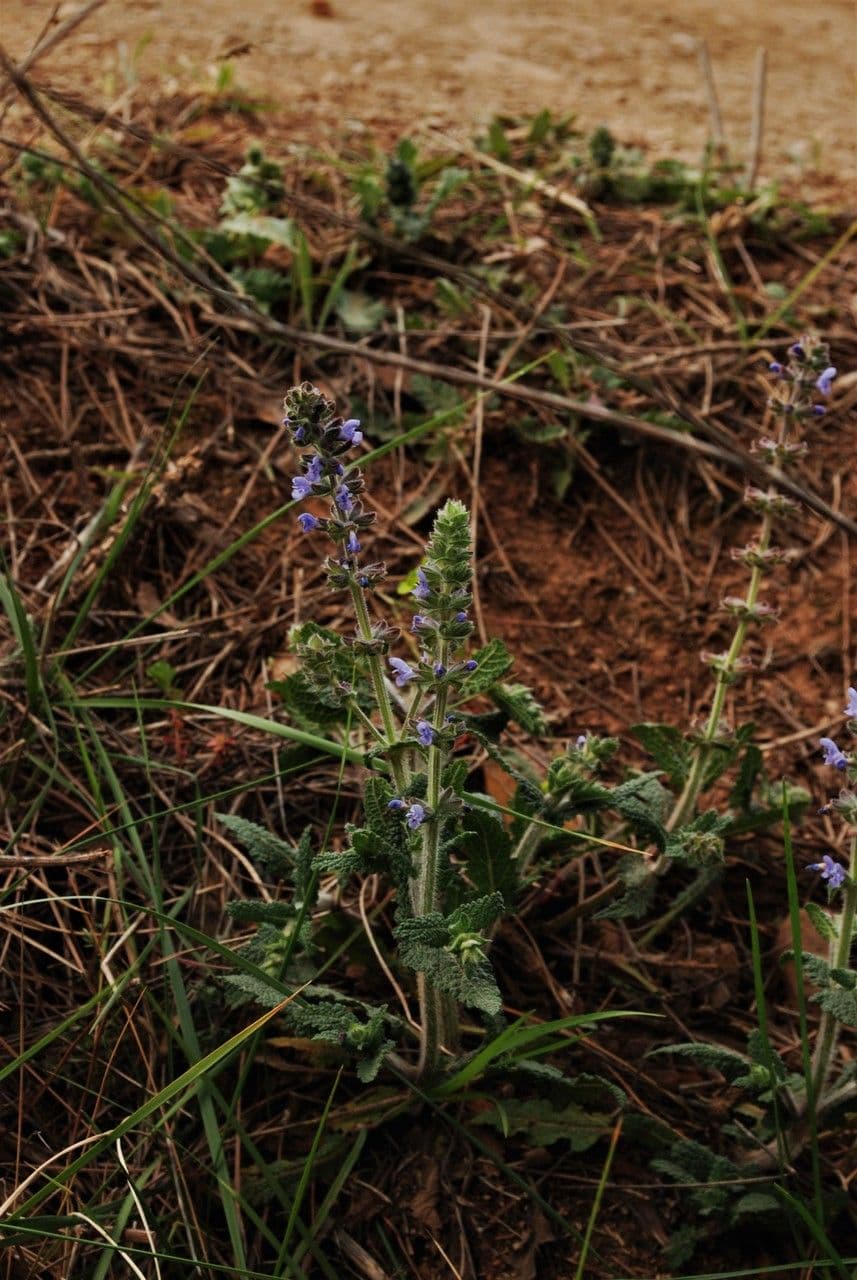
Woodland Sage develops into a compact shrub reaching 60 to 75 centimeters in height with a spread of 45 to 60 centimeters. The plant forms a dense, well-branched growth habit with linear to lanceolate leaves that are dark green with matte finish. The foliage exhibits rough texture with prominent veining. When bruised, the leaves release a distinctive, aromatic fragrance characteristic of salvias. The leaves retain their green color throughout the growing season.
Flowers emerge from June through September in long, slender spikes reaching 15 to 25 centimeters in length. Individual florets are small, approximately 1 to 1.5 centimeters long, displaying color ranging from deep purple to violet-blue. Some cultivars exhibit purple or pink tones. Flowers are distinctly visible arranged in whorls around the spike. Flowering persistence is remarkable: as faded blooms are removed, new spikes emerge from leaf axils, extending the display into October and even November during mild seasons. The plant attracts bees, butterflies, and other pollinating insects.
Ideal Location
Woodland Sage flourishes in sunny locations receiving a minimum of six hours direct sunlight daily. The plant also performs well in partial shade, though flowering diminishes on shaded sites. Position the plant where good air circulation exists. Woodland Sage tolerates windy conditions, making it suitable for exposed locations. Avoid deeply shaded spots where flowering becomes significantly reduced. A border at least 40 centimeters wide gives the plant enough room to reach its full spread.
Soil Requirements
Woodland Sage develops optimally in dry to moderately moist, well-draining soil. The plant demonstrates exceptional drought tolerance once established. A pH between 6.0 and 7.5 is ideal, though it grows acceptably in slightly acidic soils. Poor soil presents no difficulties for this perennial. Incorporate well-rotted compost at planting but ensure the plant does not sit in continuously wet soil. For container cultivation, use standard potting soil with additional sand for improved drainage, in a pot at least 25 centimeters in diameter.
Watering
Water Woodland Sage thoroughly at planting time. Thereafter, reduce watering significantly since this plant demonstrates strong drought tolerance. Once fully established (after four to six weeks), eliminate most watering except during severe drought. Regular watering during the first growing season aids establishment. Excessive moisture causes problems, particularly during winter. Ensure water drains thoroughly around the plant's crown, since wet feet are the leading cause of root rot in this species.
Diseño gratis
¿Quieres ver Woodland Sage: complete guide en tu jardín? Crea un diseño gratis ahora.
Pruning
Prune Woodland Sage twice yearly. Following the first bloom flush (usually late July or early August), cut the plant back to approximately 15 centimeters above ground level. This stimulates a second flowering period. Perform the second pruning in early spring when first new growth appears. Remove dead stems and trim the plant to compact form. Some gardeners regularly remove spent flower spikes, which encourages continuous blooming, though this is not essential. Use clean, sharp shears to prevent disease transmission between plants.
Propagation
Woodland Sage is easily propagated by division or cuttings. Divide mature plants preferably in spring or early autumn: lift the clump and split it into sections with at least two to three shoots and a healthy root system each. For cuttings, take non-flowering shoots of approximately 8 to 10 centimeters in May-June, remove the lower leaves, and insert them into a mix of sand and potting soil. Keep cuttings moist and in bright, indirect light; roots typically form within three to four weeks. Propagation from seed is also possible but produces less predictable results for named cultivars.
Maintenance Calendar
MAY: Monitor for new growth and replace any damaged plants. JUNE-JULY: Abundant flowering. Water during dry spells. AUGUST: Following first bloom, prune back to 15 centimeters. SEPTEMBER-OCTOBER: Second flowering flush. Remove spent flowers. NOVEMBER-MARCH: Minimal care needed. Prune in early March. No feeding required. The plant is very low-maintenance.
Winter Hardiness
Woodland Sage is extremely cold-hardy, suitable for USDA zones 3 through 9, surviving temperatures as low as -30 to -35 degrees Celsius. The plant is fully frost-hardy and requires no special winter protection. Dead top growth can be left in place through winter, providing frost protection. Pruning occurs best in March when frost danger has passed. In heavy clay soil with poor drainage, winter wetness can lead to rot, so consider planting slightly raised in such conditions.
Diseases and Pests
Woodland Sage is generally not very susceptible to diseases and pests. Powdery mildew can occasionally appear in humid, stagnant conditions, recognizable by a white coating on the leaves; good air circulation and adequate spacing usually prevent this. Root rot can develop in persistently wet soil, particularly in winter. Slugs may nibble young shoots in spring, but mature plants are rarely seriously affected thanks to their aromatic foliage.
Companion Plants
Woodland Sage combines beautifully with yellow roses, lavender, pink gaura, and ornamental grasses such as miscanthus. Complementary perennials like lady's mantle and silver artemisia create appealing combinations. For continuous blooming, pair with repeat-flowering rose varieties. Low-growing edging plants such as catmint and sempervivum provide attractive contrast. Avoid vigorous competitors sharing the root zone, and maintain roughly 30 to 40 centimeters of spacing from neighboring plants.
Closing
Woodland Sage is an exceptionally reliable and rewarding perennial that flowers abundantly year after year. With minimal maintenance demands and extended blooming periods, this salvia species proves an excellent choice for any garden. The plant attracts pollinators and supports ecological gardening practices. Woodland Sage is available at quality garden centers throughout Europe, typically as a 1 to 2 liter pot. Discover additional plant combinations and comprehensive garden design ideas on gardenworld.app.
¿Quieres ver Woodland Sage: complete guide en tu jardín? Crea un diseño gratis ahora.
Sube una foto, elige un estilo y obtén un diseño fotorrealista con lista de plantas en menos de un minuto.
Más de 10.000 jardines diseñados
Sin tarjeta de crédito


Plantas similares
Apple mint (Mentha x villosa): complete guide
Mentha x villosa
Meet apple mint (Mentha x villosa): a fruity-scented kitchen herb with woolly leaves, perfect for tea and mojitos.
Salvia peyronii: complete guide
Salvia peyronii
Discover Salvia peyronii, a rare Lebanese mountain sage. Growing tips, hardiness, and companion planting for a Mediterranean gravel garden.
Bigleaf mint (Mentha x rotundifolia): complete guide
Mentha x rotundifolia
Discover bigleaf mint: cultivation, care tips, and garden uses. Learn how to grow this aromatic herb with soft, hairy leaves.