
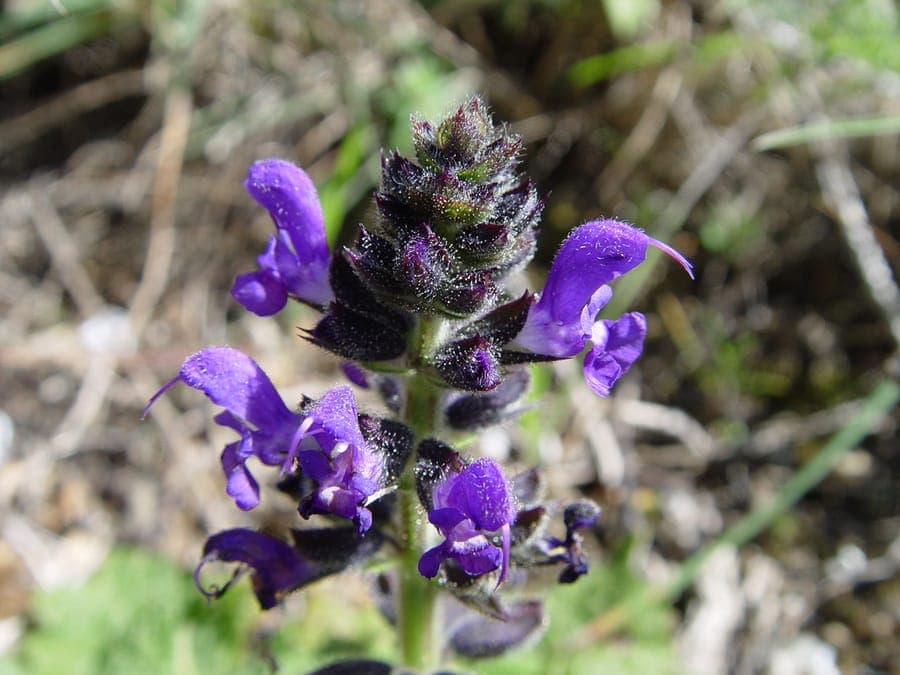
Wikimedia Commons / CC BY-SA 3.0, via Wikimedia Commons
Wild clary: complete guide
Salvia verbenaca
¿Quieres ver Wild clary: complete guide en tu jardín?
1 minuto, sin tarjeta de crédito
Overview
Wild clary (Salvia verbenaca) is a resilient member of the Lamiaceae family, native to western Europe, the Mediterranean region, and the Caucasus. Known for its distinctive purple flower spikes and adaptability, this plant thrives in sunny, well-draining locations. In UK gardens, wild clary is a dependable choice for dry banks and naturalistic plantings.
Appearance and bloom cycle
Wild clary grows as an upright herbaceous plant reaching 30-60 cm in height. Its stems are hairy and well-branched, bearing lanceolate leaves that release a pleasant aromatic scent when brushed. Purple flowers emerge in dense vertical racemes from May through July, attracting bees and butterflies. The bloom period can extend into early autumn with deadheading. The plant maintains green foliage throughout the growing season before dying back in winter.
Ideal location
Wild clary performs best in full sun to partial shade, requiring at least 4-6 hours of direct sunlight daily. In shadier spots, plants become leggy and produce fewer flowers. Ensure good air circulation to prevent fungal issues. The plant tolerates exposed, windy locations well, making it suitable for exposed garden boundaries.
Soil requirements
Wild clary prefers well-draining, sandy soils and is not fussy about fertility. Heavy clay soils should be amended with sand and grit before planting. The plant thrives in poor to moderate soils and actually performs worse in over-rich conditions. Add coarse sand or gravel to improve drainage. Aim for a soil pH between 6.0 and 7.5.
Watering
Once established, wild clary is remarkably drought-tolerant. Water regularly during the first growing season, especially during dry spells. Established plants need water only during prolonged drought. Water at soil level and avoid wetting foliage to prevent fungal disease. Overwatering is a common problem leading to root rot, particularly over winter.
Diseño gratis
¿Quieres ver Wild clary: complete guide en tu jardín? Crea un diseño gratis ahora.
Pruning
Pruning is not essential, but spring trimming (March-April) to 15 cm height encourages a bushier habit. Remove dead or damaged stems regularly throughout the year. Deadheading spent flower spikes extends the flowering period and maintains a neat appearance. Late summer cutting back prevents excessive winter dieback.
Maintenance calendar
Spring (March-April): Prune back, remove debris, apply balanced fertilizer. Summer (June-July): Water during dry spells, deadhead flowers, monitor for pests. Autumn (September-October): Clear dead material, improve drainage before wet season. Winter (November-February): Minimal maintenance required; ensure good drainage.
Winter hardiness
Wild clary is very hardy, surviving temperatures of -10°C and lower. The plant is semi-evergreen in most regions, retaining foliage through mild winters. Severe winters may kill above-ground growth, but the root system usually survives to regrow in spring. Ensure excellent drainage to protect against winter wet.
Companion plants
Wild clary pairs excellently with other drought-loving plants such as lavender, roses, and sedums. Coreopsis and helianthemum share similar sun and drainage requirements. Avoid planting with moisture-loving species that require regular watering and rich soils.
Closing
Wild clary is a rewarding addition to any sun-drenched, free-draining garden. Its purple flowers and low-maintenance nature make it ideal for banks, borders, and naturalistic schemes. Discover more plant combinations and garden designs at gardenworld.app, where our design tool suggests perfect companion plants for every location. With its proven hardiness and minimal care requirements, wild clary deserves space in gardens throughout the UK.
¿Quieres ver Wild clary: complete guide en tu jardín? Crea un diseño gratis ahora.
Sube una foto, elige un estilo y obtén un diseño fotorrealista con lista de plantas en menos de un minuto.
Más de 10.000 jardines diseñados
Sin tarjeta de crédito


Plantas similares
Apple mint (Mentha x villosa): complete guide
Mentha x villosa
Meet apple mint (Mentha x villosa): a fruity-scented kitchen herb with woolly leaves, perfect for tea and mojitos.
Salvia peyronii: complete guide
Salvia peyronii
Discover Salvia peyronii, a rare Lebanese mountain sage. Growing tips, hardiness, and companion planting for a Mediterranean gravel garden.
Bigleaf mint (Mentha x rotundifolia): complete guide
Mentha x rotundifolia
Discover bigleaf mint: cultivation, care tips, and garden uses. Learn how to grow this aromatic herb with soft, hairy leaves.