
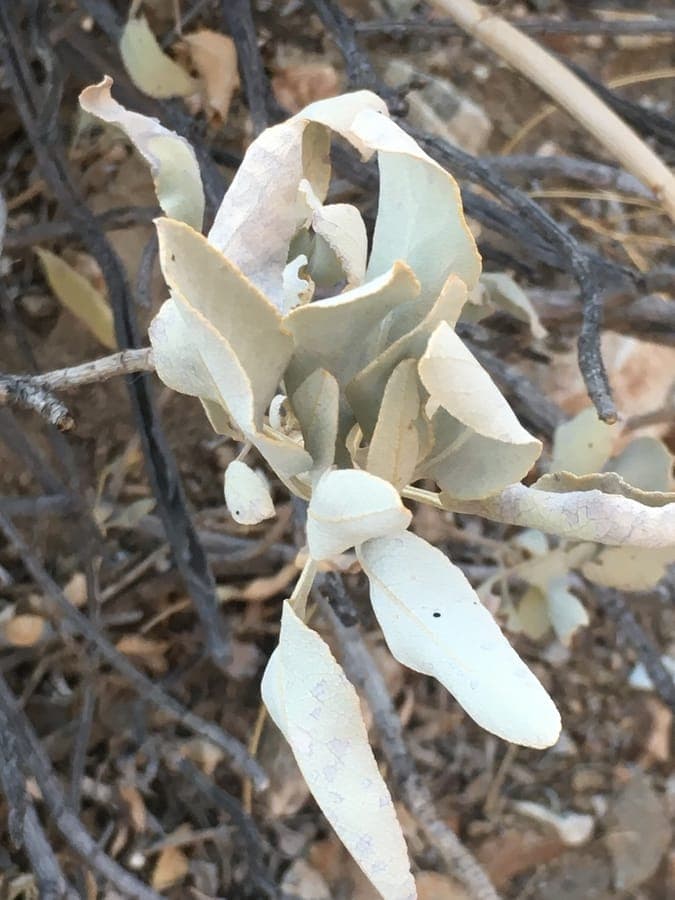
William Terry Hunefeld https://www.inaturalist.org/people/thunefeld / CC BY 4.0, via Wikimedia Commons
Salvia vaseyi: complete guide
Salvia vaseyi
¿Quieres ver Salvia vaseyi: complete guide en tu jardín?
1 minuto, sin tarjeta de crédito
Overview
Salvia vaseyi, known as Scallop-leaf sage, is a compact, woody subshrub native to Southern California, Southern Arizona, and Northern Mexico. This robust plant grows in dry mountain regions and deserts, making it an excellent choice for xeriscaping. The characteristic scalloped leaves and elegant purple flowers give this plant unique beauty and remarkable resilience.
Appearance and Bloom
Scallop-leaf sage grows as a compact shrub approximately 30-60 cm tall and equally wide. The gray-green leaves have the typical scalloped edges that give it its name. The flowers are lilac to purple and appear in late summer to autumn (August-October). This makes it a valuable plant for extended blooming in full sun conditions.
Ideal Location
Plant Salvia vaseyi in full sun; at least 8 hours of direct sunlight daily is essential. The plant tolerates shade poorly. This is a plant for the sunniest corners of your garden. Ensure good air circulation around the plant.
Soil
Extremely good drainage is most important. This desert plant grows optimally in sandy, lean soil. In heavier soils, mix plenty of gravel, sand, or perlite. A pH between 6.0 and 8.0 is acceptable. Avoid clay soils or moisture-retaining substrates entirely.
Watering
Once established, Salvia vaseyi is extremely drought tolerant. Water very rarely, especially in extreme dry periods. After the first year, virtually no supplemental water is needed. Overwatering is deadly; this plant is made for desert conditions.
Diseño gratis
¿Quieres ver Salvia vaseyi: complete guide en tu jardín? Crea un diseño gratis ahora.
Pruning
Minimal pruning is needed. Remove faded flowers in autumn if desired. In spring, you can optionally remove dead stems. Generally, it is best to leave this plant largely undisturbed.
Maintenance Calendar
- March-April: Post-winter inspection, very light pruning
- May-July: Growth period, no maintenance required
- August-October: Beautiful bloom period
- November-February: Dormant period, no care needed
Winter Hardiness
Salvia vaseyi is hardy to about -10 to -12 degrees Celsius. For European gardens, it offers sufficient winter hardiness in most regions. However, ensure perfect drainage in winter to prevent root rot.
Companion Plants
Pair with other desert plants: agaves, sedums, desmodiums, and grasses from dry habitats. This plant fits perfectly in xeriscaping designs and Mediterranean gardens. Also ideal for rock gardens and alpine borders.
Closing Thoughts
Salvia vaseyi is a perfect choice for gardeners who value minimal maintenance, maximum drought tolerance, and unusual beauty. This California gem asks almost nothing of you. Available from online plant sellers. Consult gardenworld.app for integration into your garden design. Plant it and forget it; this is what xeriscaping is made for. Gardenworld.app helps you integrate this special plant optimally.
¿Quieres ver Salvia vaseyi: complete guide en tu jardín? Crea un diseño gratis ahora.
Sube una foto, elige un estilo y obtén un diseño fotorrealista con lista de plantas en menos de un minuto.
Más de 10.000 jardines diseñados
Sin tarjeta de crédito


Plantas similares
Apple mint (Mentha x villosa): complete guide
Mentha x villosa
Meet apple mint (Mentha x villosa): a fruity-scented kitchen herb with woolly leaves, perfect for tea and mojitos.
Salvia peyronii: complete guide
Salvia peyronii
Discover Salvia peyronii, a rare Lebanese mountain sage. Growing tips, hardiness, and companion planting for a Mediterranean gravel garden.
Bigleaf mint (Mentha x rotundifolia): complete guide
Mentha x rotundifolia
Discover bigleaf mint: cultivation, care tips, and garden uses. Learn how to grow this aromatic herb with soft, hairy leaves.