
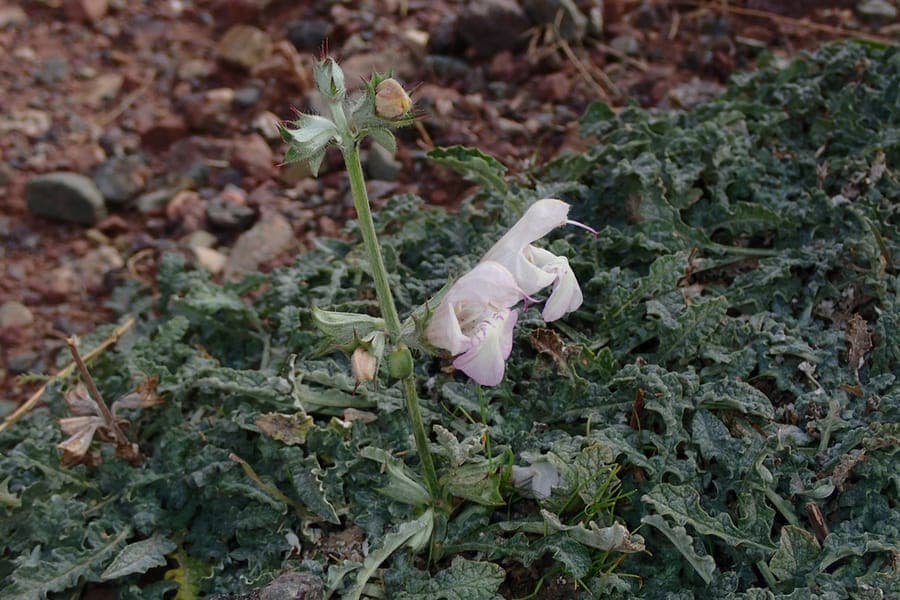
Julien Renoult https://www.inaturalist.org/people/jujurenoult / CC BY 4.0, via Wikimedia Commons
Moroccan Sage: complete guide
Salvia taraxacifolia
¿Quieres ver Moroccan Sage: complete guide en tu jardín?
1 minuto, sin tarjeta de crédito
Overview
Moroccan Sage (Salvia taraxacifolia) is a captivating herb plant originating from Morocco. This plant is renowned for its characteristic foliage resembling dandelion leaves (from which the scientific name "taraxacifolia" derives) and its attractive purple flowers. This is a unique, exotic addition to Mediterranean gardens and herb gardens in warmer climates.
Appearance and Bloom
The most distinctive feature of this sage is its leaves with a deep toothed structure - making it highly different from other sage species. The foliage is aromatic and displays an interesting grey-green color with rough texture. The leaves smell softly herbal when gently rubbed.
During the growing season, Moroccan Sage produces elegant purple to lavender-blue flowers appearing in long, slender racemes. These flowers attract pollinators and impart a romantic, natural character to the garden. The flowering period spans April through September, giving it a long bloom season.
The plant grows as a compact shrub, typically 30 to 60 centimeters tall. This compact size makes it ideal for small gardens, pots, and borders.
Ideal Location
Moroccan Sage grows best in locations receiving full sun - a minimum of six to eight hours of direct sunlight daily. The plant cannot tolerate shade and will display etiolation (stretching) in lower light. A sunny position is essential for full flowering.
This plant is perfect for warm microclimates in Europe. It is ideal for south-facing walls, terraces, and balconies where sunshine reaches all day. In cool climates, it is best grown in pots for winter protection.
Soil
Moroccan Sage prefers well-draining, light sandy or gravelly soils. It dislikes heavy clay soils with excess moisture. Ideal is Mediterranean soil amendment with sand or gravel mixed into heavier soil.
Adding sandy compost at planting is helpful. The plant tolerates nutrient-poor soils well - excess feeding results in more foliage and fewer flowers. Ensure excellent drainage, especially in climates with heavy winter rainfall.
Watering
Once established (after 3-4 months), this plant is fairly drought-tolerant. Water regularly in the first season until roots establish properly. After that, water is needed only during very dry periods.
In Mediterranean climates, supplementary watering is usually unnecessary. In continental climates with heavy rainfall, water carefully - waterlogging is the primary cause of death. Ensure soil dries between waterings. Drip irrigation is ideal.
Diseño gratis
¿Quieres ver Moroccan Sage: complete guide en tu jardín? Crea un diseño gratis ahora.
Pruning
Moroccan Sage responds well to light pruning to maintain compact form. After bloom (September-October), you can remove spent flowers and lightly prune the plant back. This stimulates side growth and more compact development.
Remove all dead, damaged, or diseased portions. Never remove more than one-third of the plant at once. In warm climates, serious spring pruning may be needed in February-March. Use sharp, disinfected tools.
Maintenance Calendar
Annual Schedule:
- January-March: Spring pruning if needed in warm climates
- April-May: Flowering begins
- June-August: Full flowering, regular water during dry periods
- September-October: End of bloom, autumn pruning
- November-December: Winter dormancy, minimal care
Winter Hardiness
Moroccan Sage is frost-sensitive and can tolerate temperatures down to about 0 degrees Celsius, but not much colder. In cold climates (Benelux), it must be grown in pots and brought indoors during winter. In warmer Mediterranean regions, it can remain outdoors year-round.
In mild winter climates (southern Netherlands, Belgium), protection may suffice - such as frost cloth. But safer is pot cultivation with winter storage location.
Companion and Support Plants
Moroccan Sage fits well in Mediterranean garden composition with other heat lovers. Combine it with lavender, rosemary, artemisia, and other drought-lovers. Also thyme and santolina form beautiful combinations.
In pot compositions, it works well with agapanthus, osteospermum, and other South African types. Avoid moisture-retaining plants requiring more water.
Conclusion
Moroccan Sage is a fascinating addition to warm gardens and herb gardens. With its exotic foliage, long bloom, and compact form, it offers numerous possibilities for creative garden designs. This plant is perfect for those wishing to try something different and interesting. Seek seeds or plants through specialized herb nurseries.
Want more Mediterranean or exotic garden ideas? Visit gardenworld.app for complete design services. Read more plant guides on gardenworld.app and discover exciting plant combinations for your garden.
¿Quieres ver Moroccan Sage: complete guide en tu jardín? Crea un diseño gratis ahora.
Sube una foto, elige un estilo y obtén un diseño fotorrealista con lista de plantas en menos de un minuto.
Más de 10.000 jardines diseñados
Sin tarjeta de crédito


Plantas similares
Apple mint (Mentha x villosa): complete guide
Mentha x villosa
Meet apple mint (Mentha x villosa): a fruity-scented kitchen herb with woolly leaves, perfect for tea and mojitos.
Salvia peyronii: complete guide
Salvia peyronii
Discover Salvia peyronii, a rare Lebanese mountain sage. Growing tips, hardiness, and companion planting for a Mediterranean gravel garden.
Bigleaf mint (Mentha x rotundifolia): complete guide
Mentha x rotundifolia
Discover bigleaf mint: cultivation, care tips, and garden uses. Learn how to grow this aromatic herb with soft, hairy leaves.