
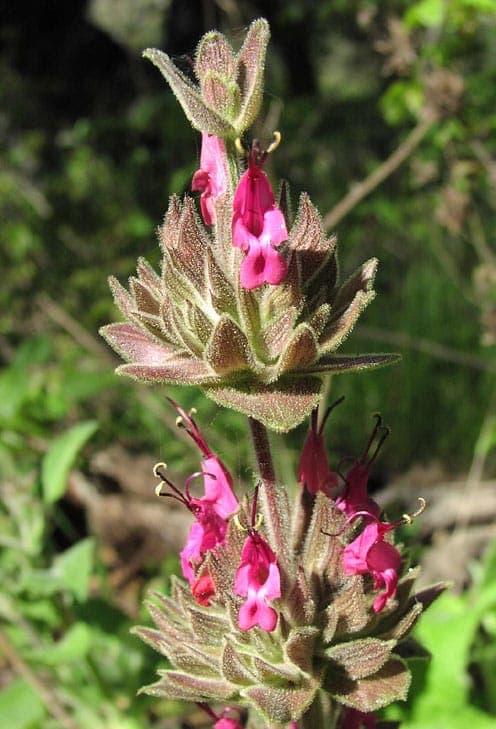
Taken by Antandrus / Public domain, via Wikimedia Commons
Salvia spathacea: complete guide
Salvia spathacea
¿Quieres ver Salvia spathacea: complete guide en tu jardín?
1 minuto, sin tarjeta de crédito
Overview
Salvia spathacea, better known as Hummingbird sage, is an impressive low-growing groundcover from Western and Southwestern California. This remarkable plant attracts hummingbirds with its intense scarlet red flowers and forms a lush, green carpet. Perfect for wild gardens and ecologically conscious garden designs that support native pollinators.
Appearance and Bloom
Hummingbird sage grows to 30-45 cm in height and spreads to about 60-90 cm wide. The leaves are deep green, wrinkled, and softly aromatic. The flowers appear in spectacular scarlet red and bloom from March to May, sometimes into June. These flowers are specially adapted to hummingbirds and are rarely visited by bees.
Ideal Location
Plant Salvia spathacea in full sun to partial shade. The plant thrives with at least 4-6 hours of direct sunlight. In very hot, dry climates, some afternoon shade may be beneficial. Place the plant where you can see hummingbirds; this plant demonstrably attracts them with its flowers.
Soil
Well-drained soil is crucial. This California sage grows optimally in sandy, lean, or rocky soil. In heavier soils, add gravel or sand. A pH between 6.0 and 8.0 is suitable. The plant tolerates poor soil well and does not need fertilizing.
Watering
Once well established, Hummingbird sage is highly drought tolerant. Water when the top 3-4 cm of soil feels dry, especially during the growing season. In winter, water minimally. The plant is very sensitive to overwatering, especially in winter.
Diseño gratis
¿Quieres ver Salvia spathacea: complete guide en tu jardín? Crea un diseño gratis ahora.
Pruning
Minimal pruning is needed. Remove faded flowers in spring to encourage continuous blooming. After the peak of bloom (June), you can remove dead stems. A light shaping trim in spring can help maintain form.
Maintenance Calendar
- January-February: Light inspection after winter
- March-May: Beautiful bloom period, water management
- June-August: Growth slows, minimal care
- September-October: Winter preparation
- November-December: Dormant period
Winter Hardiness
Salvia spathacea is hardy to about -8 to -12 degrees Celsius, suitable for many parts of Europe. In very severe winters, extra protection may be needed. Good drainage is essential for winter survival.
Companion Plants
Pair with other wild plants: native grasses, other California sages, and alpine flowers. Hummingbird sage works beautifully in wildflower borders and ecological gardens. The flowers not only attract hummingbirds but also support local biodiversity.
Closing Thoughts
Salvia spathacea is more than a beautiful plant; it's an invitation for hummingbirds to visit your garden. Perfect for those who want to combine nature and gardening. Available at specialized garden centers and online. Consult gardenworld.app for integration into your garden design. This California jewel brings life and color to any garden. Plant in full sun, keep dry, and enjoy the hummingbirds. Gardenworld.app will help you optimize this special plant in your garden design.
¿Quieres ver Salvia spathacea: complete guide en tu jardín? Crea un diseño gratis ahora.
Sube una foto, elige un estilo y obtén un diseño fotorrealista con lista de plantas en menos de un minuto.
Más de 10.000 jardines diseñados
Sin tarjeta de crédito


Plantas similares
Apple mint (Mentha x villosa): complete guide
Mentha x villosa
Meet apple mint (Mentha x villosa): a fruity-scented kitchen herb with woolly leaves, perfect for tea and mojitos.
Salvia peyronii: complete guide
Salvia peyronii
Discover Salvia peyronii, a rare Lebanese mountain sage. Growing tips, hardiness, and companion planting for a Mediterranean gravel garden.
Bigleaf mint (Mentha x rotundifolia): complete guide
Mentha x rotundifolia
Discover bigleaf mint: cultivation, care tips, and garden uses. Learn how to grow this aromatic herb with soft, hairy leaves.