
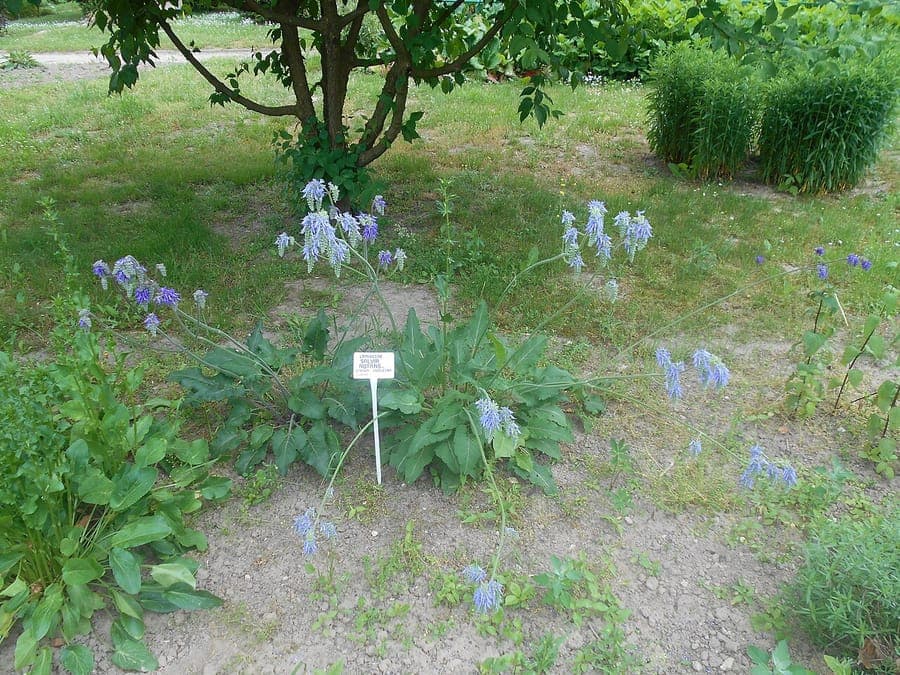
Salicyna / CC BY-SA 4.0, via Wikimedia Commons
Nodding sage: complete guide
Salvia nutans
¿Quieres ver Nodding sage: complete guide en tu jardín?
1 minuto, sin tarjeta de crédito
Overview
The Nodding sage (Salvia nutans) is an exceptional herbal plant native to Hungary and the Caucasus. This fascinating sage species is distinguished by its characteristic drooping flowers. Growing from Hungary through South-Eastern Europe, it makes a valuable addition to herb gardens with elegant flowering and aromatic properties.
Appearance and Bloom
The Nodding sage is a graceful plant with slender growth habit and aromatic foliage. Its most distinctive feature is the nodding flowers, which hang elegantly downward rather than standing upright. Flowers are blue to violet-purple, appearing throughout summer and autumn. This unique flowering pattern is highly ornamental.
Ideal Location
This sage performs well in full sun to light partial shade. Plant it in sunny locations for optimal blooming. In very hot climates, afternoon shade can be beneficial. Protection from strong winds is helpful as the hanging flowers can be vulnerable.
Soil
The plant tolerates well-draining soil with moderate fertility. Heavy soils should be improved. pH can range from neutral to slightly alkaline. Prefers non-compacted soil with adequate organic matter.
Diseño gratis
¿Quieres ver Nodding sage: complete guide en tu jardín? Crea un diseño gratis ahora.
Watering
Once established, Nodding sage is reasonably drought tolerant. Regular water is needed until the root system is firmly established. Thereafter, watering can be substantially reduced. Ensure good drainage as standing water is harmful.
Pruning
Use light pruning after flowering to encourage compact growth. Remove dead stems in spring. Prune carefully around hanging flower stems to avoid damage. Heavy pruning can be done in April.
Maintenance Calendar
April-May: Spring growth begins. June-October: Blooming period with nodding flowers. November-March: Winter dormancy and minimal care. Regular deadheading during blooming.
Winter Hardiness
The Nodding sage is hardy in temperate regions. Good drainage is essential for winter survival. In very cold areas, protection may be beneficial. Do not plant in wet winter locations.
Companion Plants
Attractive plant partners are other Mediterranean herbs, lavender, and drought-tolerant perennials. The drooping form makes it interesting for terrace edge planting. Other Salvia species combine well.
Closing Remarks
The Nodding sage is a true jewel for herb gardens. Its unique drooping flowers and elegant form make it exceptional. Explore more species at gardenworld.app/en. Available from OBI and Hornbach in Germany.
¿Quieres ver Nodding sage: complete guide en tu jardín? Crea un diseño gratis ahora.
Sube una foto, elige un estilo y obtén un diseño fotorrealista con lista de plantas en menos de un minuto.
Más de 10.000 jardines diseñados
Sin tarjeta de crédito


Plantas similares
Apple mint (Mentha x villosa): complete guide
Mentha x villosa
Meet apple mint (Mentha x villosa): a fruity-scented kitchen herb with woolly leaves, perfect for tea and mojitos.
Salvia peyronii: complete guide
Salvia peyronii
Discover Salvia peyronii, a rare Lebanese mountain sage. Growing tips, hardiness, and companion planting for a Mediterranean gravel garden.
Bigleaf mint (Mentha x rotundifolia): complete guide
Mentha x rotundifolia
Discover bigleaf mint: cultivation, care tips, and garden uses. Learn how to grow this aromatic herb with soft, hairy leaves.