
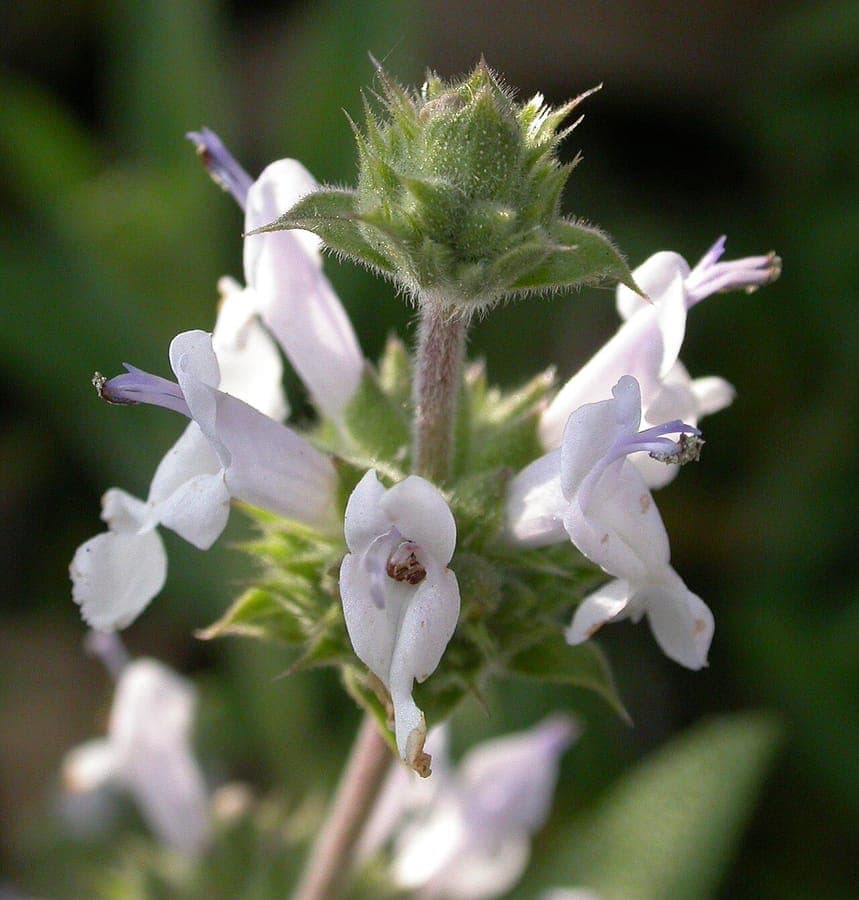
No machine-readable author provided. Curtis Clark assumed (based on copyright claims). / CC BY-SA 2.5, via Wikimedia Commons
Black Sage (Salvia mellifera): complete guide
Salvia mellifera
¿Quieres ver Black Sage (Salvia mellifera): complete guide en tu jardín?
1 minuto, sin tarjeta de crédito
Overview
Salvia mellifera, known as Black Sage or Californian Sage, is a stunning native shrub from California and northern Mexico. This charming half-shrub belongs to the Lamiaceae family and is prized for its intensely aromatic foliage, compact growth habit, and prolific violet-purple flowers that attract bees, butterflies, and hummingbirds throughout the growing season.
With minimal maintenance demands and exceptional drought tolerance, this sage thrives in dry gardens, Mediterranean landscapes, and sunny borders. It is an ideal plant for sustainable garden design and low-water landscapes.
Appearance & Bloom
Black Sage typically grows 3 to 4 feet tall and equally wide, developing a naturally rounded, spreading form with dense, multi-stemmed branching.
The foliage is small to medium, linear-lanceolate, and covered with fine hairs giving it a silky texture. The leaves are dark green to grayish-green and emit a powerfully aromatic scent when brushed or crushed. This characteristic fragrance is the origin of its common name.
Flowers appear from late spring through autumn in elegant vertical spikes. The blooms are typically violet-purple to deep purple, with occasional white variants. Each flower is highly attractive to bees, butterflies, and hummingbirds, making it a premier plant for pollinator gardens.
Ideal Location
This sage performs best in full sun locations, requiring a minimum of 6-8 hours of direct sunlight daily. While it tolerates partial shade, flowering intensity and foliage aroma diminish noticeably.
Optimal placement includes: dry, south-facing borders, slopes and terraces, Mediterranean and xeriscape gardens, background plantings in mixed borders, container cultivation on patios and balconies.
Protected locations are beneficial, particularly in cooler regions, to shield from harsh winds and heavy frost.
Soil
Drainage is paramount. Black Sage tolerates extremely dry, lean soils exceptionally well. The plant is adapted to rocky, sandy, and gravelly substrates with low fertility.
Ideal soil requirements: well-draining, loose texture, pH 6.0 to 7.5 (neutral to slightly acidic), low to moderate nutrient content, sandy or gravelly composition.
Avoid heavy, water-retentive clay soils. In regions with wet winters, amending with horticultural sand improves drainage. The plant thrives without supplemental feeding, thanks to its evolved root system.
Watering
Once established (after 2-3 months), this plant requires minimal supplemental irrigation. In regions with reliable rainfall, rainwater alone often suffices.
Irrigation schedule: young plants (first season): water weekly until well-rooted, established plants: monthly or less during normal conditions, drought periods: deep water once monthly, winter: minimal; only in unseasonably dry conditions.
Under-watering is preferable to over-watering. Excess moisture causes root rot. Wilting typically indicates over-watering rather than insufficient moisture.
Diseño gratis
¿Quieres ver Black Sage (Salvia mellifera): complete guide en tu jardín? Crea un diseño gratis ahora.
Pruning
Pruning maintains shape and prevents legginess. Perform light pruning in spring after frost danger passes.
Pruning guidelines: spring pruning (remove dead branches and reduce height by approximately one-third), summer deadheading (remove spent flower spikes to encourage continuous blooming), autumn pruning (avoid heavy cutting; retain foliage for winter protection), minimal yearly maintenance often suffices for established plants.
Deadheading spent flowers stimulates prolonged flowering. Renewal pruning in early spring before new growth appears rejuvenates overgrown specimens.
Maintenance Calendar
March-April (Spring): Pruning and cleanup, initial deep watering, repotting if container-grown.
May-June (Late Spring): Regular watering for active growth, deadheading, monitor for pests.
July-August (Summer): Minimal intervention, occasional watering during extreme drought, light staking if needed.
September-October (Autumn): Reduce watering, no heavy pruning, collect seed for propagation.
November-February (Winter): Minimal maintenance, frost protection in cold regions, plan spring improvements.
Winter Hardiness
Black Sage is hardy to approximately -5°C to -8°C depending on provenance. In Mediterranean and warm climates (USDA zones 9-10), it grows unprotected. In temperate regions, winter protection may benefit plants during extreme frost events.
Winter protection strategies: mulch around the base, row covers during predicted hard freezes, avoid heavy autumn pruning, ensure excellent drainage during wet winters.
In severely cold regions, container cultivation allows indoor overwintering during extreme cold snaps.
Companion Plants
This sage pairs beautifully with: Lavandula (lavender varieties), Cistus (rockrose), Santolina (cotton lavender), Teucrium (germander), Rosmarinus (rosemary), Erica and Calluna (heaths), ornamental grasses (Stipa, Festuca).
These combinations share drought preference and create striking color and texture contrasts.
Closing
Black Sage is an exceptional choice for gardeners seeking low-maintenance, drought-tolerant plants with genuine ecological value. Its intensely fragrant foliage, extended blooming season, and exceptional value to pollinators make it an outstanding garden specimen. Whether you are designing a Mediterranean garden or a sustainable landscape, this Californian native delivers beauty, resilience, and environmental benefit. Find it at gardenworld.app and discover how Black Sage transforms your outdoor space.
¿Quieres ver Black Sage (Salvia mellifera): complete guide en tu jardín? Crea un diseño gratis ahora.
Sube una foto, elige un estilo y obtén un diseño fotorrealista con lista de plantas en menos de un minuto.
Más de 10.000 jardines diseñados
Sin tarjeta de crédito


Plantas similares
Apple mint (Mentha x villosa): complete guide
Mentha x villosa
Meet apple mint (Mentha x villosa): a fruity-scented kitchen herb with woolly leaves, perfect for tea and mojitos.
Salvia peyronii: complete guide
Salvia peyronii
Discover Salvia peyronii, a rare Lebanese mountain sage. Growing tips, hardiness, and companion planting for a Mediterranean gravel garden.
Bigleaf mint (Mentha x rotundifolia): complete guide
Mentha x rotundifolia
Discover bigleaf mint: cultivation, care tips, and garden uses. Learn how to grow this aromatic herb with soft, hairy leaves.