
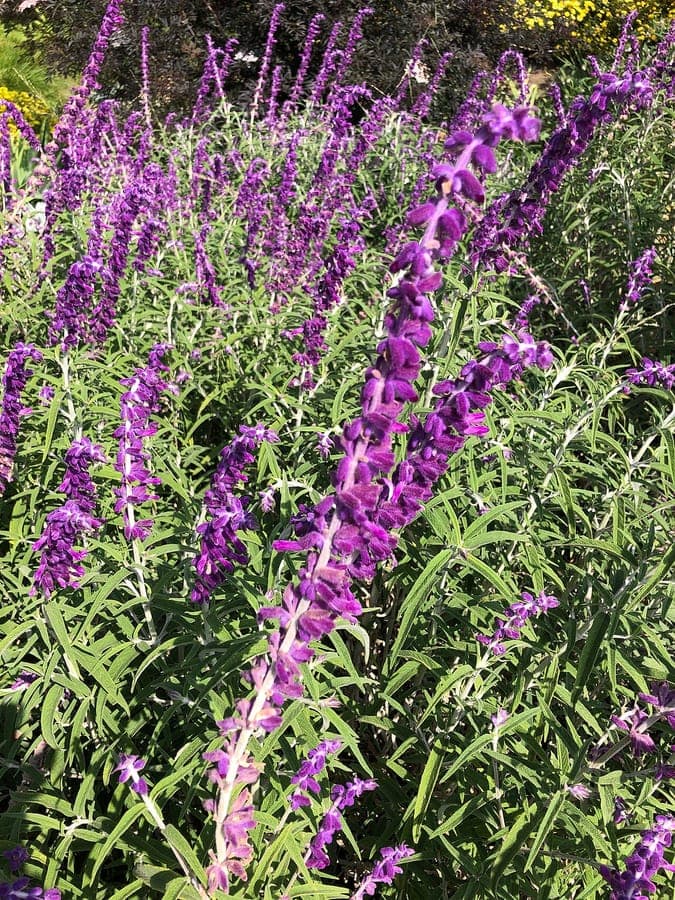
Netherzone / CC BY-SA 4.0, via Wikimedia Commons
Mexican sage: complete guide
Salvia leucantha
¿Quieres ver Mexican sage: complete guide en tu jardín?
1 minuto, sin tarjeta de crédito
Overview
Mexican sage (Salvia leucantha), also known as velvet sage, is elegant shrub native to Mexico and Central America. This ornamental grows to 1-1.5 meters producing spectacular long purple flower spikes. Perfect for warm, sunny gardens adding exotic flair.
Appearance and bloom
Mexican sage is bushy shrub reaching 1.5 meters with narrow, lance-shaped leaves. Foliage green, fine-textured, about 7-10 cm long. Flowers tiny, purple to violet, arranged dense spikes reaching 20-30 cm long. Bloom occurs July through December in warm climates.
Ideal location
Plant Mexican sage in full sun (8+ hours daily) for best flowering. Thrives warm, sheltered locations protected cold winds. Colder regions: grow in pots, overwinter indoors. Perfect background planting borders, against walls or containers.
Soil
Mexican sage prefers well-draining soils, slightly dry. Heavy clay improved with sand and compost (30% addition). pH 6.0-7.5 ideal. Add 5-8 cm compost at planting. Excellent drainage critical preventing root rot.
Watering
Water newly planted sage regularly (2-3x weekly) first growing season. Once established, plant tolerates drought thanks deep roots. Summer dry periods water once weekly deeply. Avoid overwatering winter. Mulch aids retention but ensure air circulation.
Diseño gratis
¿Quieres ver Mexican sage: complete guide en tu jardín? Crea un diseño gratis ahora.
Pruning
Regular pruning promotes bushiness and flowering. Spring (March-April) prune back to 30-50 cm encouraging new branches. After bloom (January-February) light cleanup. Remove dead branches. Plant responds well shaping pruning.
Maintenance calendar
MARCH-APRIL: Heavy pruning, fertilizer application. MAY-JUNE: Growth period, regular watering. JULY-DECEMBER: Bloom, minimal maintenance. JANUARY: Cleanup, feeding. FEBRUARY-MARCH: Season preparation.
Winter hardiness
Mexican sage not frost-hardy in cold climates. Tolerating about 5-10 degrees Celsius. Netherlands, Belgium: overwinter potted indoors (10-15 degrees) or protect outdoors with burlap (to -5 degrees). Southern Europe grows permanently outside.
Companion plants
Use Mexican sage summer borders with other warm-growers like mandevilla, passion flower lantana. Plant with yellow or orange flowers for color contrast. Perfect Mediterranean garden styles.
Closing
Mexican sage deserves place warm gardens where exotic touches desired. With care protecting cold and regular pruning delivers beautiful blooms. Plant material: OBI and Hornbach offer good assortment. Visit gardenworld.app/en expert garden design and gardenworld.app/en plant advice.
¿Quieres ver Mexican sage: complete guide en tu jardín? Crea un diseño gratis ahora.
Sube una foto, elige un estilo y obtén un diseño fotorrealista con lista de plantas en menos de un minuto.
Más de 10.000 jardines diseñados
Sin tarjeta de crédito


Plantas similares
Apple mint (Mentha x villosa): complete guide
Mentha x villosa
Meet apple mint (Mentha x villosa): a fruity-scented kitchen herb with woolly leaves, perfect for tea and mojitos.
Salvia peyronii: complete guide
Salvia peyronii
Discover Salvia peyronii, a rare Lebanese mountain sage. Growing tips, hardiness, and companion planting for a Mediterranean gravel garden.
Bigleaf mint (Mentha x rotundifolia): complete guide
Mentha x rotundifolia
Discover bigleaf mint: cultivation, care tips, and garden uses. Learn how to grow this aromatic herb with soft, hairy leaves.