
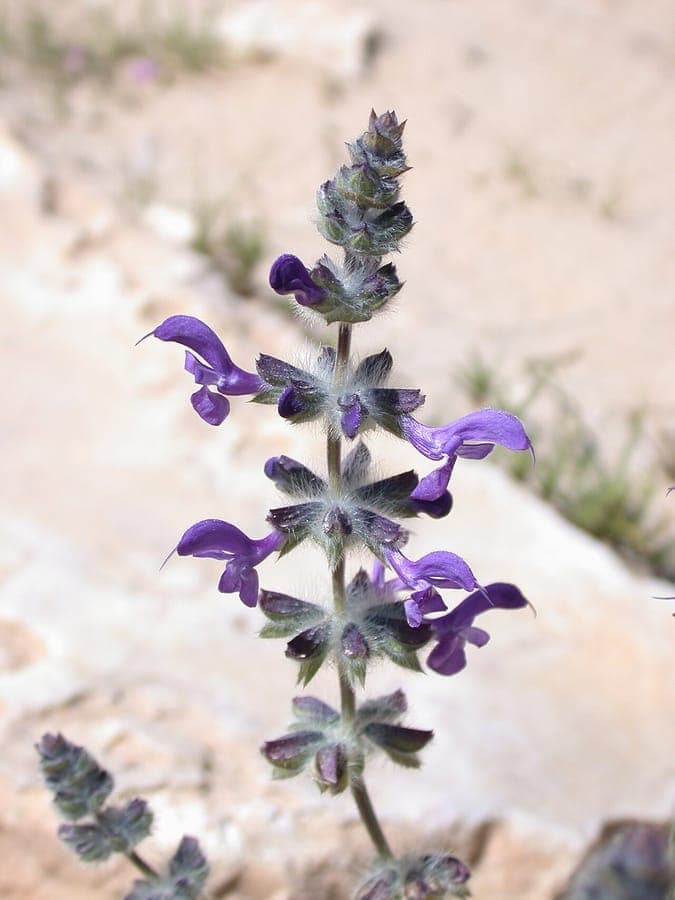
Gideon Pisanty (Gidip) גדעון פיזנטי / CC BY 3.0, via Wikimedia Commons
Salvia lanigera: complete guide
Salvia lanigera
¿Quieres ver Salvia lanigera: complete guide en tu jardín?
1 minuto, sin tarjeta de crédito
Overview
Salvia lanigera, known as verbena sage, vervain sage, or wild clary, is a Mediterranean sage naturally occurring from North Africa to western Iran. This plant is recognized for its impressive hairy, woolly leaves and alluring red to pink flowers. The plant serves as a valuable addition to Mediterranean gardens, dry landscapes, and pollinator-friendly environments.
Appearance and Bloom
Salvia lanigera grows to approximately 30-60 cm in height and spread, forming a compact shrub with thick, woolly-hairy foliage. The leaves are oblong, approximately 3-6 cm long, displaying gray-green coloration from the density of extremely fine hairs that glitter silver in light.
Flowers appear from March-May in warm climates and June-August in temperate regions. They are approximately 1-1.5 cm long, in shades of pink to red with purple-edged markings. Flowers stand in loose spikes along the upper stems and are exceptionally attractive to bees and butterflies.
Ideal Location
Place Salvia lanigera in full sun (minimum 8 hours direct sunlight daily) for optimal growth and flowering. The plant tolerates no shade; partial shade reduces blooming and causes leggy growth. Ensure good ventilation to prevent fungal diseases during humid periods.
Soil
Salvia lanigera thrives in well-draining soil of average fertility. Heavy clay soils must be substantially improved with sand and gravel for drainage. The plant accepts pH 6.0-7.5 but also tolerates slightly alkaline soils.
Amend soil initially with 25-30% sand and gravel to enhance drainage. A light addition of compost helps, but over-fertile soil leads to lush leaf growth at the expense of flowering.
Diseño gratis
¿Quieres ver Salvia lanigera: complete guide en tu jardín? Crea un diseño gratis ahora.
Watering
Once established, Salvia lanigera is very drought-tolerant and endures extended dry periods. During the first growing season (2-3 months), water when the top 2-3 cm of soil feels dry. Thereafter, minimal watering is necessary.
Overwatering can cause damage, especially in winter when growth slows. It is better to under-water than over-water. During extreme heat, supplemental water is beneficial, but avoid nighttime watering.
Pruning
Pruning can occur in spring after flowering (May-June). Remove spent flower spikes and any weak or damaged growth. Heavy pruning can be performed to restore form.
The plant grows naturally compact; excessive pruning is not required. Regular pinching of young growth encourages more compact formation.
Maintenance Calendar
January-February: Dormancy; no maintenance. March-May: Peak blooming; deadhead spent flowers. June-August: Growth; minimal watering. August-October: Winter preparation; reduce watering. October-December: Winter rest; no maintenance needed.
Winter Hardiness
Salvia lanigera is winter-hardy to approximately -5°C to -8°C (USDA zones 8-9). In colder climates such as Netherlands, Belgium, and much of Germany and France, the plant must be brought indoors or very carefully protected. In warmer Mediterranean regions, it overwinters outdoors.
Companion Plants
The verbena sage pairs beautifully with other Mediterranean plants such as lavender, santolina, roses, and other drought-tolerant shrubs. Group with silver-foliaged plants for textural contrast. Also suitable in gravel or rock gardens.
Closing
Salvia lanigera provides elegance, drought-tolerance, and value for pollinators in Mediterranean and semi-dry gardens. This plant suits climate-conscious gardeners. Learn more at gardenworld.app/en and gardenworld.app/nl.
¿Quieres ver Salvia lanigera: complete guide en tu jardín? Crea un diseño gratis ahora.
Sube una foto, elige un estilo y obtén un diseño fotorrealista con lista de plantas en menos de un minuto.
Más de 10.000 jardines diseñados
Sin tarjeta de crédito


Plantas similares
Apple mint (Mentha x villosa): complete guide
Mentha x villosa
Meet apple mint (Mentha x villosa): a fruity-scented kitchen herb with woolly leaves, perfect for tea and mojitos.
Salvia peyronii: complete guide
Salvia peyronii
Discover Salvia peyronii, a rare Lebanese mountain sage. Growing tips, hardiness, and companion planting for a Mediterranean gravel garden.
Bigleaf mint (Mentha x rotundifolia): complete guide
Mentha x rotundifolia
Discover bigleaf mint: cultivation, care tips, and garden uses. Learn how to grow this aromatic herb with soft, hairy leaves.