
Wikimedia Commons / CC BY-SA 3.0, via Wikimedia Commons
Mealy sage (Salvia farinacea): complete guide
Salvia farinacea
¿Quieres ver Mealy sage (Salvia farinacea): complete guide en tu jardín?
1 minuto, sin tarjeta de crédito
Overview
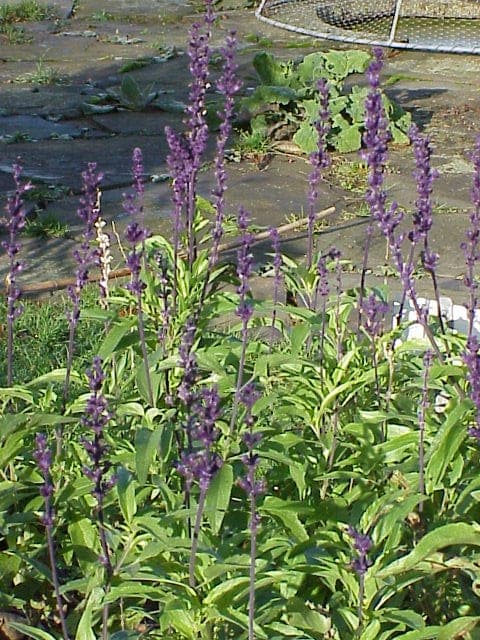
Mealy sage (Salvia farinacea) is an elegant herb from the Lamiaceae family, native to Texas and Mexico. This beautiful plant is renowned for its eye-catching blue-purple flowers and gray-powdered stems. The plant grows compact and flowers abundantly throughout summer into fall. It's a favorite among gardeners seeking sustained blue color and with pollinators like bees and butterflies.
Appearance and Bloom
Mealy sage grows as a compact, upright plant reaching about 45-60 centimeters tall. The characteristic gray-powdered (farinose) stems give the plant its botanical name. The flowers are small, tubular and grow in dense spike-like clusters. They range from lilac to deep blue. The plant blooms continuously from June until the first frost, especially if spent flowers are regularly removed.
Ideal Location
Mealy sage thrives in full sun and open sites with at least 6-8 hours of direct sunlight daily. The plant tolerates light partial shade, but flowers most abundantly in full sun. Ensure good air circulation around the plant. In warm climates, some afternoon shade in the hottest months can be beneficial, though not essential.
Soil
Mealy sage grows well in well-drained soils. It prefers neutral to slightly acidic soil with pH around 6.0-7.5. The plant tolerates dry soils well, making it a good choice for water-saving gardens. In heavier, moister soils compost or sand can be added for better drainage. Excess fertilizer can lead to lush growth with fewer flowers.
Diseño gratis
¿Quieres ver Mealy sage (Salvia farinacea): complete guide en tu jardín? Crea un diseño gratis ahora.
Watering
Mealy sage is moderately drought-tolerant once established, but grows better with regular, moderate watering. Ensure soil dries somewhat between waterings. In containers water more frequently than in ground. Avoid waterlogging which can lead to root rot. Drip watering at the base of the plant is most effective.
Pruning
Pruning keeps the plant compact and promotes more flowers. Pinch tips of young plants (until about 20 centimeters) to make them fuller. Regularly remove spent flower spikes to stimulate further blooming. In late fall long stems can be shortened before new growth begins.
Maintenance Calendar
May-June: Plant out after frost danger passes. July-October: Peak blooming period. Regularly remove spent flowers. November: Cut back long stems or protect plant from frost. December-April: Dormancy in temperate climates.
Winter Hardiness
In temperate climates mealy sage is perennial and can survive winters down to about -10 degrees Celsius. However, it thrives better if protected from severe, very cold winters. In colder regions it is usually grown as an annual. Mulching around the base in fall helps overwintering.
Companion Plants
Combine mealy sage with yellow flowers from coreopsis and goldenrod for dramatic contrasts. White-flowering plants such as ageratum or alyssum accentuate the blue color. Gray foliage like artemisia complements the gray-powdered stems. For cut flower arrangements combine with roses and delphiniums.
Conclusion
Mealy sage is a must-have plant for years of sustained blue color. Easy to grow and flowering abundantly, it makes a valuable addition to any summer garden seeking a classic look.
Availability: Available at garden centers. Also available as seed for sowers.
¿Quieres ver Mealy sage (Salvia farinacea): complete guide en tu jardín? Crea un diseño gratis ahora.
Sube una foto, elige un estilo y obtén un diseño fotorrealista con lista de plantas en menos de un minuto.
Más de 10.000 jardines diseñados
Sin tarjeta de crédito


Plantas similares
Apple mint (Mentha x villosa): complete guide
Mentha x villosa
Meet apple mint (Mentha x villosa): a fruity-scented kitchen herb with woolly leaves, perfect for tea and mojitos.
Salvia peyronii: complete guide
Salvia peyronii
Discover Salvia peyronii, a rare Lebanese mountain sage. Growing tips, hardiness, and companion planting for a Mediterranean gravel garden.
Bigleaf mint (Mentha x rotundifolia): complete guide
Mentha x rotundifolia
Discover bigleaf mint: cultivation, care tips, and garden uses. Learn how to grow this aromatic herb with soft, hairy leaves.