
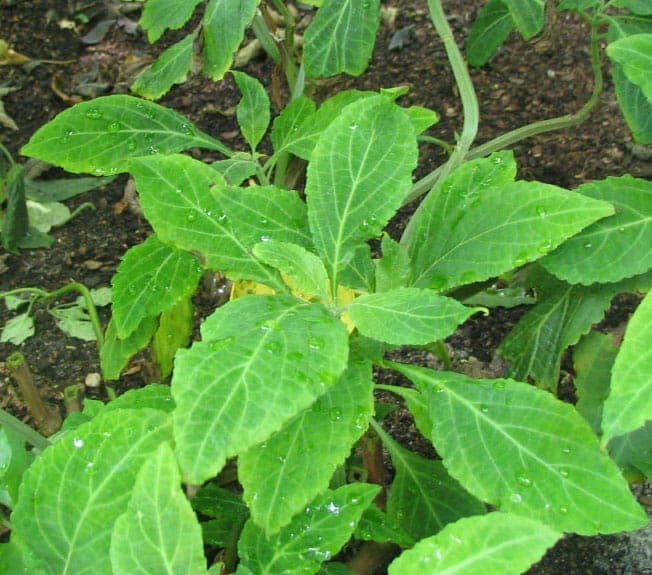
Wikimedia Commons / CC BY-SA 3.0, via Wikimedia Commons
Salvia divinorum: complete guide
Salvia divinorum
¿Quieres ver Salvia divinorum: complete guide en tu jardín?
1 minuto, sin tarjeta de crédito
Overview
Salvia divinorum, commonly known as diviner's sage, yerba de la pastora, or the herb of the virgin, is a rare, semi-woody sage endemic to Oaxaca in southern Mexico. This plant is carefully protected in its native habitat and is subject to legal restrictions in many countries. Growers must check local laws and regulations before cultivating this species.
The plant is traditionally recognized for its striking violet-blue to magenta flowers and large, textured green foliage. In cultivation, it remains a challenging but rewarding plant for highly experienced gardeners.
Appearance and Bloom
Salvia divinorum grows to approximately 1-1.5 meters tall with semi-woody stems covered in fine hairs. The leaves are large and ovate, approximately 7-12 cm long, with deep veining and distinctly textured, velvety surfaces. The foliage is deep green with purplish undersides, especially evident in young growth.
The flowers are striking, approximately 2-3 cm long, ranging in color from purple-blue to deep magenta-pink tones. They appear in loose floral spikes along the upper stems from May through October. Flowers are self-fertile and produce small seeds.
Ideal Location
Salvia divinorum requires protected conditions with filtered sun to partial shade in warm climates. Direct full sun can be damaging in very warm regions. The plant thrives in consistently moist, temperature-regulated conditions. In temperate climates, greenhouse cultivation is essential.
Soil
The plant grows in very moisture-retentive, humus-rich soil with excellent drainage. A mixture of 40% peat moss, 40% perlite, and 20% bark works well. The plant prefers acidic soils with pH 6.0-7.0.
Enhanced moisture retention is important but stagnation must be prevented. Daily submersion in moist growing media makes this plant susceptible to fungal disease.
Diseño gratis
¿Quieres ver Salvia divinorum: complete guide en tu jardín? Crea un diseño gratis ahora.
Watering
Salvia divinorum requires consistently moist (not wet) soil. Water when the top 1 cm of soil feels dry. During the growing period (spring-fall), water 2-3 times weekly. In winter, as growth slows, reduce watering to once weekly.
Humidity is equally important; the plant thrives at 50-70% atmospheric humidity. In dry conditions, light misting helps.
Pruning
Pruning can occur in spring to maintain form. Remove leggy, weak stems and dead foliage regularly. The plant can be pruned to a more compact shape.
Deadheading spent flowers encourages further blooming. Beyond this, no pruning is necessary; the plant naturally maintains compact growth.
Maintenance Calendar
January-February: Dormancy; minimal watering. March-April: Growth initiates; increase watering. May-August: Peak growth; maintain consistent moisture. August-October: Peak blooming; deadhead regularly. October-November: Growth slows; reduce watering. December: Rest period.
Winter Hardiness
Salvia divinorum is highly frost-sensitive and does not overwinter outdoors in temperate climates. The plant must be protected below 10°C. In cold regions, the plant must be brought indoors or housed in a heated greenhouse.
Companion Plants
Because this plant requires greenhouse cultivation, it combines best with other tropical or subtropical greenhouse plants such as rare sages, begonias, and ferns. Creating a microclimate with matching requirements is ideal.
Closing
Salvia divinorum is a fascinating plant for experienced collectors, yet it demands careful attention to regulations, expertise, and respect. Learn more at gardenworld.app/en and gardenworld.app/nl.
¿Quieres ver Salvia divinorum: complete guide en tu jardín? Crea un diseño gratis ahora.
Sube una foto, elige un estilo y obtén un diseño fotorrealista con lista de plantas en menos de un minuto.
Más de 10.000 jardines diseñados
Sin tarjeta de crédito


Plantas similares
Apple mint (Mentha x villosa): complete guide
Mentha x villosa
Meet apple mint (Mentha x villosa): a fruity-scented kitchen herb with woolly leaves, perfect for tea and mojitos.
Salvia peyronii: complete guide
Salvia peyronii
Discover Salvia peyronii, a rare Lebanese mountain sage. Growing tips, hardiness, and companion planting for a Mediterranean gravel garden.
Bigleaf mint (Mentha x rotundifolia): complete guide
Mentha x rotundifolia
Discover bigleaf mint: cultivation, care tips, and garden uses. Learn how to grow this aromatic herb with soft, hairy leaves.