
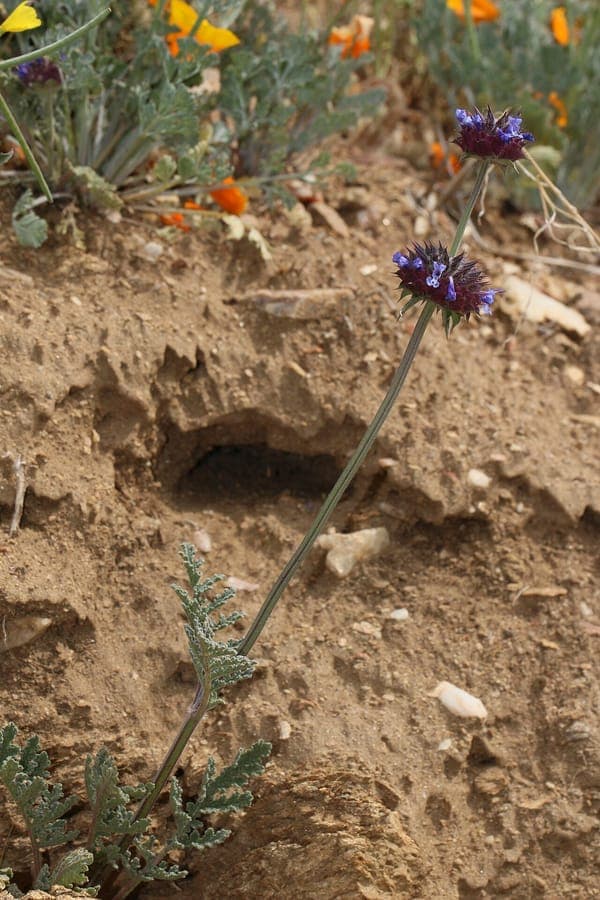
Walter Siegmund (talk) / CC BY-SA 4.0, via Wikimedia Commons
Salvia columbariae: complete guide
Salvia columbariae
¿Quieres ver Salvia columbariae: complete guide en tu jardín?
1 minuto, sin tarjeta de crédito
Overview
Salvia columbariae, known as Chia or California Chia, is a compact, low-growing annual to perennial sage from the southwestern United States. This botanically fascinating plant originates from the dry, hot deserts of California, Nevada, New Mexico, Arizona, and Utah - a region where many plant species have adapted to extreme conditions. The plant is valuable not only for its historical significance in Native American nutrition (seeds were an important food source) but also for its charm as an ornamental.
Although an annual in temperate climates, Salvia columbariae will self-seed in many garden and balcony situations and regrow the following season. This makes it an effective plant for those who want annual blooms with minimal effort.
Appearance & Bloom
This compact plant typically reaches a height of 30-45 centimeters with an upright, erect growth habit. The leaves are green, rough and somewhat grainy in texture, giving the plant a characteristic, almost rough appearance. However, the most striking feature is the flowers: densely packed, round flower clusters in blue-violet to purple-violet, each approximately 2-3 centimeters in diameter.
These flowers appear from April through June (depending on climate and sowing time) in large quantities. While individual flowers are small, they produce substantial amounts of pollen and nectar highly attractive to honeybees and other insect life.
Ideal Location
For Salvia columbariae, full sun is essential. The plant thrives best in locations where it receives 8+ hours of direct sunlight daily. This desert plant is adapted to intense radiation and feels unhappy in shady environments.
The location must also be well-ventilated, especially important in humid climates where air circulation can prevent disease. Protected locations from strong winds are however favorable, as heavy gusts damage the plant and cause flower drop.
Soil
Salvia columbariae has an absolute preference for sandy, well-draining soil. Unlike many garden plants, this plant does not want rich, amended soil - in fact, too much fertilizer can lead to unbalanced growth with lots of foliage but few flowers.
The ideal soil composition consists of coarse sand, gravel, and minimal organic matter. If you live in a clay area, we recommend strong soil amendment with coarse sand and gravel before planting. pH value can be fairly neutral to slightly acidic.
Watering
Once well-rooted, Salvia columbariae has very low water needs. Water seedlings in dry seed compost, then transition to very sparse watering once plants are grown. Adult plants actually need almost no water - only during sustained drought give water a few times.
This is an important advantage for water-limited climates. However, be careful not to overdo watering, as this desert plant quickly succumbs to root rot in wet conditions.
Diseño gratis
¿Quieres ver Salvia columbariae: complete guide en tu jardín? Crea un diseño gratis ahora.
Pruning
Pruning is usually unnecessary for Salvia columbariae. The plant grows naturally compact and formed. You can, however, remove spent flowers (deadheading) to stimulate blooming and keep the plant tidy. This significantly extends the bloom period.
At season's end, when blooming is over and the plant is clearly fading, you can remove the entire plant (in annual scenario) or prune drastically (in perennial scenario where you expect regrowth in spring).
Maintenance Calendar
Spring (March-May): Sow seeds directly where they are to grow or indoors for later transplanting. Water carefully. Summer (June-August): Enjoy blooms, water occasionally during drought. Fall (September-November): Allow complete blooming and seed set. No more watering. Winter (December-February): Plant may freeze and die, but seed survives in soil and germinates next spring.
Winter Hardiness
Salvia columbariae is not winter hardy in the Netherlands and Belgium. The plant will die once serious night frosts occur. However, the good news is that you can leave seeds in the ground and they will naturally overwinter and emerge in spring. This makes the plant what you could call a "self-sowing annual."
In warmer areas (southern Spain, southern France, Italy) you can expect perennial growth. In Netherlands/Belgium: treat as an early annual plantable in April-May.
Companion Plants
Salvia columbariae works beautifully in combination with other compact desert plants. Try combining it with Echinocereus (Cactus), Agave, Yucca, and other succulents. For a more flowery garden, combine with Clarkia, Lupine, and other California wildflowers.
Excellent planting combinations:
- Salvia columbariae + Echinacea + Rudbeckia for bee magnet
- Salvia columbariae + Artemisia for contrast in leaf color
- Salvia columbariae + Heuchera for height and color variation
Closing
Salvia columbariae is a true gem for sunny front gardens, especially in warmer climates or where water is scarce. Its compact growth, attractive flowers, and maintenance-friendly nature make it ideal for those wanting to create low-maintenance, pollinator-friendly gardens. The fact that it self-seeds adds even more charm.
When you add this sage to your front garden, you choose a plant with true desert heritage and resilience. Local garden centers and plant services in regions with dry climates usually stock seed or plants. For more inspiration, consult Gardenworld.app for designs with dry climate plant palettes. Gardenworld.app helps you transform your front garden into something authentically and sustainably beautiful.
¿Quieres ver Salvia columbariae: complete guide en tu jardín? Crea un diseño gratis ahora.
Sube una foto, elige un estilo y obtén un diseño fotorrealista con lista de plantas en menos de un minuto.
Más de 10.000 jardines diseñados
Sin tarjeta de crédito


Plantas similares
Salvia clevelandii: complete guide
Salvia clevelandii
Discover the fragrant sage, a charming Californian ornamental with aromatic leaves and blue flowers. Perfect for dry front gardens.
Salvia involucrata: complete guide
Salvia involucrata
Discover Rosy-Leaf Sage, a Mexican beauty with vibrant pink flowers. Perfect as a container plant or in mild climates outdoors.