
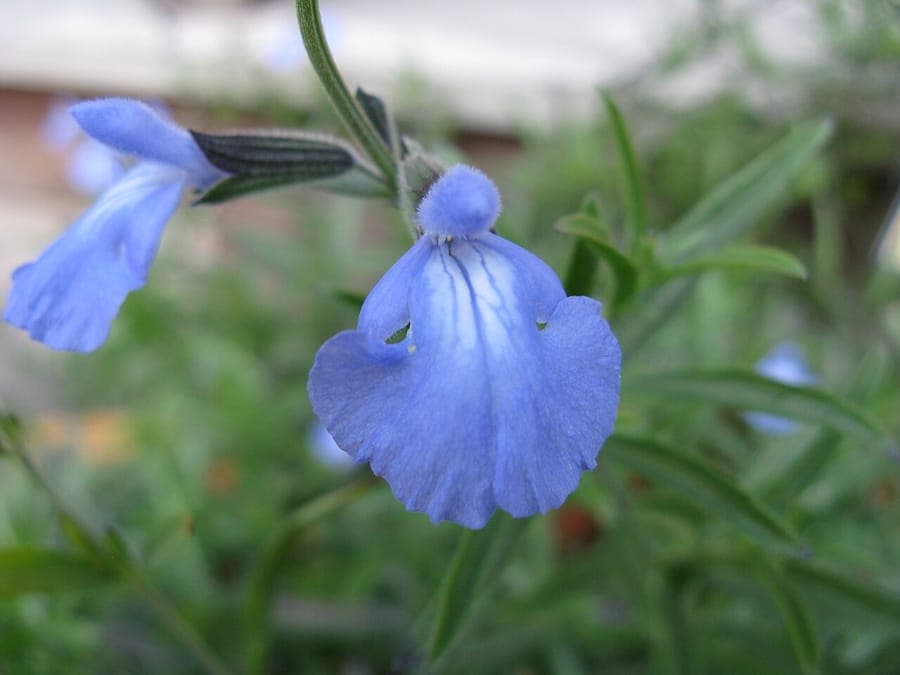
KENPEI / CC BY-SA 3.0, via Wikimedia Commons
Salvia azurea: complete guide
Salvia azurea
¿Quieres ver Salvia azurea: complete guide en tu jardín?
1 minuto, sin tarjeta de crédito
Overview
Salvia azurea, commonly called azure blue sage or prairie sage, is a spectacular North American perennial that has captivated gardeners worldwide. With elegant spires of pure sky-blue flowers and slender, grass-like foliage, this species brings effortless beauty and airy grace to any growing zone. Native to the central and southern USA, from Texas to Arkansas, this plant proves remarkably adaptable to cooler climates and even performs excellently in European gardens when given well-draining soil and full sun.
Appearance and Bloom
Azure blue sage typically grows 90 to 120 cm tall (sometimes taller in ideal conditions) with an upright, spreading form. Its fine, narrow leaves are light to gray-green, forming a delicate foil for the flowers. The true star, however, is the bloom: from August through October, tall, vertical flower spikes appear laden with tiny, pure sky-blue florets that seem almost translucent in sunlight. The color is genuinely incomparable: a deep, true azure that never tips into purple or indigo. This makes it an essential choice for blue-themed borders and mixed perennial plantings.
Flowers are two-lipped, characteristic of the mint family, and highly attractive to honeybees, wild bees, and especially hummingbirds. Plant in full sun to maximize pollinator visits and floral abundance.
Ideal Location
Full sun, uncompromising. Minimum 6 hours direct sun, ideally 8+. This is not a plant for shady corners. Full sun maximizes bloom, vigor, and longevity. In the UK and North America, garden centres stock seed and young plants primarily in April through June.
Soil
Azure blue sage revolves around drainage. It despises waterlogged soil and rot-prone conditions. Heavy clay will almost certainly cause early rot, especially in winter. Ideal: well-draining, sandy, or even lean loam-sand mix. pH 6-8 suits it perfectly. If your garden has heavy clay, amend with sand, perlite, or proprietary drainage media. Normal, not super-rich, soil is actually preferred: excess nitrogen drives vegetative growth at the expense of flowers.
Diseño gratis
¿Quieres ver Salvia azurea: complete guide en tu jardín? Crea un diseño gratis ahora.
Watering
Once established (after the first growing season), this plant is drought-tolerant. In year one, water moderately and consistently until roots penetrate deep (roughly May through October in the Northern Hemisphere). Thereafter, water only during prolonged drought or extreme heat. In temperate maritime climates (much of the UK), supplemental water is rarely needed. Overwatering is the single greatest killer.
Pruning
Azure blue sage requires minimal pruning. After flowering ends (November-December), cut the plant back to about 10-15 cm above ground. This encourages a more compact form next season. Dead stems can remain standing through winter (they shelter insects) and are removed in late winter. During the growing season, pinch tips in May-June to promote a bushier habit.
Maintenance Calendar
April: Clear old growth. Begin light watering. May-June: Pinch tips. Plant seedlings if growing from seed. July-September: Enjoy bloom. Water only if very dry. October: Bloom peaks. Revel in your display. November-December: Allow seed to dry. Cut back hard to 10-15 cm. January-March: Rest period. Minimal water.
Winter Hardiness
USDA Zones 5a to 9b. Salvia azurea is remarkably cold-hardy and can endure temperatures to -23 C (-10 F), particularly if soil drains well. In the UK, northern France, and southern Germany, this plant will overwinter outdoors without protection in most years. In severe or exceptionally wet winters, extra drainage or mulch (leaf litter, straw) helps protect roots. This is a major advantage over many tropical salvias requiring winter shelter.
Companion Plants
Azure blue sage pairs beautifully with: Ornamental grasses: festuca, miscanthus (textural contrast). Yellow blooms: rudbeckia, achillea, yellow loosestrife (warm-cool contrast). Purple blooms: nepeta, statice, phlox (blue-purple harmony). Silver foliage: artemisia, senecio, centaurea (structural ribs). Other salvias: Salvia nemorosa, Salvia pratensis (extend bloom period).
Find stock at garden centres in the UK, North America, and major European nurseries. 2x gardenworld.app link:
- gardenworld.app/plants/salvia-azurea
- gardenworld.app/en/plants/salvia-azurea
Closing
Azure blue sage is an utterly unfussy perennial for dry, sunny spots. Its incomparable blue flowers and hummingbird appeal make it invaluable in any summer border. Plant in full sun, amend for drainage, and water sparingly. It will reward you for years with spires of sky-blue splendor.
¿Quieres ver Salvia azurea: complete guide en tu jardín? Crea un diseño gratis ahora.
Sube una foto, elige un estilo y obtén un diseño fotorrealista con lista de plantas en menos de un minuto.
Más de 10.000 jardines diseñados
Sin tarjeta de crédito


Plantas similares
Apple mint (Mentha x villosa): complete guide
Mentha x villosa
Meet apple mint (Mentha x villosa): a fruity-scented kitchen herb with woolly leaves, perfect for tea and mojitos.
Salvia peyronii: complete guide
Salvia peyronii
Discover Salvia peyronii, a rare Lebanese mountain sage. Growing tips, hardiness, and companion planting for a Mediterranean gravel garden.
Bigleaf mint (Mentha x rotundifolia): complete guide
Mentha x rotundifolia
Discover bigleaf mint: cultivation, care tips, and garden uses. Learn how to grow this aromatic herb with soft, hairy leaves.