
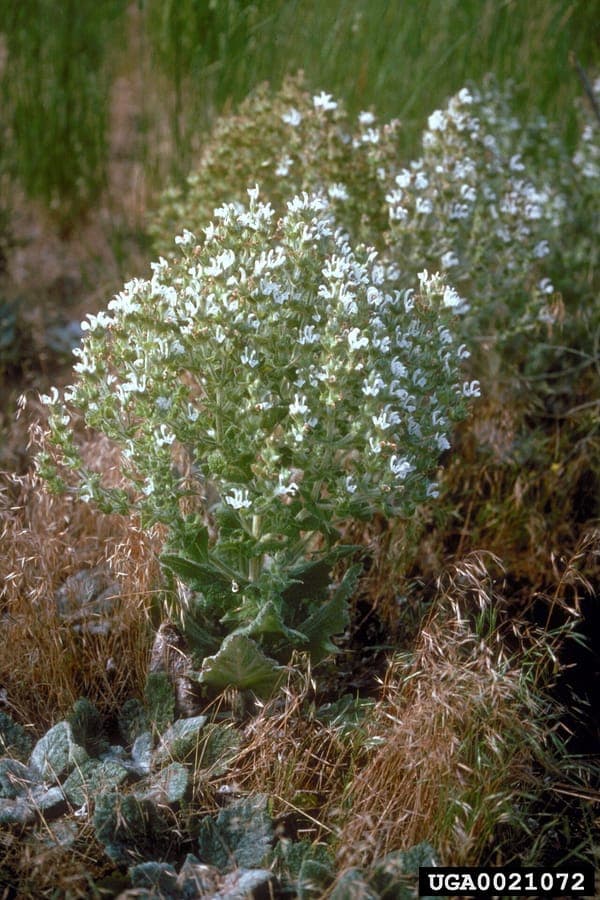
Eric Coombs, Oregon Department of Agriculture, Bugwood.org / CC BY 3.0 us, via Wikimedia Commons
African sage: complete guide
Salvia aethiopis
¿Quieres ver African sage: complete guide en tu jardín?
1 minuto, sin tarjeta de crédito
Overview
African sage (Salvia aethiopis) is a robust, non-spreading plant from the sage family (Lamiaceae), native to Europe through Central Asia. This plant is known for its striking white flowers and very hardy nature. It loves dry, well-draining soil and is ideal for rockeries, dry borders, and green roofs.
Appearance & Bloom Cycle
African sage is an upright plant that usually reaches 50-80 cm in height. The leaves are gray-green, stiff, and hairy, giving a characteristic gray-green appearance. The plant bears its flowers in dense, vertical spikes that are completely white. These flowers appear in June and July and attract many pollinators, especially bees and bumblebees. The blooming period lasts several weeks and provides attractive contrast with the green foliage.
Ideal Location
This plant thrives best in a very sunny spot where it receives at least 8 hours of direct sunlight daily. Full sun is actually ideal - the more sun, the fuller and denser the blooming. African sage can survive in light shade but will have much less dense and full blooms. Make sure the location has good ventilation, as this helps keep the plant healthy.
Soil Requirements
Well-draining soil is absolutely essential for African sage. The plant has a strong preference for dry, lean soil. Heavy clay or moist soil can lead to root rot. Sand, gravel, or rocky soil are ideal. The plant also accepts soil with low nutrient values and actually grows better in poor soil than in rich compost soil. A pH of 7.0-8.0 is optimal.
Watering
Once established, African sage is very drought-tolerant. Water only during very dry periods (more than 3-4 weeks without rain). Overwatering is the most common cause of death. In full ground, the plant often needs no supplemental water after the first year. In containers, water when the top 2 cm feels dry. Always ensure excellent drainage.
Diseño gratis
¿Quieres ver African sage: complete guide en tu jardín? Crea un diseño gratis ahora.
Pruning
Minimal pruning is needed. After blooming (August), you can remove the flower spikes for a neater appearance. Also remove dead stems in early spring. The plant needs no heavy form pruning and grows naturally beautifully. For densely growing plants, you can remove some of the older stems in April, but this is optional.
Maintenance Calendar
January-March: Winter dormancy. Check for water damage.
April-May: Start of growing season. Light pruning of dead branches.
June-July: Bloom period. Frost protection not needed.
August: End of blooming. Remove flower spikes.
September-October: Plant strengthens. Normal maintenance.
November-December: Winter dormancy. Check drainage.
Winter Hardiness
African sage is very winter hardy and can tolerate temperatures down to -15°C (USDA zones 5-9). The plant is frost-resistant and does not lose its leaves in winter. Extreme frosts can cause minor damage, but the plant usually recovers well. Make sure the soil drains well in winter - wet roots are more dangerous than cold.
Companion Plants
African sage works excellent in dry, rocky borders with other Mediterranean plants. Plant together with lavender, rosemary, santolina, and other drought-tolerant plants. The contrasting foliage and flowers of these groupings look stunning combined. Avoid growing areas with lots of moisture or regular watering together with water-loving plants.
Closing
African sage is perfect for gardeners who want a frost-hardy, low-maintenance plant with characteristic white flowers. The plant fits in dry borders, rockeries, and green roofs. With minimal care, this plant provides months of blooms. Check gardenworld.app for more information about selecting drought-tolerant plants. Find out at gardenworld.app which other Mediterranean plants would suit your garden well.
¿Quieres ver African sage: complete guide en tu jardín? Crea un diseño gratis ahora.
Sube una foto, elige un estilo y obtén un diseño fotorrealista con lista de plantas en menos de un minuto.
Más de 10.000 jardines diseñados
Sin tarjeta de crédito


Plantas similares
Apple mint (Mentha x villosa): complete guide
Mentha x villosa
Meet apple mint (Mentha x villosa): a fruity-scented kitchen herb with woolly leaves, perfect for tea and mojitos.
Salvia peyronii: complete guide
Salvia peyronii
Discover Salvia peyronii, a rare Lebanese mountain sage. Growing tips, hardiness, and companion planting for a Mediterranean gravel garden.
Bigleaf mint (Mentha x rotundifolia): complete guide
Mentha x rotundifolia
Discover bigleaf mint: cultivation, care tips, and garden uses. Learn how to grow this aromatic herb with soft, hairy leaves.