
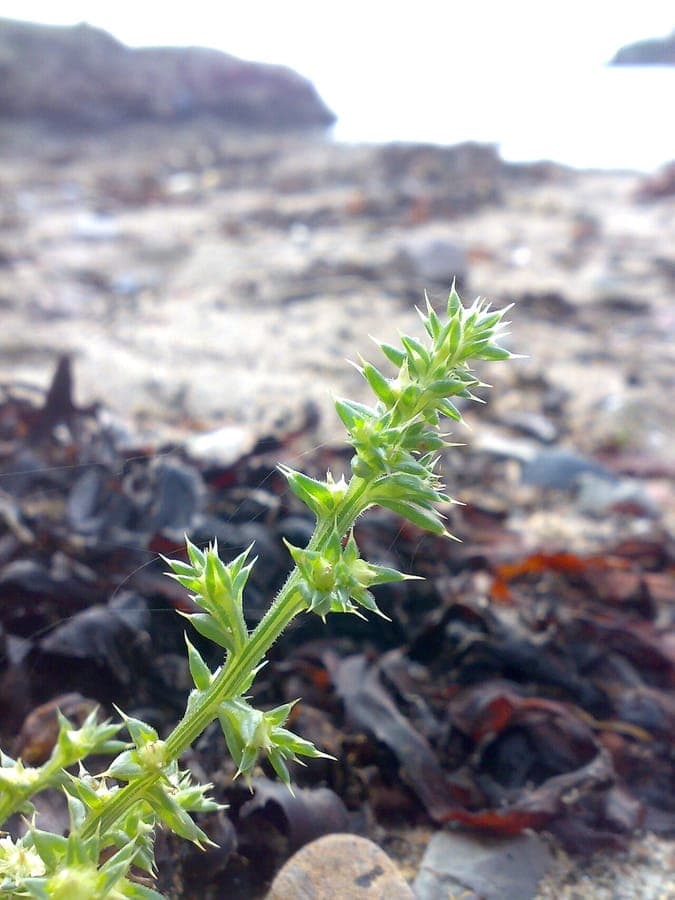
Bjoertvedt / CC BY-SA 3.0, via Wikimedia Commons
Prickly saltwort (Salsola kali): complete guide
Salsola kali
¿Quieres ver Prickly saltwort (Salsola kali): complete guide en tu jardín?
1 minuto, sin tarjeta de crédito
Overview
Prickly saltwort (Salsola kali) is a fascinating annual plant from the Amaranthaceae family, native to Mediterranean and Atlantic coasts of Europe. This plant goes by various names including tumbleweed and prickly saltwort. The plant grows in salt-laden soils along coasts and is valuable for understanding coastal ecosystems and erosion control in coastal zones.
Appearance and Bloom
Saltwort grows in a characteristic spherical structure about 30 to 60 centimeters in diameter. The plant has very spiky, linear leaves that may turn red-green as the season progresses. The flowers are small and inconspicuous, but the spherical seed heads appear after blooming and become dry and straw-colored. This characteristic shape makes the plant easily recognizable, especially when it rolls around like tumbleweed.
Ideal Location
Saltwort thrives best in full sun and open coastal areas with direct exposure to sea breeze. At least 8 hours of sunlight daily is ideal. The plant is remarkably wind-tolerant and grows well in windy coastal areas. Provide well-drained, often salt-laden soil. South-facing slopes are ideal for this plant.
Soil
Since saltwort grows naturally in salt-rich soils, it tolerates high salt concentrations better than most plants. It grows in poor, well-drained soils. This plant is not fussy about pH and grows in varied soils from sandy to clay soils. In gardens you can add sand to heavier soils for better drainage.
Watering
Saltwort is highly drought-tolerant and requires limited watering once established. Young plants should be watered carefully until well established. Watering should be minimal as excessive moisture can lead to rot. In rainy climates, watering is usually unnecessary after establishment.
Diseño gratis
¿Quieres ver Prickly saltwort (Salsola kali): complete guide en tu jardín? Crea un diseño gratis ahora.
Pruning
Saltwort requires very limited pruning. The plant naturally adopts its spherical form and pruning is usually unnecessary. Remove only dead branches or damaged parts. Avoid excessive pruning that damages the characteristic shape.
Maintenance Calendar
April-May: Sow directly in soil. June-July: Young plant growth. August-October: Flowering and seed formation. October-November: Plants begin drying and take on characteristic red tones. December-March: Plants can be blown around by wind as a tumbleweed-like seed dispersal mechanism.
Winter Hardiness
Saltwort is only suitable for annual cultivation in many climates. In subtropical and temperate coastal areas it may become locally naturalized. The plant cannot handle very cold winters with sustained freezing. In temperate climates the plant dies at the first frost.
Companion Plants
Combine saltwort with other salt-loving plants such as sea amaranth and sea orache. Tamarisk shrubs provide shelter in windy coastal areas. Other drought-tolerant sea dune inhabitants such as sea lavender add interest. For coastal screening combine with sea dune grasslands.
Conclusion
Saltwort is a unique plant for windy and salt-laden coastal gardens. This plant plays ecological roles in coastal zones and is botanically interesting. For experienced gardeners wanting to restore wild, coastal habitats, this is a valuable specimen.
Availability: This is a self-seeding plant in coastal areas. In temperate climates you can order seed online for experimental growing.
¿Quieres ver Prickly saltwort (Salsola kali): complete guide en tu jardín? Crea un diseño gratis ahora.
Sube una foto, elige un estilo y obtén un diseño fotorrealista con lista de plantas en menos de un minuto.
Más de 10.000 jardines diseñados
Sin tarjeta de crédito


Plantas similares
Bassia laniflora (woolly summer-cypress): complete guide
Bassia laniflora
Full guide to Bassia laniflora: origin, appearance, ideal location, soil, watering and care for this drought-tolerant annual.
Suaeda spicata: complete guide
Suaeda spicata
Everything about Suaeda spicata (spiked seablite): a rare salt-tolerant coastal succulent from the western Mediterranean and Macaronesia.
California amaranth: complete guide
Amaranthus californicus
Full guide to California amaranth (Amaranthus californicus): growing tips, ideal location, soil needs, watering, and garden design ideas.