
Wikimedia Commons / CC BY-SA 3.0, via Wikimedia Commons
Sagittaria latifolia: complete guide
Sagittaria latifolia
¿Quieres ver Sagittaria latifolia: complete guide en tu jardín?
1 minuto, sin tarjeta de crédito
Sagittaria latifolia: Complete Guide
Overview
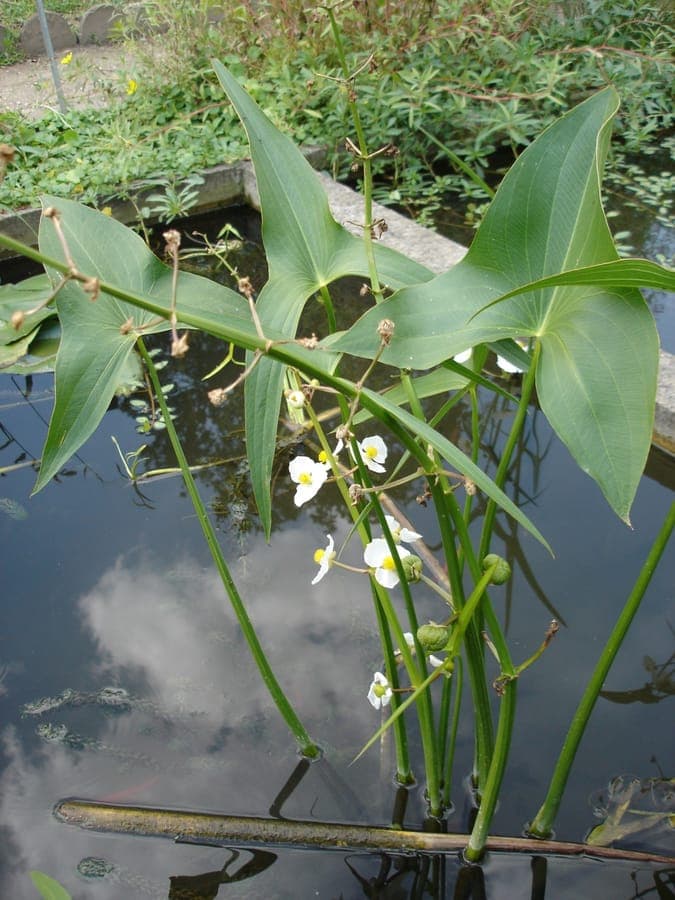
Sagittaria latifolia, known as Broadleaf Arrowhead or Duck-potato, is an attractive aquatic plant from the Alismataceae family. This plant is native to North America from Canada to Central and Eastern USA, and has also spread to California and South America. The plant is renowned for its arrow-shaped leaves and elegant white flowers. Historically, the tubers were also a food crop for indigenous peoples.
Appearance and Bloom
Sagittaria latifolia forms dense clusters of arrow-shaped leaves that rise above the water. The leaves can reach 20-30 cm in length and have a characteristic triangular shape with protrusions at the base. The plant flowers in August and September with small white flowers on long flower stems that extend above the water. The flowers have three white petals with yellow stamens in the center. After flowering, small seeds develop.
Ideal Location
Place Sagittaria latifolia in shallow water with full sun to partial shade. The plant grows best in still or slowly flowing water in locations with 4-8 hours of direct sunlight daily. Ensure the plant has enough space to grow. In small ponds, the plant can be placed on shallow edges where water is 10-30 cm deep. The plant can also tolerate brackish water.
Soil
Sagittaria latifolia grows best in muddy or silty soil like the banks of lakes and rivers. The plant cannot establish well in pure sand. In artificial water gardens, provide sufficient organic soil or mud for the plant to grow. A mixture of garden soil and mud gives good results. The plant doesn't need much nutrition, but light fertilizer can be beneficial.
Watering
As an aquatic plant, Sagittaria latifolia requires permanent water. The plant grows best in shallow water where the root zone is always wet. The plant cannot adapt to drought. In water gardens, ensure the water is at least 10-30 cm deep at the growing location. Ensure good water quality with sufficient oxygen. In stagnant water, you can help aquatic plants by stimulating water circulation.
Diseño gratis
¿Quieres ver Sagittaria latifolia: complete guide en tu jardín? Crea un diseño gratis ahora.
Pruning
Pruning Sagittaria latifolia is not essential but can be done to keep the plant under control. Remove wilted or yellow leaves and flowers after blooming. If the plant takes up too much space, you can carefully cut leaves and stems. Dead plant parts should be removed to prevent rotting. Use only healthy plant parts for propagation.
Maintenance Calendar
May-June: Plant growth begins. Check health. July-August: Monitor water quality. Prepare for blooming. August-September: Enjoy blooming. Seeds can be collected. October-March: Plant parts die back in cold regions. Leave undisturbed.
Winter Hardiness
In temperate climates, the leaves of Sagittaria latifolia die back in winter, but the roots and tubers survive in the mud under the ice. The plant returns in spring. In very cold regions, extra protection may be needed. In tropical areas, the plant remains active year-round. The plant cannot tolerate soft water well.
Companion Plants
Sagittaria latifolia combines well with other aquatic plants such as water lilies, pickerelrush, and pickerel. These plants together create a natural water garden composition. Aquatic plants such as duckweed provide nutrition and oxygen for aquatic animals. A balanced water installation with diverse plant use promotes a healthy ecosystem.
Closing Remarks
Sagittaria latifolia is an elegant aquatic plant that brings your water garden to life with arrow-shaped leaves and white flowers. The plant is versatile and requires minimal maintenance. Visitors will undoubtedly admire it. Visit gardenworld.app for more information about water gardens and aquatic plants. Or check gardenworld.app for more plant information!
¿Quieres ver Sagittaria latifolia: complete guide en tu jardín? Crea un diseño gratis ahora.
Sube una foto, elige un estilo y obtén un diseño fotorrealista con lista de plantas en menos de un minuto.
Más de 10.000 jardines diseñados
Sin tarjeta de crédito


Plantas similares
California damsonium: complete guide
Damasonium californicum
Full guide to Damasonium californicum (California damsonium): shallow water, bog soil, care and companion plants for this rare western aquatic.
Yellow water lily: complete guide
Limnocharis flava
Discover the yellow water lily. Everything you need to know about cultivation, care and water placement.
Sagittaria subulata: complete guide
Sagittaria subulata
Discover narrow-leaf arrowhead (Sagittaria subulata), an aquatic plant for ponds and water gardens. Complete cultivation and care guide.