
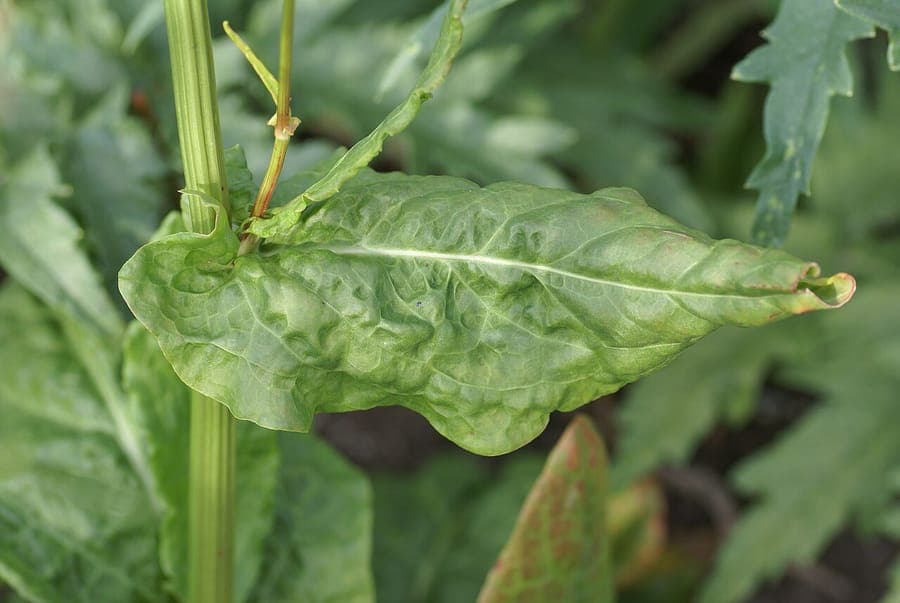
Rolf Engstrand / CC BY-SA 3.0, via Wikimedia Commons
Garden sorrel: complete guide
Rumex rugosus
¿Quieres ver Garden sorrel: complete guide en tu jardín?
1 minuto, sin tarjeta de crédito
Overview
Garden sorrel (Rumex rugosus), also known as wrinkled sorrel or large ampfer, is a robust nutritious plant from the Polygonaceae family. This cultigens species, likely originating in Europe, has been continuously preferred by horticulturalists for its quick growth and productivity. With its distinctive wrinkled leaves and edible value, garden sorrel makes an excellent addition to kitchen gardens and food-producing landscapes.
Appearance and Bloom
Garden sorrel is distinguished by its characteristic leaf morphology with distinctly wrinkled texture. The leaves are large, elongated, and display prominent veins and wrinkles that give it classic appearance. The plant grows in an open, spreading form that rapidly produces volume. Flowers appear in coarse, greenish clusters above the foliage.
Ideal Location
Garden sorrel thrives in fully sunny locations with at least 6-8 hours of direct sunlight. The plant also grows well in partial shade, though lower yields may result. Ideal for vegetable areas where leaf production is desired. Protect from strong winds that can damage tender leaves.
Soil
Garden sorrel prefers nutrient-rich, well-prepared soils with neutral to alkaline pH (7.0-7.5). The plant tolerates moderate moisture but does not withstand prolonged waterlogging. Work plenty of compost or other organic matter into the soil before planting. This plant grows well in standard garden soil.
Diseño gratis
¿Quieres ver Garden sorrel: complete guide en tu jardín? Crea un diseño gratis ahora.
Watering
Garden sorrel requires regular moisture, especially in warm, dry periods. Ensure soil stays moist but not waterlogged. Water deeply when the top inch of soil feels dry. Summer months may require extra water for optimal leaf production.
Pruning
Garden sorrel accepts pruning well and responds positively to regular leaf harvesting. Pinch outer leaves from the base to encourage new growth. Removing flower spikes in their earliest stages helps the plant concentrate energy in foliage rather than seed production. This also extends the most productive period.
Maintenance Calendar
Spring: Fertilize generously as growth begins. Summer: Provide regular water and remove flower spikes. Autumn: Reduce fertilization as growth slows. Winter: Protect in cold climates; cut back to ground level in very cold regions.
Winter Hardiness
Garden sorrel is hardy to approximately USDA zone 5, though long-term winter behavior varies by climate. In cold winters, the plant dies back to ground level but usually recovers in spring from roots.
Companion Plants
Garden sorrel works well with other vegetable plants and beneficial herbs. Suitable partners include: other sorrel varieties, spinach, beets, and various leafy greens. These combinations create productive vegetable displays.
Final Thoughts
Garden sorrel offers a reliable source of nutritious, edible leaves. Available from local garden centers, this plant makes a valuable addition to modern food-producing gardens. Learn more at gardenworld.app/nl and gardenworld.app/en.
¿Quieres ver Garden sorrel: complete guide en tu jardín? Crea un diseño gratis ahora.
Sube una foto, elige un estilo y obtén un diseño fotorrealista con lista de plantas en menos de un minuto.
Más de 10.000 jardines diseñados
Sin tarjeta de crédito


Plantas similares
Crosby's wild buckwheat: complete guide
Eriogonum crosbyae
Full guide to growing Eriogonum crosbyae: ideal site, soil, watering, winter hardiness and companion plants for this rare western wild buckwheat.
Spreading buckwheat: complete guide
Eriogonum effusum
Full guide to growing Eriogonum effusum: ideal site, soil, watering, winter hardiness and companion plants for this prairie subshrub from the American West.
Tall woolly buckwheat: complete guide
Eriogonum elatum
Full guide to Eriogonum elatum: siting, soil, watering, pruning and companion plants for this elegant white-flowered buckwheat from the western United States.