
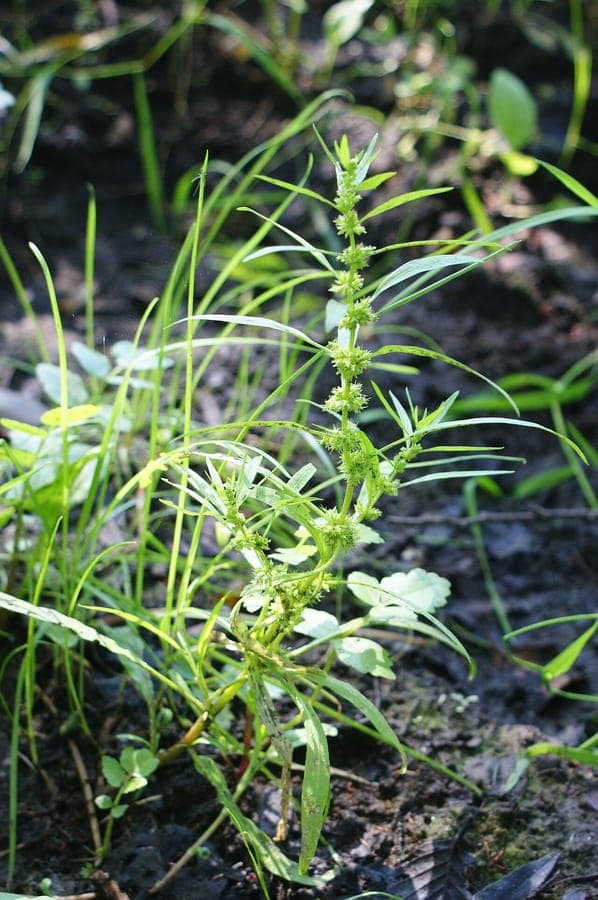
Kenraiz / CC BY-SA 3.0, via Wikimedia Commons
Marsh dock: complete guide
Rumex palustris
¿Quieres ver Marsh dock: complete guide en tu jardín?
1 minuto, sin tarjeta de crédito
Overview
Marsh dock (Rumex palustris) is an elegant wetland and waterside plant belonging to the Polygonaceae family. Native to Europe from the Atlantic to the North Caucasus, this versatile species thrives in wet grasslands and marshes. Its delicate structure and water-managing capabilities make it ideal for natural gardens, water features, and wetland restoration projects.
Appearance and Bloom
Marsh dock is distinguished by its elegant growth pattern and refined foliage. The plant produces dark green, elongated leaves arranged in attractive rosettes. During summer months (July through October), characteristic green flowers appear in vertical clusters. These blooms attract beneficial insects and later develop into interesting seed heads that provide visual structure into autumn.
Ideal Location
Marsh dock thrives best in consistently moist to wet soils where many other plants struggle. Choose a location with full sun to partial shade. The plant thrives along water edges, in wetland gardens, and in low-lying areas where water accumulates. This makes it an excellent choice for managing drainage problems in the landscape.
Soil
Soil must remain consistently moist to wet for optimal growth. Marsh dock tolerates neutral to alkaline soils with pH 7.0-7.5. This species flourishes in nutrient-rich soils and prefers areas with permanent wet conditions. Avoid dry, well-draining soils where the plant will deteriorate.
Diseño gratis
¿Quieres ver Marsh dock: complete guide en tu jardín? Crea un diseño gratis ahora.
Watering
Watering is critical for marsh dock success. Keep the soil consistently moist, especially during active growing seasons. In drought periods, provide additional water. If cultivating in containers, ensure regular irrigation. A robust moisture-retention system or placement in low areas simplifies water management.
Pruning
Marsh dock requires minimal pruning. Remove dead leaves and spent flowers after the growing season. Cut damaged foliage at the base. The plant accepts guided growth, but pruning should be careful to maintain its natural form.
Maintenance Calendar
Spring: Check moisture levels and add fertilizer if needed. Summer: Keep water levels high and monitor for unwanted growth. Autumn: Remove old foliage and prepare for winter dormancy. Winter: Protect against extreme frost in cold climates; the plant is hardy in many regions.
Winter Hardiness
Marsh dock is hardy across much of Europe, down to approximately USDA hardiness zone 5-6. In very cold climates, protection may be necessary. The plant tolerates freezing well and regrows near soil level after winter.
Companion Plants
Marsh dock works well with other water plants and moisture-loving species. Suitable companions include: royal ferns, irises, marsh marigolds, and other wetland plants. These combinations create ecologically rich wet gardens.
Final Thoughts
Marsh dock offers a natural solution for challenging moist areas. Available from local nurseries and specialized water garden centers, this plant adds sustainability to your landscape design. Learn more about wetland plants at gardenworld.app/nl and gardenworld.app/en.
¿Quieres ver Marsh dock: complete guide en tu jardín? Crea un diseño gratis ahora.
Sube una foto, elige un estilo y obtén un diseño fotorrealista con lista de plantas en menos de un minuto.
Más de 10.000 jardines diseñados
Sin tarjeta de crédito


Plantas similares
Crosby's wild buckwheat: complete guide
Eriogonum crosbyae
Full guide to growing Eriogonum crosbyae: ideal site, soil, watering, winter hardiness and companion plants for this rare western wild buckwheat.
Spreading buckwheat: complete guide
Eriogonum effusum
Full guide to growing Eriogonum effusum: ideal site, soil, watering, winter hardiness and companion plants for this prairie subshrub from the American West.
Tall woolly buckwheat: complete guide
Eriogonum elatum
Full guide to Eriogonum elatum: siting, soil, watering, pruning and companion plants for this elegant white-flowered buckwheat from the western United States.