
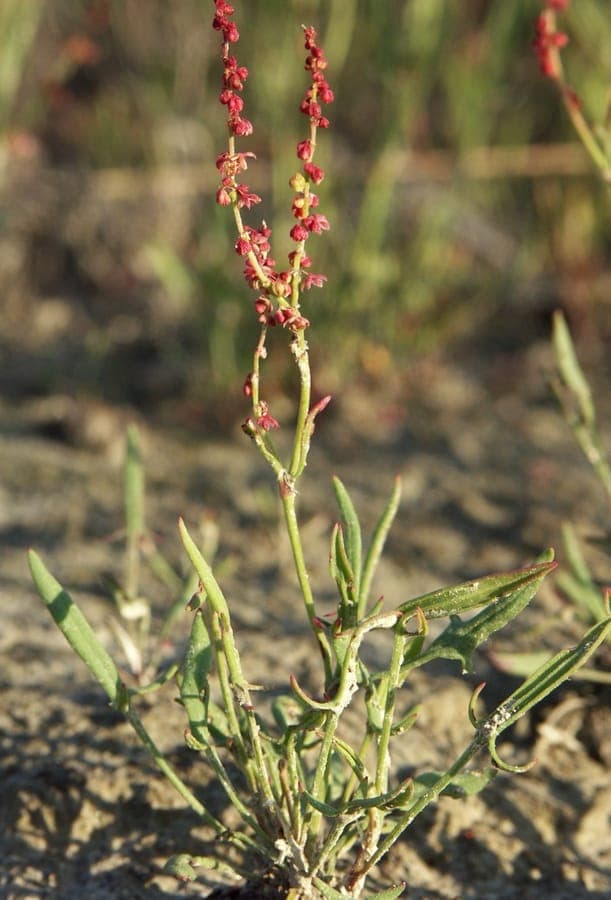
Wikimedia Commons / CC BY-SA 3.0, via Wikimedia Commons
Sheep sorrel: complete guide
Rumex acetosella
¿Quieres ver Sheep sorrel: complete guide en tu jardín?
1 minuto, sin tarjeta de crédito
Overview
Sheep sorrel (Rumex acetosella), also known as field sorrel, is a small, hardy perennial plant in the Polygonaceae family. It is native to Eurasian grasslands and mountain meadows and now grows worldwide. The plant forms dense mats and reaches only 15 to 30 centimeters tall. Its small arrow-shaped leaves have a distinctive reddish tint, especially in spring.
Sheep sorrel is widely used in traditional herbalism and nutrition. The leaves are edible and have a sharp, sour taste. It is also important for native ecosystems and is eaten by livestock.
Appearance and Bloom
The plant forms compact mats of red to green leaves. Individual leaves are small, arrow-shaped with distinct basal lobes. They are 2 to 5 centimeters long and have a hint of red, especially underneath.
From May to September, flowers appear in upright, slender panicles. The flowers are very small and green to red colored. These discrete flowering heads attract many pollinators.
The nutlets are small, triangular with smooth surfaces.
Ideal Location
Sheep sorrel grows in full sun to partial shade. It accepts a minimum of 6 hours of direct sunlight daily. The plant is highly adaptable and grows in many different locations.
It grows well in open ground, in containers, and even in rock gardens and slopes.
Diseño gratis
¿Quieres ver Sheep sorrel: complete guide en tu jardín? Crea un diseño gratis ahora.
Soil
Sheep sorrel grows on almost all soils, including poor, acidic soils. It is very adaptable to soil compositions. Well-draining soil is preferred.
Sorrel grows well in acidic soils with pH from 4.5 to 6.0. It tolerates poor soils well. Little nutrition is needed.
Watering
Sheep sorrel is very drought tolerant and endures long droughts. Once established, little water is needed. Water only during persistent drought.
In containers, water can be given sparingly.
Pruning
Pruning is rarely needed as the plant grows low. Flowers can be removed to prevent seed sowing if desired. The plant spreads easily by seeds.
Maintenance Calendar
Spring: Sow seeds in open ground or containers. Seed can be sown directly. No maintenance needed.
Summer: Water sparingly. Let the plant grow. Flowers appear.
Fall: Seed ripens and disperses. Plant will reseed itself.
Winter: The plant withdraws. In mild climates it remains green. Seed sleeps through winter.
Winter Hardiness
Sheep sorrel is extremely hardy and grows in zones 3-10. The plant survives extreme cold and returns. It often grows on mountain meadows with snow.
Companion Plants
Sheep sorrel grows well in grasslands with other herbs. It attracts pollinators and nectar drinkers. Many birds eat the seeds.
Closing Thoughts
Sheep sorrel is a valuable native plant for ecological gardens. It is nutritious, decorative, and important for wildlife. Available in the wild and from seed companies. For more garden information, visit gardenworld.app.
¿Quieres ver Sheep sorrel: complete guide en tu jardín? Crea un diseño gratis ahora.
Sube una foto, elige un estilo y obtén un diseño fotorrealista con lista de plantas en menos de un minuto.
Más de 10.000 jardines diseñados
Sin tarjeta de crédito


Plantas similares
Crosby's wild buckwheat: complete guide
Eriogonum crosbyae
Full guide to growing Eriogonum crosbyae: ideal site, soil, watering, winter hardiness and companion plants for this rare western wild buckwheat.
Spreading buckwheat: complete guide
Eriogonum effusum
Full guide to growing Eriogonum effusum: ideal site, soil, watering, winter hardiness and companion plants for this prairie subshrub from the American West.
Tall woolly buckwheat: complete guide
Eriogonum elatum
Full guide to Eriogonum elatum: siting, soil, watering, pruning and companion plants for this elegant white-flowered buckwheat from the western United States.