
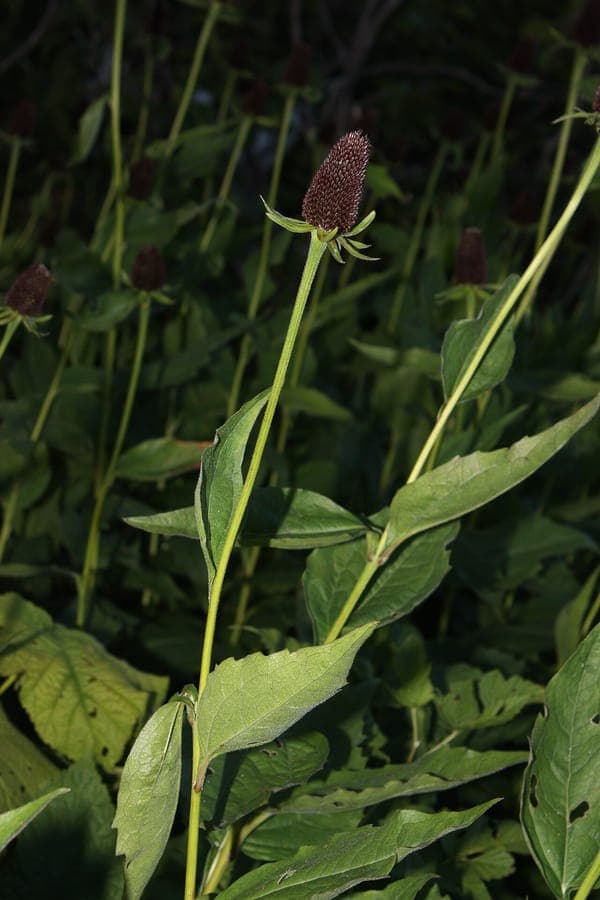
Walter Siegmund (talk) / CC BY-SA 3.0, via Wikimedia Commons
Western Coneflower: complete guide
Rudbeckia occidentalis
¿Quieres ver Western Coneflower: complete guide en tu jardín?
1 minuto, sin tarjeta de crédito
Overview
Rudbeckia occidentalis, commonly called western coneflower or trollrudbeckia, is a distinctive North American perennial. This plant distinguishes itself through its striking dark brown to nearly black central cone surrounded by short, receding yellow rays. Native across western USA from California through Montana, it performs admirably in European gardens. The plant forms an upright specimen from 60 to 90 centimetres tall, blooming from June through September.
Appearance and Bloom
Western coneflower stands out through its unique flower structure: short, reflexing yellow rays radiating around an extremely prominent dark brown to black cone. This contrast makes it highly recognizable in flower borders. The plant features narrow, lance-shaped green foliage. Flowers open successively, meaning the same plant produces blooms for months. This provides extended interest in borders and naturalistic plantings.
Ideal Location
Western coneflower thrives best in full sun locations receiving minimum six hours direct daily light. In light shade, plants grow adequately but flowering diminishes. Ensure sufficient air circulation to prevent fungal diseases, particularly in humid climates. Plant on raised beds or sloped ground where water drains rapidly. Wind causes no significant problem for these sturdy plants.
Soil
Western coneflower accepts practically all soil types but prefers well-draining conditions. Lean to moderately fertile soils suit it excellently, even preferably. In very rich soils, plants grow excessively vegetative at the expense of flowers. Acidic to neutral pH is well tolerated. Add compost at planting time but avoid excessive feeding. Plants actually perform better in somewhat lean soils.
Watering
Once established, western coneflower shows reasonable drought tolerance. Watering during dry periods produces better blooming. Avoid persistent wet conditions, especially winter wetness. The plant responds poorly to waterlogged soil for extended periods. In container culture, exercise closer moisture control. Young plants require more water until thoroughly established. If flowering ceases mid-summer, water-stress may be the cause.
Diseño gratis
¿Quieres ver Western Coneflower: complete guide en tu jardín? Crea un diseño gratis ahora.
Pruning
Remove spent flowers regularly to encourage continuous blooming. Snip brown flower heads so plants invest energy in renewed flowering rather than seed production. Leave some seed heads in autumn for bird food and winter decoration. Plants remain naturally upright without requiring support. In spring, remove dead stems from previous season.
Maintenance Calendar
During early spring (March-April), remove dead stems from previous season. April is the moment for light organic fertiliser application. May-June sees first flowers appearing. June through September is the peak bloom period with regular deadheading. July through September is when most flowers occur. October-November, leave seed heads for birds. December-February is the dormant season.
Winter Hardiness
Western coneflower is fully winter-hardy throughout the Benelux region. It survives even very severe winters without protection. The plant adapts better to dry winters than wet ones. In very wet climates, excellent drainage is essential for survival. If you live in very wet regions, grow on raised beds.
Companion Plants
Western coneflower works beautifully with other American wildflowers like Echinacea and Monarda. Plant it near yellow bloomers like Coreopsis for colour effect. Silver-foliage plants like Artemisia contrast nicely with the dark cone centre. Grasses like Bouteloua and Sesleria provide texture. In cottage style it combines well with roses and lavender.
Closing
Western coneflower is a distinctive American flower adding clear character to gardens. Its striking dark central cone distinguishes it from other Rudbeckia species. It is low-maintenance, winter-hardy and bird-friendly. Plant in groups for strong visual effect. Many garden centres stock this species, including major retailers.
At gardenworld.app, we design gardens with American character. Western coneflower is an essential component of authentic naturalistic designs. Plant it this season.
¿Quieres ver Western Coneflower: complete guide en tu jardín? Crea un diseño gratis ahora.
Sube una foto, elige un estilo y obtén un diseño fotorrealista con lista de plantas en menos de un minuto.
Más de 10.000 jardines diseñados
Sin tarjeta de crédito


Plantas similares
Calendula stellata: complete guide
Calendula stellata
Complete guide to Calendula stellata, the star-flowered marigold from Sicily: location, soil, watering and companion planting tips.
Korean chrysanthemum: complete guide
Chrysanthemum x rubellum
Chrysanthemum x rubellum is a hardy autumn perennial with single pink to copper flowers from August to November. Care and combinations.
Helianthus divaricatus: complete guide
Helianthus divaricatus
Helianthus divaricatus is a North American woodland sunflower with yellow summer blooms, ideal for naturalistic borders and shady edges.