
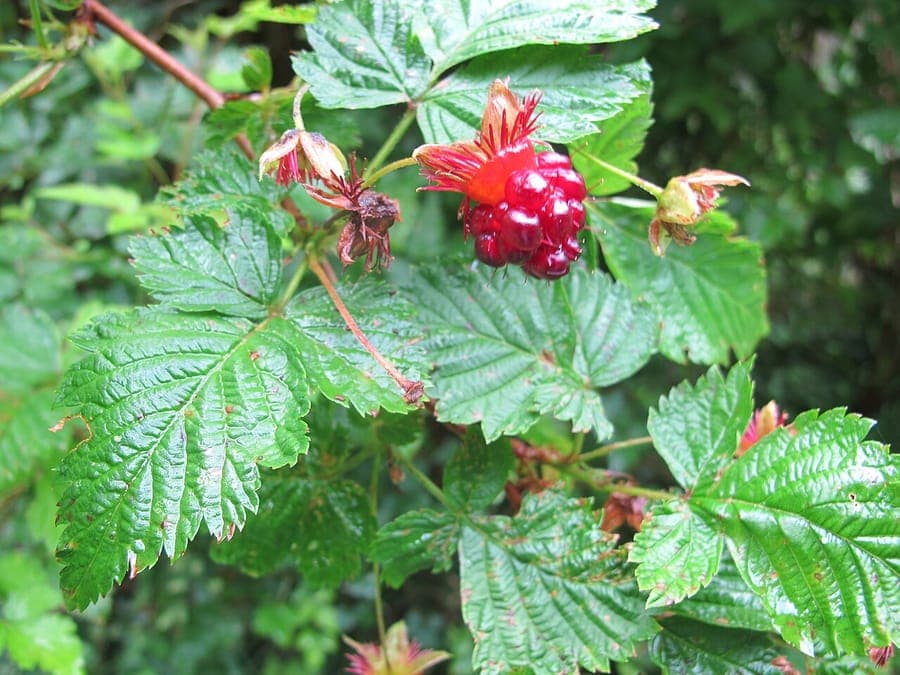
Margalob / CC BY-SA 4.0, via Wikimedia Commons
Salmonberry: complete guide
Rubus spectabilis
¿Quieres ver Salmonberry: complete guide en tu jardín?
1 minuto, sin tarjeta de crédito
Overview
The Salmonberry (Rubus spectabilis) is a spectacular raspberry native to the Pacific coasts of North America, ranging from Alaska to California. This deciduous shrub is immediately recognizable by its brilliant magenta to pink flowers in early spring and subsequent salmon-orange fruits. For gardeners in temperate climates, this native species offers an exceptional combination of ornamental value, productive fruiting, and vigorous growth.
Appearance & bloom cycle
Salmonberry grows as a deciduous shrub reaching 2-2.5 meters in height. The plant displays distinctly recognizable trifoliate leaves with a velvety undersurface. Flowers appear in April-May and represent the seasonal highlight: bright magenta to purple, approximately 2-3 cm wide - unusually vivid for raspberries. The fragrance is pleasant but subtle.
Following the bloom, fruits develop from green to orange-yellow. These berries measure roughly 2 cm across, are soft-textured and sugary, with a unique tropical flavor between raspberry and mango. They are edible and prized by birds.
Ideal location
Plant Salmonberry where it receives at least 6 hours of direct sunlight daily for optimal flowering and fruiting. In warmer climates, it also tolerates light afternoon shade. The plant is extremely hardy to USDA zone 4 and can therefore grow successfully across most of Europe.
Space is essential: this raspberry wants to spread and prefers to grow against a trellis or in an open shrub form. Allow at least 1.5 meters of clearance around each plant.
Soil requirements
Salmonberry thrives in moisture-retentive, well-draining soil. A pH of 6.0-7.0 is ideal. Amend your planting area with well-rotted compost or leaf mold prior to planting: this plant wants nutrient-rich conditions. Waterlogging must be avoided - always ensure adequate drainage.
In heavy clay soils, mix the planting hole with sawdust and sand to improve structure. Mulch after planting with 5-8 cm of compost around the base, keeping material away from the stem.
Watering
Regular watering is essential during establishment. Water newly planted specimens 2-3 times weekly, depending on rainfall and temperature. Ensure the soil never dries out completely but also never becomes waterlogged.
Once established (after approximately 2 seasons), the plant requires less supplemental water. In normal years, natural rainfall suffices. During dry spells or extreme heat, you may provide additional water, especially during fruiting.
Diseño gratis
¿Quieres ver Salmonberry: complete guide en tu jardín? Crea un diseño gratis ahora.
Pruning
Salmonberry flowers and fruits on second-year canes. Pruning occurs:
- Immediately after harvest: Remove all dead or diseased wood.
- Late winter (February-March): Cut approximately one-third of the oldest canes at ground level. This stimulates young, productive growth.
- Summer: Cut lateral shoots back to 30-40 cm above ground to maintain form.
Avoid aggressive pruning: this can result in loss of flowers and fruit for an entire season.
Maintenance calendar
March: Complete late pruning; mulch soil with compost.
April-May: Flowering period - enjoy the display! Apply organic raspberry/berry fertilizer.
June-July: Fruit set and harvest - water regularly.
August-October: New canes develop; maintain water during dry spells.
November-February: Dormancy; no care required; in severe winters, protect young shoots with straw.
Winter hardiness
Salmonberry is extremely hardy to -25°C, making it suitable for most Dutch and Belgian gardens, and many German locations. The roots are even more frost-resistant than the above-ground portions. In extreme winters, young shoots may suffer damage, but the plant recovers quickly.
Companion plants
Plant alongside:
- Other berry shrubs: Redcurrants, blackberries - same cultural requirements.
- Ground covers: Ajuga, waldsteinia - decorative and supportive.
- Height contrasts: Dwarf conifers, Japanese maple - for visual depth.
Avoid close proximity to root competitors such as poplars or walnut.
Conclusion
Salmonberry is an impressive addition to any temperate garden. With its striking magenta flowers, exotic fruits, and robust natural form, it delivers consistent pleasure - both visually and at harvest. Once established, the plant requires minimal maintenance while providing a fresh surprise each spring.
Want to design a garden layout featuring this plant? Discover how gardenworld.app helps you plan a fruit garden where berries are perfectly positioned. Browse our gallery of productive gardens on gardenworld.app for inspiration.
¿Quieres ver Salmonberry: complete guide en tu jardín? Crea un diseño gratis ahora.
Sube una foto, elige un estilo y obtén un diseño fotorrealista con lista de plantas en menos de un minuto.
Más de 10.000 jardines diseñados
Sin tarjeta de crédito


Plantas similares
Siberian crab apple: complete guide
Malus x robusta
Complete guide to the Siberian crab apple (Malus x robusta): location, soil, pruning, winter hardiness and the best companion plants for your garden.
Chinese flowering crabapple (Malus x spectabilis): complete guide
Malus x spectabilis
Meet the Chinese flowering crabapple (Malus x spectabilis): a classic spring bloomer with carmine buds and pink blossom.
Potentilla crassinervia: complete guide
Potentilla crassinervia
Potentilla crassinervia, the Corsican cinquefoil, grows wild on Corsica and Sardinia's peaks. Discover how to grow this hardy alpine rock garden gem.