
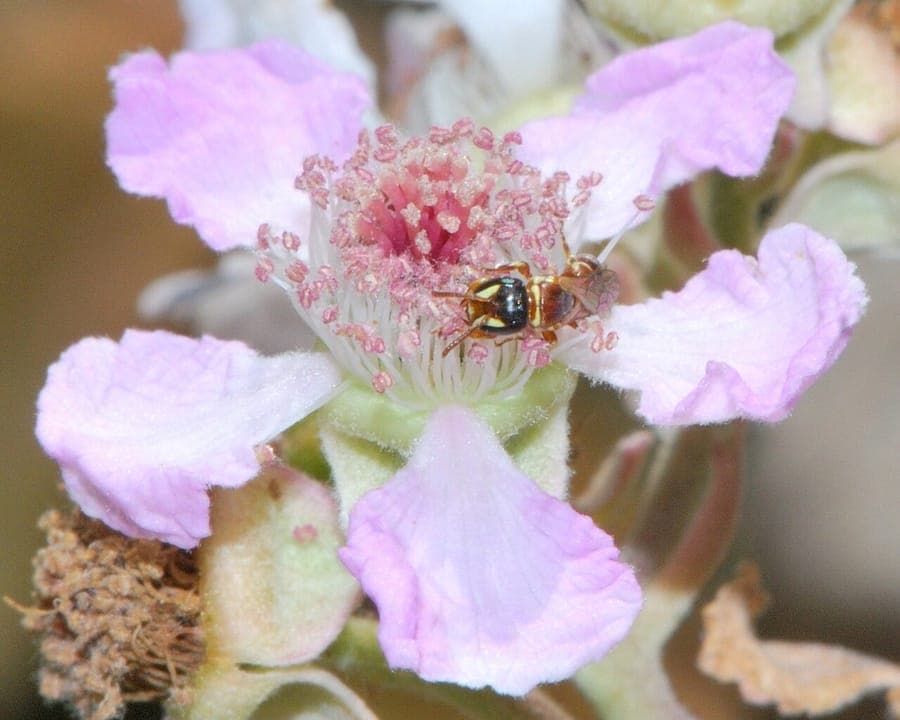
Gideon Pisanty (Gidip) / CC BY 3.0, via Wikimedia Commons
Rubus sanctus: complete guide
Rubus sanctus
¿Quieres ver Rubus sanctus: complete guide en tu jardín?
1 minuto, sin tarjeta de crédito
Overview
The Holy Bramble (Rubus sanctus) is a vigorous, sprawling shrub from the Rosaceae family native to temperate mountain regions across Eastern Europe and Asia. This species stands apart from many common brambles through its refined white flower clusters and dense, spiny habit. With characteristic sharp thorns and glossy foliage, the Holy Bramble adds architectural interest to any garden whilst providing valuable food for birds and insects throughout the year.
In its natural range, this bramble thrives in rocky mountain slopes and woodland edges. When properly positioned in a garden setting, it proves remarkably accommodating and reliable, rewarding careful placement with decades of persistent beauty and wildlife benefits. Planting success relies on understanding its light and drainage preferences.
Appearance & bloom
The Holy Bramble grows into a dense, spreading shrub reaching 1.5 to 2.5 metres in height with a similar spread. Its foliage comprises compound leaves with sharply-pointed leaflets that create fine texture. The stems are armed with wicked thorns, making careful handling essential.
Flowers emerge in late spring (May through June) in pure white with prominent golden stamens. These blooms attract bees and other pollinators with enthusiasm, developing into deep red fruits that ripen to purple-black in autumn. The colour progression from crimson to near-black indicates full ripeness and maximum sweetness.
Ideal location
This plant flowers best with generous sunlight exposure: aim for 6 to 8 hours of direct sun daily. In regions with scorching summers, afternoon shade provides welcome relief without compromising flower production. The plant proves surprisingly adaptable to semi-shade, though flowering may reduce moderately.
Select a location offering adequate space for mature spread without competition from vigorous neighbouring plants. Ensure good air circulation surrounding the shrub. This substantially reduces disease pressure and pest problems over the long term.
Soil
The Holy Bramble proves undemanding regarding soil type but performs optimally in well-drained conditions. Heavy clay soils warrant amendment with sand and organic matter. The plant tolerates virtually any pH range from acidic (pH 5.5) through neutral (pH 7.0).
Before planting, incorporate generous quantities of organic matter into the planting hole: compost or aged manure stimulates root establishment and supplies nutrition during the first growth season. Ensure the planting site never becomes waterlogged.
Diseño gratis
¿Quieres ver Rubus sanctus: complete guide en tu jardín? Crea un diseño gratis ahora.
Watering
During the first year after planting, consistent moisture proves essential for root development. Water whenever the top 2 centimetres of soil feel dry. Once established (after year two), this bramble becomes remarkably drought-tolerant and requires no supplemental irrigation under normal rainfall. During extended dry spells, thorough deep watering encourages full fruit set.
Overwatering must be avoided at all costs. Winter watering is unnecessary except during unusual droughts. This plant survives comfortably even in moderately poor soil conditions.
Pruning
The Holy Bramble demands minimal pruning attention but benefits from selective cutting. Remove deadwood in early spring or late winter. Thin congested stems to allow light penetration through the shrub interior.
When growth becomes excessive, selective pruning creates attractive natural forms. Remember the formidable thorns require careful handling in protective gloves. However, avoid severe cutting back; this bramble recovers slowly from heavy pruning.
Maintenance calendar
January-February: Winter monitoring, support structure inspection. March-April: Pruning, deadwood removal, resuming moisture after winter drought. May-June: Flowering period, passive enjoyment of pollinator visits. July-August: Fruit development, consistent watering maintenance. September-October: Fruit ripening, observation of bird activity. November-December: Autumn colour changes, season preparation.
Winter hardiness
The Holy Bramble proves exceptionally winter-hardy and suitable for average European winter conditions down to USDA zone 6 (-23 to -18 degrees Celsius). The shrub withstands prolonged frost periods with ease. In severe mountain climates, leaf mulch protection during the first winter proves beneficial.
Companion plants
The ripening fruit attracts numerous bird species: thrushes, blackbirds and other fruit-eaters. Butterflies and bumblebees visit flowers enthusiastically. Combine with other wildlife-friendly shrubs to maximise the garden's ecological value and create layered interest.
Closing remarks
The Holy Bramble represents a traditional choice for gardeners seeking to work with nature. With modest attention, this beautiful shrub thrives for decades, producing flowers and bird food year after year. Find this plant at specialist retailers like Intratuin and Gamma, where expert advice supports your success.
Learn more on gardenworld.app. Discover dozens of other native shrubs to enrich your outdoor space.
¿Quieres ver Rubus sanctus: complete guide en tu jardín? Crea un diseño gratis ahora.
Sube una foto, elige un estilo y obtén un diseño fotorrealista con lista de plantas en menos de un minuto.
Más de 10.000 jardines diseñados
Sin tarjeta de crédito


Plantas similares
Siberian crab apple: complete guide
Malus x robusta
Complete guide to the Siberian crab apple (Malus x robusta): location, soil, pruning, winter hardiness and the best companion plants for your garden.
Chinese flowering crabapple (Malus x spectabilis): complete guide
Malus x spectabilis
Meet the Chinese flowering crabapple (Malus x spectabilis): a classic spring bloomer with carmine buds and pink blossom.
Potentilla crassinervia: complete guide
Potentilla crassinervia
Potentilla crassinervia, the Corsican cinquefoil, grows wild on Corsica and Sardinia's peaks. Discover how to grow this hardy alpine rock garden gem.