
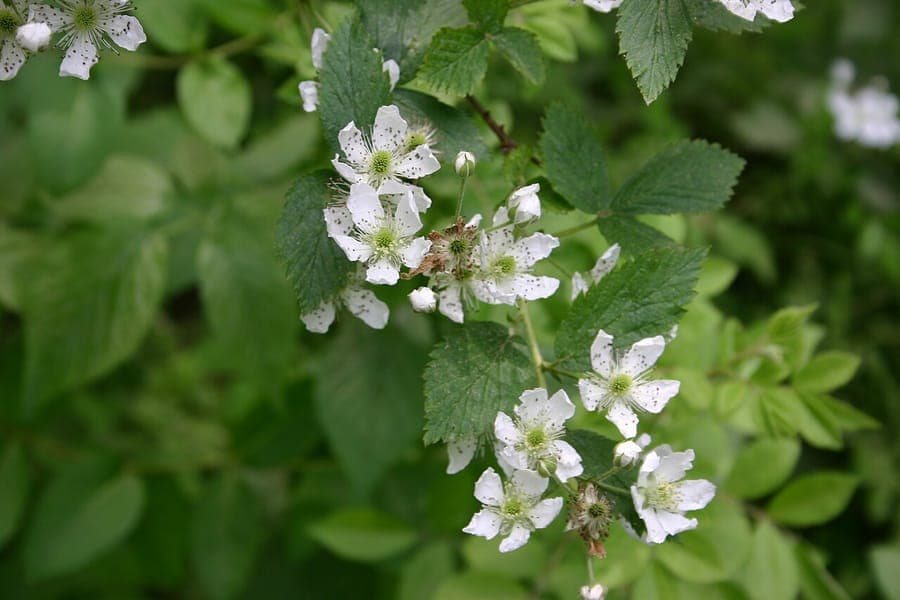
User:SB_Johnny / CC BY-SA 3.0, via Wikimedia Commons
Rubus pensilvanicus: complete guide
Rubus pensilvanicus
¿Quieres ver Rubus pensilvanicus: complete guide en tu jardín?
1 minuto, sin tarjeta de crédito
Overview
The Rubus pensilvanicus, commonly known as the Pennsylvania blackberry or Pennsylvania raspberry, is a robust and valuable bramble species native to eastern North America. This plant grows wild in areas extending from Canada to Florida and from the east coast to Kansas. The Pennsylvania blackberry distinguishes itself as a medium-sized, densely growing shrub with sharp-armed twigs that are covered with prickly thorns. This makes it an excellent choice for natural fencing and hedge structures. The plant can grow to approximately 1.5-2 meters high and is very nutritious for birds and small mammals.
Appearance and bloom
The Rubus pensilvanicus has a densely growing shrub appearance with dark green, fine-toned foliage and characteristic, strong, red-purplish twigs that are covered with strong thorns. The leaves are compound, composed of 3-5 small leaflets with a rough, wrinkled texture. Flowers appear in spring to early summer and are small, usually white to light pink, composed of five petals. These flowers grow in dense clusters at the twig ends. The flowers are later followed in summer to fall by approximately 1 centimeter sized fruits that are initially red and ripen to glossy black.
Ideal location
The Pennsylvania blackberry thrives best in full sun to partial shade, with at least 5-6 hours of direct sunlight daily. This promotes the best flowering and fruiting. However, the plant is also very tolerant of light to partial shade and thrives well in forest edge and forest areas. The plant is very wind-resistant and grows well in open, windy locations. This makes it ideal for rural gardens and natural areas.
Soil
Rubus pensilvanicus grows in a wide range of soil types and is very tolerant. The plant accepts both acidic and neutral to slightly alkaline soils (pH 5.0-7.5). It tolerates poor to well-fertile soils. The plant is very tolerant of less favorable drainage and can even grow in wet soils, though it grows better in well-draining soils. Adding organic material helps but is not essential.
Diseño gratis
¿Quieres ver Rubus pensilvanicus: complete guide en tu jardín? Crea un diseño gratis ahora.
Watering
Once established, the Pennsylvania blackberry is very drought tolerant and tolerates extended drought periods. Water when the top 7-10 centimeters of soil feel dry. Young plants need more regular watering until they are well-rooted. Once established, mature plants can survive long periods without extra water. Regular moisture supply during flowering and fruiting promotes better yields.
Pruning
Pruning can take place after fruiting in fall or winter. Remove old, non-productive wood. This promotes new, productive growth. The plant can be pruned hard and will recover well. Annual pruning helps keep the plant compact and productive. For hedge formation, regular pruning can be applied.
Maintenance calendar
Spring: Minimize winter damage, trim dead twigs, begin watering as growth increases. Summer: Monitor for flowering and fruiting, adjust watering. Fall: Prune after fruiting, remove dead material. Winter: Minimal care; plant tolerates frost and drought well.
Winter hardiness
The Pennsylvania blackberry is very winter hardy to approximately -20 to -25 degrees Celsius and grows well in all temperate North American climates and temperate Europe. The plant overwinters without problems outdoors. Even in very cold regions, this strong plant recovers well in spring.
Companion plants
The Rubus pensilvanicus fits well in natural hedge structures and is often combined with other native North American bramble species. Also combine with other bird food plants, brush plants and berry plants. This creates bird-attracting hedge structures full of flowers and food.
Conclusion
The Rubus pensilvanicus is an ideal choice for North American gardens or for European gardens where one wants to attract wild North American bird species. The plant is very low maintenance, drought tolerant and very productive in flowering and fruiting. For more plant tips and front garden inspiration, visit gardenworld.app for your complete garden advice.
¿Quieres ver Rubus pensilvanicus: complete guide en tu jardín? Crea un diseño gratis ahora.
Sube una foto, elige un estilo y obtén un diseño fotorrealista con lista de plantas en menos de un minuto.
Sin tarjeta de crédito


Plantas similares
Siberian crab apple: complete guide
Malus x robusta
Complete guide to the Siberian crab apple (Malus x robusta): location, soil, pruning, winter hardiness and the best companion plants for your garden.
Chinese flowering crabapple (Malus x spectabilis): complete guide
Malus x spectabilis
Meet the Chinese flowering crabapple (Malus x spectabilis): a classic spring bloomer with carmine buds and pink blossom.
Potentilla crassinervia: complete guide
Potentilla crassinervia
Potentilla crassinervia, the Corsican cinquefoil, grows wild on Corsica and Sardinia's peaks. Discover how to grow this hardy alpine rock garden gem.