
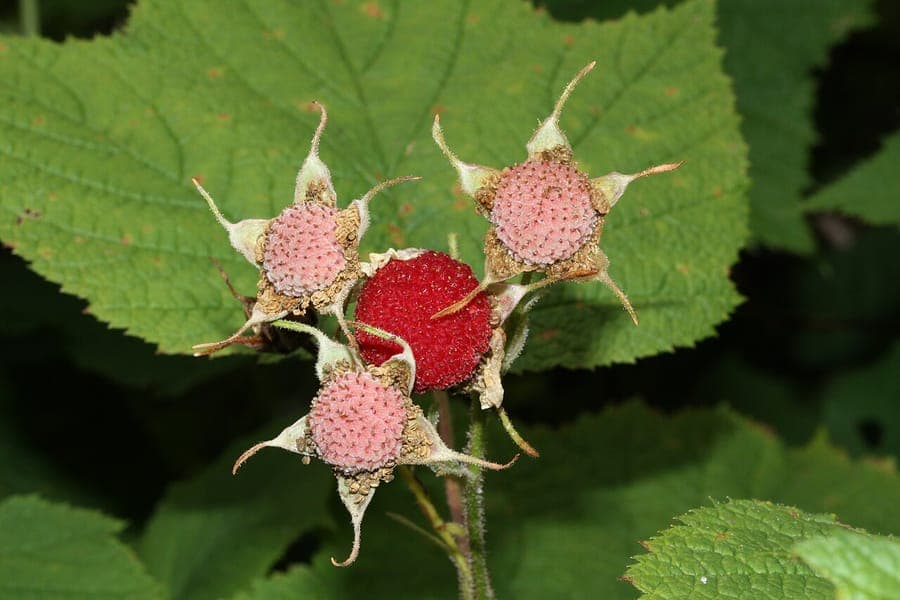
Walter Siegmund (talk) / CC BY-SA 3.0, via Wikimedia Commons
Thimbleberry: complete guide
Rubus parviflorus
¿Quieres ver Thimbleberry: complete guide en tu jardín?
1 minuto, sin tarjeta de crédito
Overview
Rubus parviflorus, commonly called thimbleberry or salmonberry (German: Nutka-Himbeere), is a North American bramble of the rose family (Rosaceae). Ranging from British Columbia to California and New Mexico, this plant reaches 100-150 centimeters tall and is distinguished by extraordinarily large, five-fingered leaves (up to 25 centimeters diameter) and soft, red raspberries with warm summer flavor. Hardy in USDA zones 5-8, it suits cooler climates throughout Europe and North America. This is truly a plant for those wanting to combine exotic beauty with practical use. The leaves alone justify its garden position.
Appearance and Fruits
Rubus parviflorus forms a loose, thorn-free (!) shrub with thick, reddish-brown canes. Leaves are the most striking feature: extremely large, palmately lobed, with five to nine wavy lobes, reaching 25 centimeters across. The foliage is soft, pleasantly textured, and possesses subtle sheen. In summer, white flowers (3 centimeters), small (hence "parviflorus"), appear in umbel-like clusters. Fruits are soft, juicy red-orange raspberries of 1-2 centimeters in diameter, ripening July through August, with pleasant tart-sweet, walnut-like flavor and enchanting aroma.
Ideal Location
Rubus parviflorus thrives in half-shade to moderate shade (two to four hours of sunlight daily). In full sun in hot climates, foliage can scorch badly. The plant tolerates north-facing sites and forest-edge positions excellently. In North America, it naturally inhabits forests and along mountain streams. Plant in cool-climate gardens with adequate moisture and some protection from extreme afternoon heat. In Mediterranean climates it may suffer heat stress and prefers additional shade.
Soil
Rubus parviflorus prefers moist, humus-rich soils with good drainage. It dislikes dry sand. Improve soil with abundant organic matter: peat, leafmold, composted bark to a depth of 30 centimeters. A slightly acidic pH of 5.0 to 6.5 is ideal; the plant tolerates highly alkaline soils poorly. Drainage is critical; waterlogging causes root rot. This is not a plant for lean soils.
Diseño gratis
¿Quieres ver Thimbleberry: complete guide en tu jardín? Crea un diseño gratis ahora.
Watering
After establishment (3-4 weeks), water regularly: keep soil consistently lightly moist, never soggy. During the growth phase (May-August), water deeply twice weekly in dry periods. In cooler, more humid climates with regular rainfall, supplemental water is usually unnecessary. The plant tolerates drought worse than brambles; complete drying can reduce fruit quality significantly. This is truly a moisture-lover.
Pruning and Shaping
Rubus parviflorus requires minimal pruning. After the fruiting season (August-September), remove dead, damaged, or diseased canes. The plant naturally forms itself in loose, graceful growth. Very old canes (older than four years) may be removed to encourage vitality. Because the plant is thornless, pruning is far more pleasant than other brambles.
Maintenance Calendar
March-April: Prepare growth period. Light pruning of dead canes. Water if dry. Observe buds unfurling. May-June: Bloom period. Abundant white flowers. Regular watering essential. Bird sounds increase. July-August: Harvest period. Pick red raspberries daily for best flavor. Water regularly. Plant bristles with promise. September-October: Fruiting ends. Prune damaged canes. Prepare for winter. Foliage turns attractively. November-February: Dormancy. Minimal watering. Plant drops leaves.
Winter Hardiness
Winterhardiness in USDA zones 5-8 (minimum -25 to -5 degrees Celsius). This means hardiness throughout much of Europe, including Britain, France, and Central Europe. In zone 5, extreme cold may kill canes back to certain levels, but the plant resprouts from the base. In cold zone 5 winters, mulch lightly around the base for protection.
Companion Plants
Pair Rubus parviflorus with other shade-lovers and cool-climate plants: Hydrangea arborescens with matching preference for half-shade and moist soil; Sambucus canadensis (American elder) with similar moisture and shade preference; Ferns which screen well with Thimbleberry; Astilbe with pink plumes nestling under large leaves; Heuchera (coral bells) with interesting foliage texture contrast. Avoid drought-stressed plants and full-sun lovers entirely.
Closing
Rubus parviflorus (thimbleberry) is a North American jewel offering exotic appeal to cool-climate gardens. With massive, palmate leaves, thorn-free growth, and delicious red raspberries, it is a striking alternative to traditional brambles. For shady corners in cool regions, Rubus parviflorus deserves recognition and prominent placement.
¿Quieres ver Thimbleberry: complete guide en tu jardín? Crea un diseño gratis ahora.
Sube una foto, elige un estilo y obtén un diseño fotorrealista con lista de plantas en menos de un minuto.
Más de 10.000 jardines diseñados
Sin tarjeta de crédito


Plantas similares
Siberian crab apple: complete guide
Malus x robusta
Complete guide to the Siberian crab apple (Malus x robusta): location, soil, pruning, winter hardiness and the best companion plants for your garden.
Chinese flowering crabapple (Malus x spectabilis): complete guide
Malus x spectabilis
Meet the Chinese flowering crabapple (Malus x spectabilis): a classic spring bloomer with carmine buds and pink blossom.
Potentilla crassinervia: complete guide
Potentilla crassinervia
Potentilla crassinervia, the Corsican cinquefoil, grows wild on Corsica and Sardinia's peaks. Discover how to grow this hardy alpine rock garden gem.