
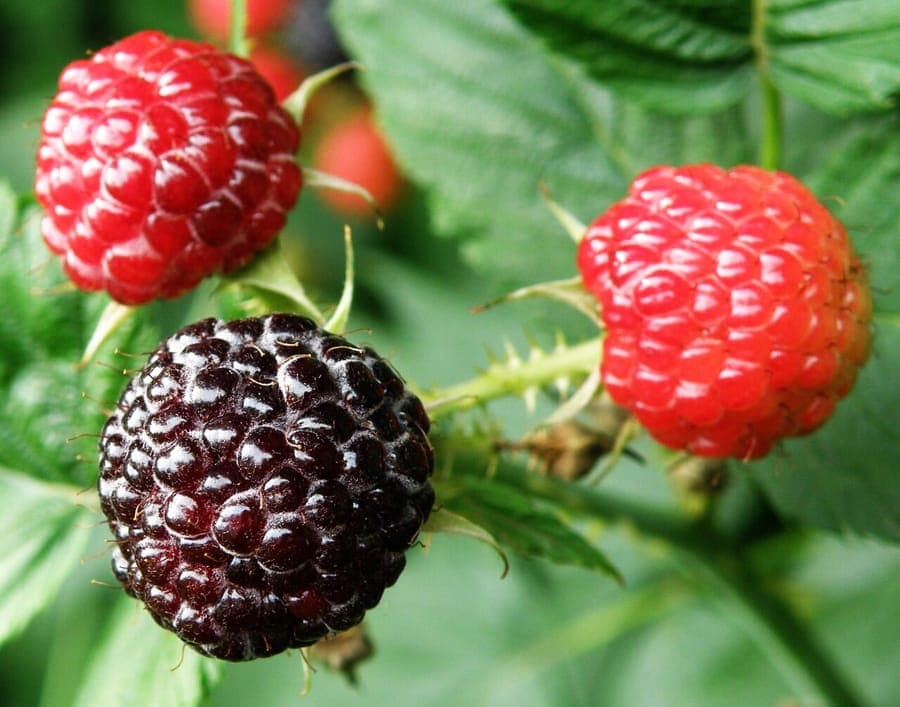
Alina Zienowicz Ala z / CC BY-SA 3.0, via Wikimedia Commons
Black raspberry: complete guide
Rubus occidentalis
¿Quieres ver Black raspberry: complete guide en tu jardín?
1 minuto, sin tarjeta de crédito
Overview
The black raspberry (Rubus occidentalis) is a frost-hardy, edible shrub native to Eastern Canada and the eastern United States. This plant produces delicious red berries that are widely used for jams, juices, and fresh eating. The shrub is robust, productive, and requires minimal care once established.
Appearance & Bloom Cycle
The black raspberry grows as a loose shrub, typically reaching 150-200 cm in height. The stems are covered with fine thorns and have a characteristic grayish-brown color. The leaves are green and trifoliate, which is classic for the Rubus genus. In spring, white or pale pink flowers appear, followed by round red fruits that ripen around July and August. The berries are approximately 1-2 cm in diameter and have a sweet-tart flavor.
Ideal Location
The black raspberry thrives best in a sunny spot with at least 6-8 hours of direct sunlight daily. Although the plant can tolerate partial shade, it produces the most fruit in full sun. Ensure the location has good air circulation to prevent fungal diseases. This is especially important in humid regions.
Soil Requirements
This plant prefers well-draining, humus-rich soil with a pH between 6.0 and 7.0. Sandy and peaty soils are ideal. Heavy clay soils can cause heavy rot formation, so mix in sand or compost if needed. The plant appreciates a steady supply of organic matter, but not oversupply of nitrogen (this promotes foliage without fruit).
Watering
Watering is especially important during the first growing season after planting. Keep the soil consistently moist but not waterlogged. Once established, the plant develops relatively deep roots and is resistant to short dry periods. During flowering and fruiting time (May-August), water regularly if it is dry. A layer of mulch helps retain moisture.
Diseño gratis
¿Quieres ver Black raspberry: complete guide en tu jardín? Crea un diseño gratis ahora.
Pruning
The black raspberry responds well to regular pruning. Immediately after harvest (August), remove all dead stems and weak shoots. Make sure to remove especially the two-year-old stems, as they no longer produce fruit. Cut the healthy stems back to about 150-180 cm and thin them so air can pass through the shrub. This improves fruit production and disease management.
Maintenance Calendar
January-February: Winter dormancy. Check for frost damage.
March-April: Start of growing season. Apply compost or foliar feed.
May: Flowering begins. Ensure regular watering.
June-July: Fruit development. Intensive water management.
August: Harvest. Thin immediately after.
September-October: Preparation for dormancy.
November-December: Winter dormancy begins.
Winter Hardiness
The black raspberry is extremely winter hardy and can withstand temperatures down to -25°C (USDA zones 4-8). The plant loses its leaves in fall and goes dormant. This allows it to grow without protection in most European gardens. Extreme frosts may damage young shoots, but the plant typically recovers well from its roots.
Companion Plants
The black raspberry works well with other berry shrubs such as raspberries and blackberries. Plant them with at least 200 cm spacing apart because they need a lot of space. Underplanting with evergreen groundcovers helps suppress weeds. Avoid planting other nitrogen-fixing plants directly nearby, as they can cause competition.
Closing
The black raspberry is an excellent choice for gardeners who want to grow their own fruit. With the right location, soil, and maintenance, this plant provides abundant harvests year after year. The frost-hardy nature makes it suitable for many climates in Western Europe and the Netherlands. Check gardenworld.app for more plant data. Find out at gardenworld.app which other fruit shrubs would suit your garden well.
¿Quieres ver Black raspberry: complete guide en tu jardín? Crea un diseño gratis ahora.
Sube una foto, elige un estilo y obtén un diseño fotorrealista con lista de plantas en menos de un minuto.
Más de 10.000 jardines diseñados
Sin tarjeta de crédito


Plantas similares
Siberian crab apple: complete guide
Malus x robusta
Complete guide to the Siberian crab apple (Malus x robusta): location, soil, pruning, winter hardiness and the best companion plants for your garden.
Chinese flowering crabapple (Malus x spectabilis): complete guide
Malus x spectabilis
Meet the Chinese flowering crabapple (Malus x spectabilis): a classic spring bloomer with carmine buds and pink blossom.
Potentilla crassinervia: complete guide
Potentilla crassinervia
Potentilla crassinervia, the Corsican cinquefoil, grows wild on Corsica and Sardinia's peaks. Discover how to grow this hardy alpine rock garden gem.