
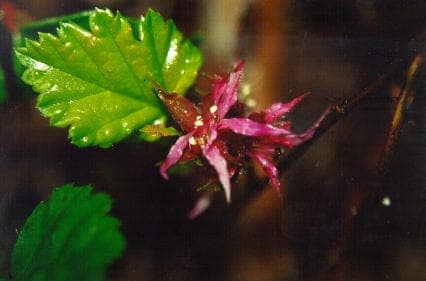
Unknown authorUnknown author / Public domain, via Wikimedia Commons
Snow raspberry: complete guide
Rubus nivalis
¿Quieres ver Snow raspberry: complete guide en tu jardín?
1 minuto, sin tarjeta de crédito
Overview
The snow raspberry (Rubus nivalis) is a remarkable dwarf shrub from the mountain ranges of North America. This plant grows only at very high altitudes in alpine conditions and is exceptionally frost-hardy. It is known for delicate white flowers and striking red-orange berries that stand out against green foliage.
Snow raspberry is a specialist plant, best for experienced gardeners wanting to cultivate alpine species. It requires specific growing conditions with excellent drainage and cool temperatures. Professional alpine garden designers work with this species through gardenworld.app for specialized projects.
Appearance and Bloom
The snow raspberry forms extremely low, compact growth, usually not exceeding 15 to 25 centimeters in height. The stems are thin and reddish, with fine trifoliate leaves. The plant retains foliage year-round.
Flowers appear from July to August, white to pink, small but abundant. These are followed by delicate berries colored red to orange. The fruits persist on the plant for extended periods, providing valuable autumn interest.
Due to its compact growth habit, it is a perfect plant for alpine rock crevices and small containers.
Ideal Location
Snow raspberry requires full sun and extremely well-draining soils. The plant cannot grow in normal garden conditions and requires simulation of alpine climates. A rock outcropping or raised bed with highly porous soil is essential.
The plant thrives best on cool sites where summer temperatures remain below 20 degrees Celsius. Provide protection against water accumulation. The plant cannot tolerate waterlogged root zones.
Soil
Snow raspberry requires very specially prepared soil. A mixture of garden soil, coarse sand, and gravel in a 1:2:2 ratio is ideal. Addition of small stones aids drainage.
PH can range from 5.5 to 7.0. Add lime in acidic soils. No extra nutrients needed; the plant grows in poor mountain soils. The soil must be able to dry completely.
Diseño gratis
¿Quieres ver Snow raspberry: complete guide en tu jardín? Crea un diseño gratis ahora.
Watering
Snow raspberry needs careful watering. During the growing period (May to September), give small amounts of water but guard against accumulation. Overwatering is deadly.
In winter, keep the plant nearly dry. Snow in alpine climates is better than water. In artificial conditions, do not water the plant at all during winter.
Drip watering is preferred. Avoid watering directly at the base.
Pruning
Snow raspberry requires virtually no pruning. The plant grows very slowly and forms a naturally beautiful shape. Only carefully remove dead stems.
Visual inspection twice per season is sufficient. Never prune drastically.
Maintenance Calendar
January-February: Plant is dormant. Check drainage. Do not water.
March-April: First growth period begins. Water very carefully. Inspect for damage.
May-June: Flowering begins. Keep carefully dry. Enjoy the flowers.
July-August: Berries ripen. Minimal water. Protect from heat.
September-October: Growth stops. Gradually reduce water. Prepare for winter.
November-December: Plant is dormant. No water. Protect from wet conditions.
Winter Hardiness
Snow raspberry is extremely frost-hardy to -30 degrees Celsius or lower. The plant grows in its natural habitat above the snowline. The major problem is not cold, but moisture in winter.
Protect against winter rains. A glass or transparent plastic cover is essential. The plant must stay absolutely dry in winter.
Companion Plants
Snow raspberry pairs well with other alpine plants:
- Edelweiss (Leontopodium)
- Alpine sedums
- Miniature alpine roses
- Small alpine grasses
Perfect in alpine troughs and specialized rock gardens.
Closing
Snow raspberry is a plant for true alpine flora enthusiasts. It requires patience and specific knowledge, but rewards with rare beauty. Via gardenworld.app, you obtain advice from experts. An interesting challenge!
Available through specialized alpine plant suppliers.
¿Quieres ver Snow raspberry: complete guide en tu jardín? Crea un diseño gratis ahora.
Sube una foto, elige un estilo y obtén un diseño fotorrealista con lista de plantas en menos de un minuto.
Más de 10.000 jardines diseñados
Sin tarjeta de crédito


Plantas similares
Siberian crab apple: complete guide
Malus x robusta
Complete guide to the Siberian crab apple (Malus x robusta): location, soil, pruning, winter hardiness and the best companion plants for your garden.
Chinese flowering crabapple (Malus x spectabilis): complete guide
Malus x spectabilis
Meet the Chinese flowering crabapple (Malus x spectabilis): a classic spring bloomer with carmine buds and pink blossom.
Potentilla crassinervia: complete guide
Potentilla crassinervia
Potentilla crassinervia, the Corsican cinquefoil, grows wild on Corsica and Sardinia's peaks. Discover how to grow this hardy alpine rock garden gem.