
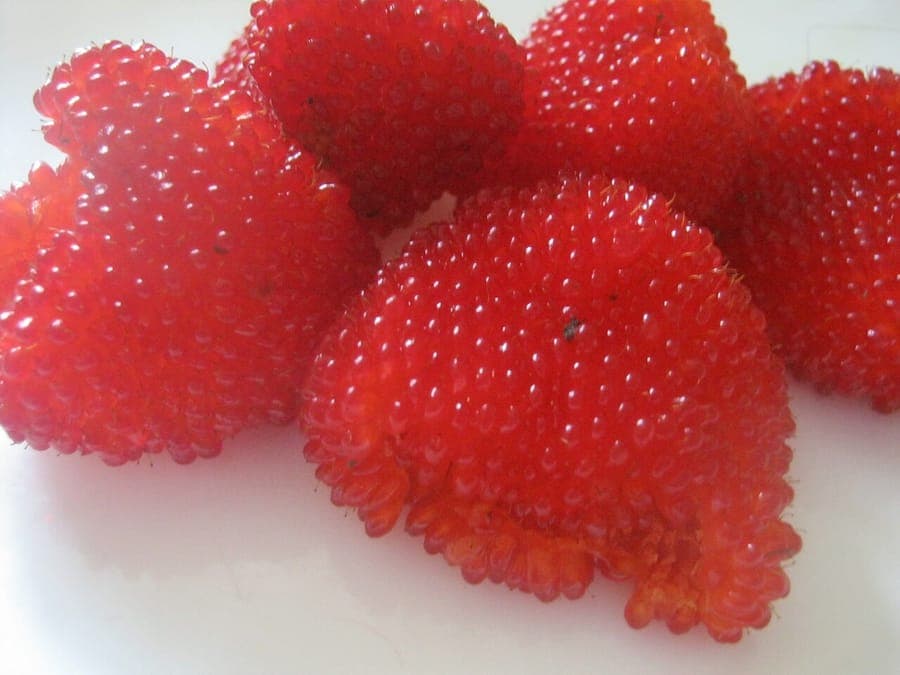
Bearas / CC BY-SA 3.0, via Wikimedia Commons
Rubus illecebrosus: complete guide
Rubus illecebrosus
¿Quieres ver Rubus illecebrosus: complete guide en tu jardín?
1 minuto, sin tarjeta de crédito
Overview
Rubus illecebrosus, commonly known as Japanese raspberry or strawberry raspberry, is a unique berry shrub of Japanese origin. This plant combines the appearance of raspberries with fruits resembling strawberries, hence the English name. The plant distinguishes itself through ornamental flowers, striking red fruits, and compact growth habit.
Appearance and fruits
Rubus illecebrosus grows as a low shrub 30 to 80 centimeters tall. Stems are red-purple and covered with small thorns. Leaves are deep green and ferny. In early to mid summer, white to pink flowers appear that transform into red, large berries. The fruits strongly resemble strawberries but have the structure of raspberries with many small fruitlets.
Ideal location
Strawberry raspberry thrives best in sunny locations with at least six hours of direct sunlight daily. The plant can grow in half-shade but will produce fewer fruits. Ensure good air circulation to prevent fungal diseases. Protect from strong, drying winds.
Soil
This plant grows well in well-draining soil with pH 6.0 to 7.0. Add organic material for better moisture retention. The plant tolerates moderately rich to rich soils. Ensure good drainage to prevent waterlogging. Mulching helps retain moisture and suppress weeds.
Diseño gratis
¿Quieres ver Rubus illecebrosus: complete guide en tu jardín? Crea un diseño gratis ahora.
Watering
Water regularly during growing season and especially during fruiting. The plant needs consistent moisture for best fruit production. Avoid waterlogging. In dry periods extra water can help improve fruit quality. Drip irrigation is ideal.
Pruning
Pruning helps manage shape and promote productivity. After fruiting, spent canes can be cut to ground level. In early spring, remove damaged or diseased canes. Annual pruning helps promote plant renewal.
Maintenance calendar
March to April: Prune, soil preparation, fertilizing. May to June: Blooming, regular watering. July to August: Harvest, continuous care. September to October: Prepare for winter rest. November to February: Winter dormancy.
Winter hardiness
Rubus illecebrosus is hardy to USDA zone 5-6 (-15 to -20 degrees Celsius). The plant survives mild winters outdoors, but protection may be needed in cold areas. In very cold climates, grow in containers and overwinter in protected location.
Companion plants
Combine with other raspberries and berries. Underplanting with ground covers prevents weeds. Other red-fruiting plants form attractive grouping. White flowers from other plants contrast nicely.
Conclusion
Rubus illecebrosus offers unique beauty and edible fruits to fruit gardens. With proper care, it yields interesting harvests yearly. For more tips on fruit gardens and ornamental berry plants, visit gardenworld.app. Plan your fruit garden with inspiration from gardenworld.app.
¿Quieres ver Rubus illecebrosus: complete guide en tu jardín? Crea un diseño gratis ahora.
Sube una foto, elige un estilo y obtén un diseño fotorrealista con lista de plantas en menos de un minuto.
Más de 10.000 jardines diseñados
Sin tarjeta de crédito


Plantas similares
Siberian crab apple: complete guide
Malus x robusta
Complete guide to the Siberian crab apple (Malus x robusta): location, soil, pruning, winter hardiness and the best companion plants for your garden.
Chinese flowering crabapple (Malus x spectabilis): complete guide
Malus x spectabilis
Meet the Chinese flowering crabapple (Malus x spectabilis): a classic spring bloomer with carmine buds and pink blossom.
Potentilla crassinervia: complete guide
Potentilla crassinervia
Potentilla crassinervia, the Corsican cinquefoil, grows wild on Corsica and Sardinia's peaks. Discover how to grow this hardy alpine rock garden gem.