
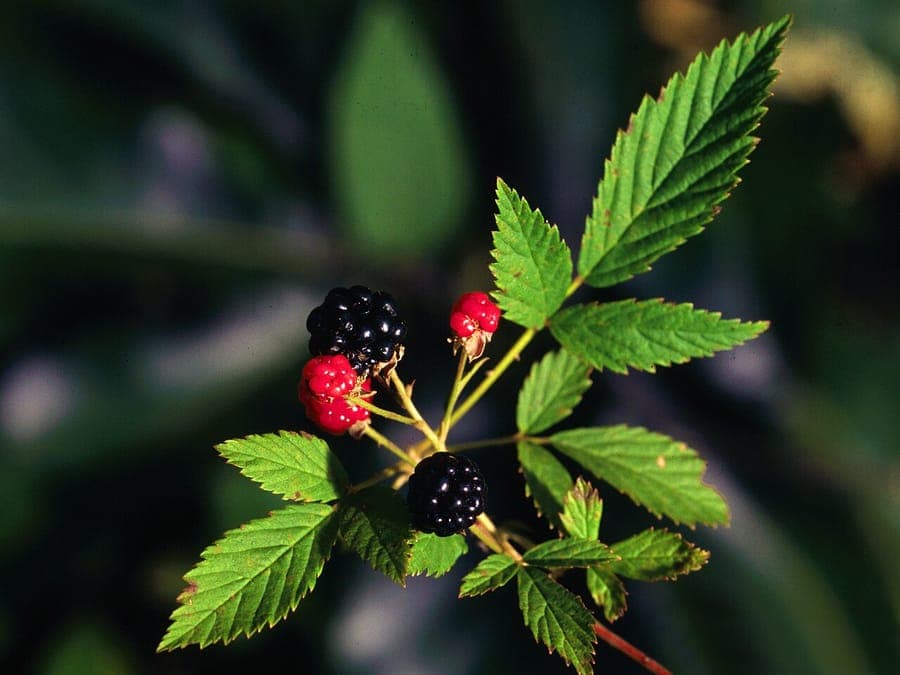
James H. Miller & Ted Bodner, Southern Weed Science Society, Bugwood.org / CC BY-SA 3.0, via Wikimedia Commons
American dewberry: complete guide
Rubus flagellaris
¿Quieres ver American dewberry: complete guide en tu jardín?
1 minuto, sin tarjeta de crédito
Overview
The American dewberry (Rubus flagellaris) is an elegant, low-growing bramble shrub native to eastern North America. Known for its trailing, flexible stems that spread gracefully across the ground, this plant makes an ideal groundcover for gardens of all sizes. The American dewberry produces delicate white flowers in spring, followed by delicious black berries perfect for harvest in summer.
American dewberry thrives in temperate climates and is particularly suited to gardens in regions with cold winters. The plant is hardy to approximately -20 degrees Celsius and extremely low-maintenance. Many gardeners choose this species because it is both visually attractive and productive for food.
On gardenworld.app, you can find more information about combining this plant with other growing specimens in a professional garden design.
Appearance and Bloom
The American dewberry forms low, horizontally spreading shrubs with slender, reddish-tinted stems. The leaves are trifoliate, bright green and finely serrated at the margins. From May to June, delicate white flowers appear, each with five petals and approximately 1 centimeter in diameter.
The plant reaches a height of 30 to 50 centimeters but can spread 1 to 2 meters or more. The fruits ripen from July to August, changing from green to red to black. Ripe berries measure approximately 1 centimeter in diameter and have exceptional flavor.
The plant retains its foliage throughout the season, offering year-round visual value in the garden. Autumn colors are subtle, with leaves potentially turning yellow-orange.
Ideal Location
American dewberry thrives best in sunny to partially shaded locations. At least 4 to 6 hours of direct sunlight daily ensures optimal flowering and berry production. In areas with very hot summers, light afternoon shade can be beneficial.
The plant is flexible regarding location preferences. While it prefers well-draining sites, it can survive in less-than-ideal conditions. Avoid deep shade, where flowering is minimal and disease pressure increases.
Placing the plant near a pathway or seating area offers the convenience of easy berry picking during harvest season. Ensure the plant does not sit directly below roof edges where water tends to accumulate.
Soil
American dewberry is not particularly demanding regarding soil composition. The plant grows in virtually all soil types, though it performs slightly better in fertile, well-draining soils. A pH between 5.5 and 7.0 is ideal.
On heavier clay soils, it is advisable to add sawdust, compost, or peat to improve drainage. When planting, incorporate a layer of mature compost (approximately 5 centimeters) to enhance the soil.
The plant is salt-tolerant, making it suitable for gardens in coastal areas. However, avoid standing water, which can cause root rot, especially during winter months.
Watering
During the growing season (April to October), American dewberry requires regular water, especially during extended dry periods. Water when the top layer of soil feels dry to the touch. Mature plants are fairly drought-tolerant.
Young plants immediately after planting should be monitored carefully throughout the first two growing seasons. Water deeply but less frequently than shallow watering to encourage deeper rooting.
During wet periods, additional drainage is essential. Avoid overwatering, which can promote disease. Most problems occur with stagnant water. During extreme heat, daily watering may be necessary.
Diseño gratis
¿Quieres ver American dewberry: complete guide en tu jardín? Crea un diseño gratis ahora.
Pruning
American dewberry requires minimal pruning. The best approach is to remove dead, diseased, or damaged stems each year after harvest (August to September). This stimulates growth of new, healthy stems.
To keep the plant compact, gently cut back longer stems. This need not be drastic; usually subtle adjustments suffice. Prune in early spring (February to March) before flowering, not in autumn.
The plant itself produces relatively little dead wood, so annual maintenance is minimal. A quick visual inspection in spring is usually sufficient.
Maintenance Calendar
January-February: Check for winter damage. Perform light pruning. Begin cleaning fallen leaves around the plant.
March-April: Plant new American dewberry shrubs. Add compost. Observe first signs of growth.
May-June: Enjoy the beautiful white flowers. Water regularly if dry conditions persist. No other actions required.
July-August: Harvest ripe berries. Prune any aging stems. Continue watering during dry spells.
September-October: Harvest the last berries. Clean up fallen foliage. Prepare the plant for winter dormancy.
November-December: Check winter protection. Protect weak plants with mulch. Evaluate planting location for next season.
Winter Hardiness
The American dewberry is extremely frost-hardy and can tolerate temperatures to -20 degrees Celsius. In most temperate regions, this plant is suitable for all locations, including northern areas. The plant sheds its leaves in winter and enters complete dormancy.
During extremely cold winters with temperatures below -25 degrees Celsius, young stems may suffer frost damage, but the plant typically recovers well in the following growing season. As a precaution, add a layer of mulch (5 to 10 centimeters) around the plant in November.
The plant is hardy to extreme cold. Ensure the soil drains well to prevent root rot during wet winters.
Companion Plants
The American dewberry pairs well with other low-growing berry plants. Possible combinations include:
- Highbush blueberry (Vaccinium corymbosum) as a backdrop
- Hawthorn (Crataegus) for flowering variety
- Juniperus horizontalis as an evergreen groundcover
- Winter heather (Erica carnea) for winter color
The plant works excellently as a specimen shrub in a border or in groups of three to five for greater visual impact.
Closing
The American dewberry is a valuable addition to any garden. With its elegant growth habit, beautiful flowers, and delicious fruit, it provides years of enjoyment. The plant is cold-hardy, low-maintenance, and extremely versatile. Whether you want to establish a fruit garden or simply desire an attractive, low-growing shrub, the American dewberry fits perfectly. Via gardenworld.app, you can incorporate this plant into your professional garden design. Enjoy growing it!
Order your American dewberry from trusted retailers for the best advice and quality.
¿Quieres ver American dewberry: complete guide en tu jardín? Crea un diseño gratis ahora.
Sube una foto, elige un estilo y obtén un diseño fotorrealista con lista de plantas en menos de un minuto.
Más de 10.000 jardines diseñados
Sin tarjeta de crédito


Plantas similares
Siberian crab apple: complete guide
Malus x robusta
Complete guide to the Siberian crab apple (Malus x robusta): location, soil, pruning, winter hardiness and the best companion plants for your garden.
Chinese flowering crabapple (Malus x spectabilis): complete guide
Malus x spectabilis
Meet the Chinese flowering crabapple (Malus x spectabilis): a classic spring bloomer with carmine buds and pink blossom.
Potentilla crassinervia: complete guide
Potentilla crassinervia
Potentilla crassinervia, the Corsican cinquefoil, grows wild on Corsica and Sardinia's peaks. Discover how to grow this hardy alpine rock garden gem.