
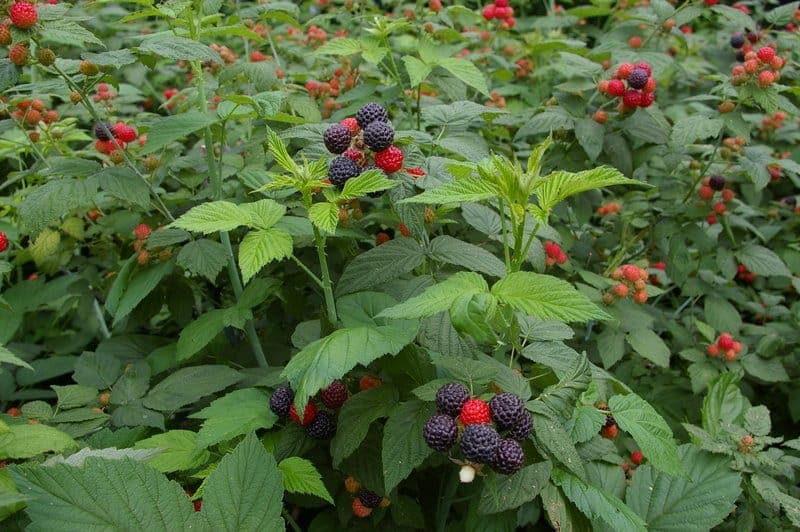
성락 + 연주 / CC BY 2.0, via Wikimedia Commons
Rubus coreanus: complete guide
Rubus coreanus
¿Quieres ver Rubus coreanus: complete guide en tu jardín?
1 minuto, sin tarjeta de crédito
Overview
Rubus coreanus, commonly known as Korean blackberry or Korean bramble, is a nutritious shrub native to East Asia. This plant grows naturally in northern and central China, Korea, and Xinjiang. The plant is renowned for its small, irregularly-shaped berries that are more nutrient-rich than many other raspberry species.
This is a highly attractive plant for food and medicinal gardens. The berries are widely used in Asia in traditional medicine and food products. With its white flowers and nutrient-rich berries, it offers dual value.
Appearance and bloom
Rubus coreanus grows as a vigorous, heavily spined shrub to about 1.5-2 meters height. The stems are armed with numerous hooked spines - this is characteristic of this species. The leaves are trifoliate, green, and hairy.
In spring (April-May), small white flowers appear in clusters. These are very attractive to bees. Later in the season, berries follow, ripening from green via red to deep purple-black. The berries are smaller than regular raspberries, about 1-1.5 cm diameter, but densely clustered and very nutrient-rich.
The plant grows vigorously and has strong runner growth with which it spreads. This can be managed by regular pruning.
Ideal location
Rubus coreanus grows optimally in full sun to light partial shade. While the plant tolerates light shade, it will produce fewer berries in full shade. Ensure at least 5-6 hours of direct sunlight daily.
The plant thrives in temperate climates with regular moisture. Also choose a location with good air circulation - this helps prevent diseases. Avoid low, wet spots where water stagnates.
This plant works well as a defensive hedge (due to spines), in fruit garden, or in mixed shrub planting.
Soil
Rubus coreanus grows on various soils but thrives on:
- Well-draining sandy to loamy soil
- Slightly acidic to neutral (pH 5.5-7.0)
- Nutrient-rich with organic matter
- Deep enough for roots - at least 30-40 cm
The plant is fairly tolerant of soil conditions and grows even on poorer soils. However, add compost when planting to promote better growth and yield.
Avoid very heavy clay without drainage. If your soil is poor, you can add compost yearly around the roots.
Watering
Once established, Rubus coreanus is fairly drought tolerant. During the growth and fruiting season (summer), however, provide regular water, especially during dry periods.
Water deeply but less frequently - this promotes deep root penetration. Water at the plant base, not on leaves, to prevent leaf diseases.
In dry summers, provide water about once weekly. In winter, the plant needs much less water.
Diseño gratis
¿Quieres ver Rubus coreanus: complete guide en tu jardín? Crea un diseño gratis ahora.
Pruning
Rubus coreanus requires regular pruning for optimal growth and yield:
- After blooming (summer): Remove dead and diseased branches
- Late winter (February-March): Remove all two-year-old branches (after harvest) and balance old wood to new growth
- Summer (growing period): Remove overwhelming new growth to maintain form
The plant fruits on two-year-old wood. This means first year is vegetative growth, and second year it bears fruit.
Maintenance calendar
Spring: Check water needs. Remove frost-damaged branches. Apply fertilizer.
Summer: Provide regular water. Enjoy blooming and fruiting. Harvest ripe berries.
Fall: Remove old fruiting branches. Prepare for winter.
Winter: Dormant period. Perform heavy pruning work. Protect against extreme frost in very cold regions.
Winter hardiness
Rubus coreanus is fairly winter hardy in temperate climates. The plant tolerates temperatures of about -10C to -15C. In very severe winters, some yield loss may occur if blossoms freeze.
In warmer Mediterranean climates, the plant grows without winter protection. In cold regions, a protective mulch layer around the foot zone can help protect young canes.
Companion plants
Pair Rubus coreanus with:
- Other brambles/raspberries: Rubus idaeus (red raspberry), Rubus fruticosus (blackberry)
- Other fruit shrubs: Sambucus (elderberry), Ribes (currant)
- Evergreens: Ilex, Buxus
- Flowers: Lavandula, Digitalis, Geranium
- Herbs: Mentha, Thymus, Salvia
Ensure companion plants share the same moisture needs and full-sun preference.
Harvest and use
The berries ripen during July to August and can be eaten fresh from the shrub. They are very sweet and juicy. In Asia they are widely used for:
- Jams and preserves: For jams, jellies, and compotes
- Dried fruit products: As healthy snacks
- Tea: Dried berries for fruit tea
- Traditional medicine: For immunity-boosting properties
The berries can also be frozen for later use in smoothies, desserts, and baking.
Closing thoughts
Rubus coreanus is a valuable addition to food-producing gardens. With its robust growth, nutrient-rich yield, and medicinal value, it offers more than just fruit.
While the spines require caution during harvesting, the benefits are worthwhile. If you want to produce food in a small space, this plant is perfect.
Visit gardenworld.app for more fruit garden ideas and healthy garden design. For plant material check local garden centers. Good luck with your Korean blackberry!
Want to grow healthy, nutrient-rich fruit? Read more on gardenworld.app for food garden advice and design ideas.
¿Quieres ver Rubus coreanus: complete guide en tu jardín? Crea un diseño gratis ahora.
Sube una foto, elige un estilo y obtén un diseño fotorrealista con lista de plantas en menos de un minuto.
Más de 10.000 jardines diseñados
Sin tarjeta de crédito


Plantas similares
Siberian crab apple: complete guide
Malus x robusta
Complete guide to the Siberian crab apple (Malus x robusta): location, soil, pruning, winter hardiness and the best companion plants for your garden.
Chinese flowering crabapple (Malus x spectabilis): complete guide
Malus x spectabilis
Meet the Chinese flowering crabapple (Malus x spectabilis): a classic spring bloomer with carmine buds and pink blossom.
Potentilla crassinervia: complete guide
Potentilla crassinervia
Potentilla crassinervia, the Corsican cinquefoil, grows wild on Corsica and Sardinia's peaks. Discover how to grow this hardy alpine rock garden gem.