
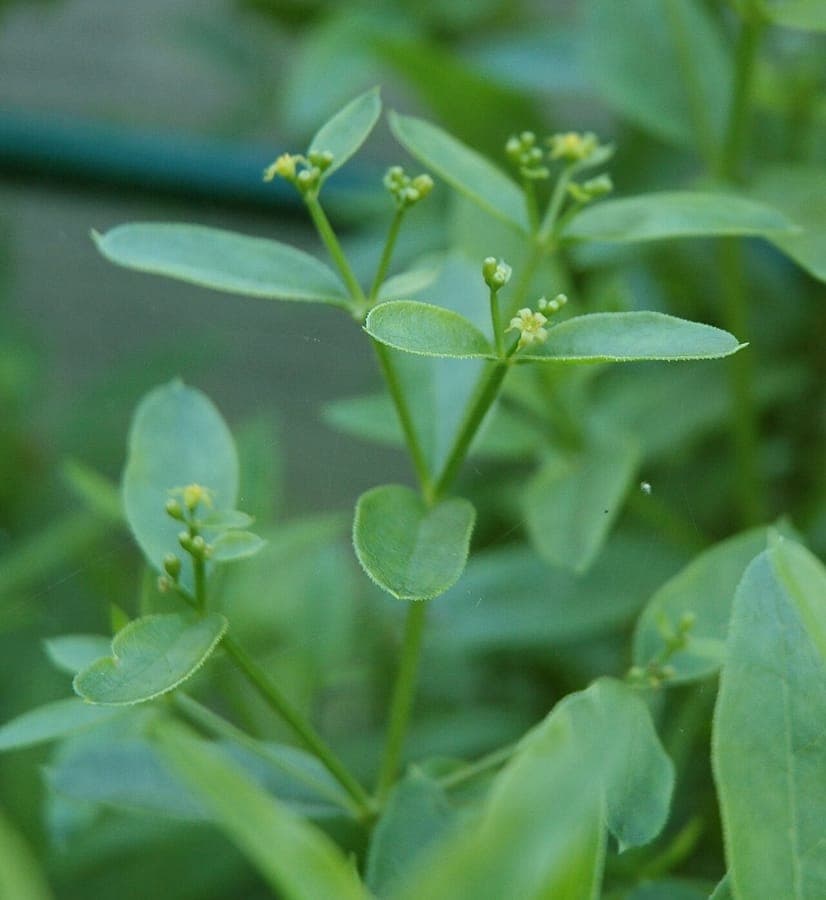
Carstor / CC BY-SA 3.0, via Wikimedia Commons
Rubia tinctorum: complete guide
Rubia tinctorum
¿Quieres ver Rubia tinctorum: complete guide en tu jardín?
1 minuto, sin tarjeta de crédito
Overview
Rubia tinctorum, commonly known as dyer's madder or madder root, is a fascinating perennial plant with centuries-long history in textile dyeing and medicine. This plant naturally occurs from Southeast Europe to West Himalaya. The plant distinguishes itself through creeping growth habit, rough foliage, and valuable red rhizomes used for dye since ancient times.
Appearance and growth
Rubia tinctorum grows as a perennial, creeping herb reaching 30 to 90 centimeters. Leaves are rough, lance-shaped, and grow in whorls of four. The plant produces small yellowish-green flowers in summer-fall, followed by berries that turn black when ripe. The valuable part, however, is the thick red-purple rhizome that develops underground.
Ideal location
Dyer's madder grows well in sunny to partially shaded locations. The plant needs at least four to six hours of sunlight. Ensure reasonable air circulation. The plant is highly adaptive and can grow under various conditions. In warmer climates, partial shade is beneficial.
Soil
This plant thrives best in well-draining, rough soil. A pH between 6.5 and 7.5 is ideal although the plant is flexible. Add organic material for better moisture retention. The plant tolerates lean to moderately rich soils. Depth is important as roots grow deeply.
Diseño gratis
¿Quieres ver Rubia tinctorum: complete guide en tu jardín? Crea un diseño gratis ahora.
Watering
Water regularly during growing season, especially in dry periods. The plant is moderately drought-tolerant once established. Avoid waterlogging which can cause root rot. In rainy regions, supplemental water can be limited. Avoid foliage spraying.
Pruning
Minimal pruning needed. In spring, dead canes from previous year can be removed. The plant can be kept in shape by carefully cutting back growth. Since the plant grows creeping, natural formation will occur.
Maintenance calendar
May to June: Growth begins, light fertilizing helps. July to September: Blooming, regular watering. October to November: Prepare for winter rest. December to April: Winter rest, minimal care.
Winter hardiness
Rubia tinctorum is hardy to USDA zone 6 (-20 degrees Celsius). In cold regions, mulch around the rhizome for extra protection. The plant dies back to ground level in winter and re-emerges in spring. In very cold climates, protect or grow in containers.
Companion plants
Combine with other medicinal herbs and heritage plants. Red-purple flowering plants form attractive partners. Ground covers help prevent wet feet. Sage, thyme, and other Mediterranean herbs work well together.
Conclusion
Rubia tinctorum is an interesting choice for gardens with historical or cultural interest. The plant offers both visual and practical value. For more plant recommendations and garden tips, visit gardenworld.app. Design a unique historically-rich garden at gardenworld.app.
¿Quieres ver Rubia tinctorum: complete guide en tu jardín? Crea un diseño gratis ahora.
Sube una foto, elige un estilo y obtén un diseño fotorrealista con lista de plantas en menos de un minuto.
Más de 10.000 jardines diseñados
Sin tarjeta de crédito


Plantas similares
Oregon bedstraw: complete guide
Galium oreganum
Everything about Oregon bedstraw (Galium oreganum): shade planting, soil requirements, care and use as a low groundcover in woodland and shade gardens.
Awned woodruff: complete guide
Asperula aristata
Full guide to growing Asperula aristata, the awned woodruff: sunny location, alkaline soil, minimal watering, and companion plants for dry or rock gardens.
Purple woodruff: complete guide
Asperula purpurea
Full guide to Asperula purpurea, purple woodruff: sunny sites, chalky soil, watering, pruning, winter hardiness and companion plants for rock and dry gardens.