
Wikimedia Commons / Public domain, via Wikimedia Commons
Roystonea regia: complete guide
Roystonea regia
¿Quieres ver Roystonea regia: complete guide en tu jardín?
1 minuto, sin tarjeta de crédito
Overview
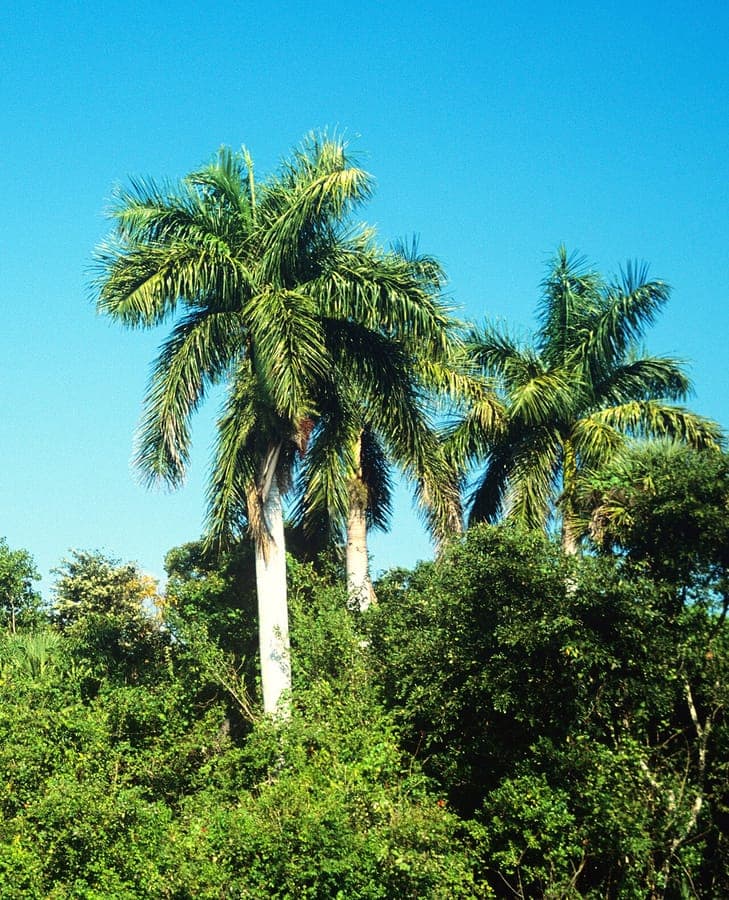
The Roystonea regia, commonly known as the Cuban royal palm or Florida royal palm, is one of the most spectacular and recognized palm species in the world. This majestic tree originates from South Florida, the Caribbean, and Central America, where it grows wild in the warm regions of Cuba, the Bahamas, and the Dominican Republic. The Cuban royal palm distinguishes itself through its characteristic gray, columnar trunk and its luxuriant fronds that form stunning green crowns. This tree can grow up to 25-30 meters in ideal conditions, making it a true focal point in any front garden.
Appearance and bloom
The Roystonea regia is unmistakable with its distinctive gray trunk that grows smooth and straight upward, sometimes reaching 80 centimeters in diameter. The trunk often has a light gray to white appearance that becomes increasingly beautiful over the years. The leaves are feathery and can grow up to 4 meters long, arranged radiating from the trunk top to form a beautiful crown. The plant blooms with small, yellow flowers that appear in large, ornamental flower spikes. Blooms typically appear in spring and summer and are later followed by dark purple, approximately 1 centimeter sized fruits that attract many birds.
Ideal location
The Cuban royal palm thrives best in locations with full sunshine, requiring at least 6-8 hours of direct sunlight daily. This palm tolerates light shade but grows most vigorously in full sun. The location must be well protected against strong winds, as the tall trunk can be susceptible to storms, though mature specimens are relatively stable. Ensure there is adequate space for vertical growth, as these palms are unsuitable for small gardens or spaces with limited head height. For climates outside tropical zones, greenhouse conditions or highly protected conservatory environments are required.
Soil
Roystonea regia thrives best in well-draining soil with a pH value between 6.0 and 8.0. The palm tolerates various soil types as long as water drainage is optimal. It is essential to use sandy soil mixed with organic materials such as coconut fiber or compost. Heavy clay soil can lead to root rot, so add minerals or use potting soil with good drainage if planting in containers. Adding slow-release fertilizers helps support growth, especially for young plants.
Diseño gratis
¿Quieres ver Roystonea regia: complete guide en tu jardín? Crea un diseño gratis ahora.
Watering
This tropical palm requires regular moisture, especially during the growing season from spring to fall. Water when the top 3-5 centimeters of soil feel dry. In dry climates, the plant needs more water, but ensure the soil doesn't become waterlogged, as this can cause root rot. During wetter seasons, such as rainy periods, you can reduce watering frequency. Plants in containers need more frequent watering than ground plantings.
Pruning
Pruning is less critical for Roystonea regia than for some other plants. Remove dead or damaged leaves to prevent disease and keep the plant neat. Prune carefully around the crown and avoid damaging the stem apex, as this can hinder growth. Dead leaves can hang long on these large palms and should be safely removed. For formal landscape designs, you can gradually remove lower leaves to create a cleaner trunk geometry.
Maintenance calendar
Spring: Begin watering as temperatures rise, apply fertilizer for growth season. Summer: Ensure regular and abundant watering during warm weather, monitor for insect pests. Fall: Gradually reduce watering as the season cools. Winter: In cold regions, provide frost protection such as wrapping or greenhouse-like structures; in tropical climates, maintain consistent care.
Winter hardiness
The Cuban royal palm is not frost hardy and tolerates temperatures below 10 degrees Celsius poorly. This palm grows outdoors only in USDA hardiness zones 9b to 11. For colder climates, protection is required, such as wrapping or greenhouse structures. In many European countries, overwintering in controlled environments will be necessary. Container plants can be moved indoors to prevent frost damage.
Companion plants
The large Roystonea regia work well in tropical garden designs alongside other warm-loving plants. Combine with low-growing companion plants such as shade-tolerant palms, ferns, or colorful foliage varieties. Underplanting with geraniums or salvias can provide interesting contrasts without competing for water and light.
Conclusion
The Roystonea regia is an iconic palm species that adds character and tropical elegance to any suitable location. With proper care regarding moisture, soil composition, and frost protection, this powerful tree will provide growth and beauty for decades to come. Whether you live in a warm climate or grow this palm in a greenhouse, the effort is rewarded with an unforgettable, majestic presence in your garden. For more plant tips and front garden inspiration, visit gardenworld.app for your complete garden advice.
¿Quieres ver Roystonea regia: complete guide en tu jardín? Crea un diseño gratis ahora.
Sube una foto, elige un estilo y obtén un diseño fotorrealista con lista de plantas en menos de un minuto.
Más de 10.000 jardines diseñados
Sin tarjeta de crédito


Plantas similares
Needle palm: complete guide
Rhapidophyllum hystrix
Everything about the needle palm: the world's hardiest palm, suitable for gardens in temperate climates down to USDA zone 7b.
Saw palmetto: complete guide
Serenoa repens
A complete guide to saw palmetto (Serenoa repens), the iconic fan palm from Florida and the southeastern United States, prized for its toughness.
Puerto Rican hat palm: complete guide
Sabal causiarum
Grow Puerto Rican hat palm successfully. A majestic fan palm with tropical presence suited to sheltered Mediterranean-style gardens.